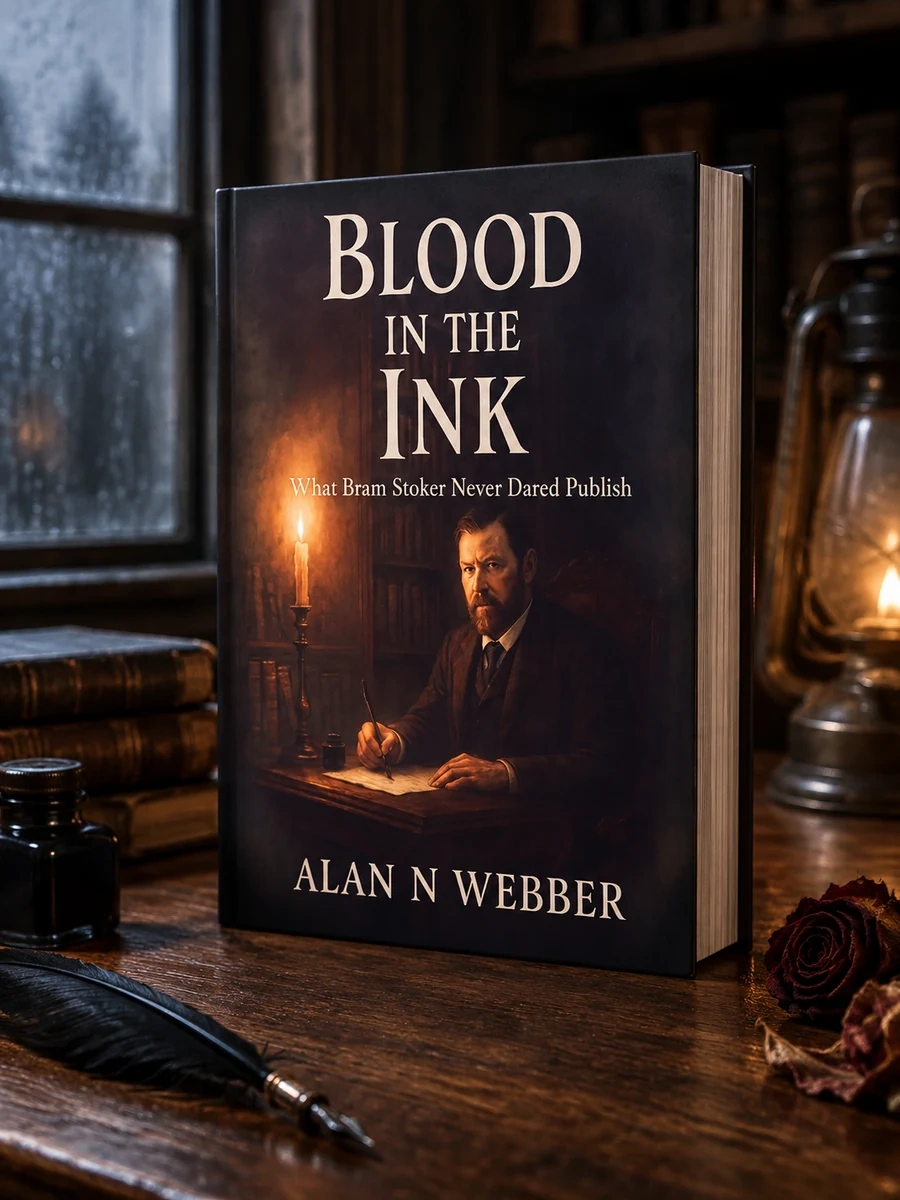
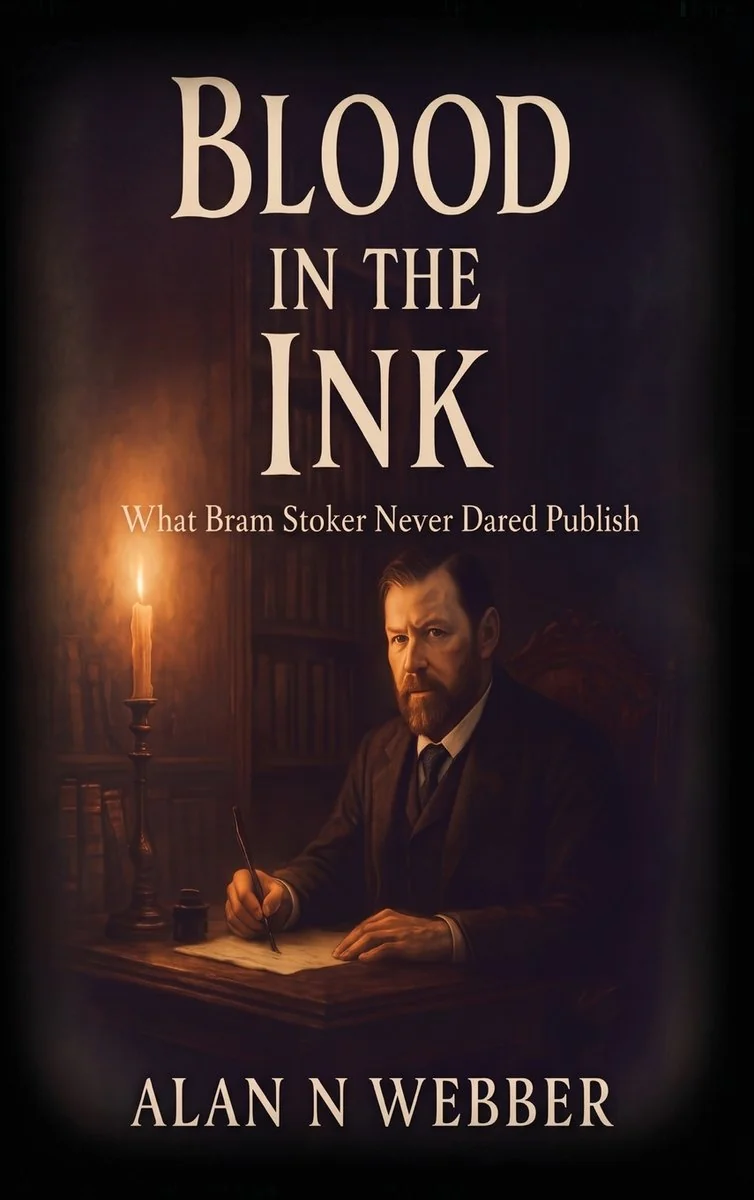
Blood in the Ink
Bram Stoker faces a supernatural predator born from his own writing at Slains Castle.
Webber, known for the Ink & Shadow Series, reimagines the life of Bram Stoker in this gripping tale. The author returns to haunted ruins to finish his famous work but instead awakens a terrifying entity. Florence becomes a target as the Count’s influence grows. Stoker must confront the horrifying consequences of his past writings. The novel uses a unique structure of diary entries and recollections to build suspense. It explores the price of imagination and the fear that fiction can become reality. The story acts as both a love letter to gothic literature and a stark warning about the dangers of creation.
This novel sits within the Ink & Shadow Series, drawing on the legacy of Bram Stoker and the Dracula mythos. It engages with gothic literature traditions and historical horror periods. The work references other literary figures like Doyle, Poe, Jekyll, Dorian Gray, Uriah Heep, and Sing For Me Man Who Stole Tomorrow to contextualize its place in the genre.


📝 Description: Blood in the Ink
💎 Our verdict on Blood in the Ink
📖 Why choose it
Why this book is worth reading
Readers who appreciate atmospheric, slow-burn horror and literary fiction will find this novel deeply rewarding. It is ideal for those fascinated by the intersection of real historical figures and supernatural events, offering a unique perspective on the creation of Dracula. Fans of gothic tales that explore the terrifying consequences of imagination and the power of words will gain much from its dense prose and suspenseful structure. The book serves as both an homage to classic horror traditions and a stark warning about the dangers of creation, appealing to those who enjoy intellectual engagement alongside their scares. It is less suitable for readers seeking fast-paced action or contemporary settings, as it demands patience with its historical focus and journal-style narrative.
⭐ Reader reviews
Reader rating
Webber delivers a chilling homage to gothic literature, weaving Bram Stoker’s life into a terrifying narrative where fiction bleeds into reality. The use of diary entries and recollections effectively builds suspense, creating an immersive experience that blurs the line between author and monster. The prose is dense but rewarding for those willing to engage with its slow-burn tension. While the historical focus may alienate readers preferring contemporary thrillers, it perfectly suits enthusiasts of literary horror and vampire lore. The exploration of the price of imagination provides a compelling thematic core, making this a standout entry for fans of atmospheric suspense who enjoy books that challenge the power of storytelling itself.
You might also like
See more →






Have a question about this item?
Ask about the edition, condition, delivery or anything else — we reply by email or phone, usually within a day.
