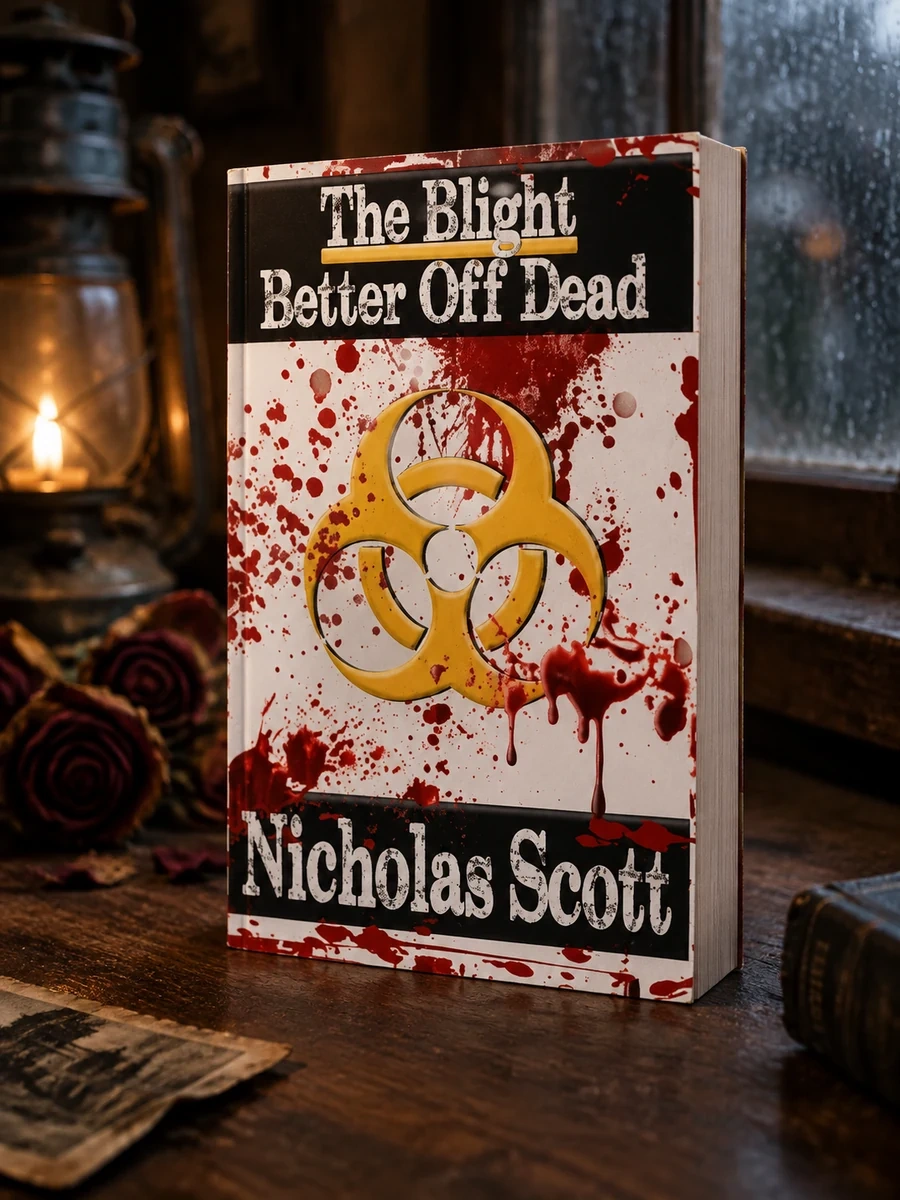

Blight: Better Off Dead: a Blight short story
A short story about the immediate aftermath of a viral attack in Grand Central Station.
Scott’s narrative focuses on the period following the viral incident at Grand Central Station. The text describes how the virus became the deadliest attack in history within one month. Survivors realize the initial outbreak was only the start. The Blight emerges as a distinct and more complex threat than the virus itself. The story tracks the survivors' dawning comprehension of their situation. It highlights the stark difference between dying from the virus and facing the consequences of the Blight. The work is a compact examination of survival in a depopulated world. It avoids traditional hero arcs, focusing instead on the grim reality of being among the few left alive.
Published in December 2014 by 26 Letter Productions, this short story emerges from the tradition of American horror fiction. It engages with post-apocalyptic narratives and supernatural themes prevalent in contemporary genre literature.


📝 Description: Blight: Better Off Dead: a Blight short story
💎 Our verdict on Blight: Better Off Dead: a Blight short story
📖 Why choose it
Why this book is worth reading
Readers who appreciate grim, realistic depictions of societal collapse will find value in this concise narrative. It appeals to those seeking a compact examination of survival without the comfort of traditional hero arcs or hopeful resolutions. The book is ideal for fans of psychological horror who prefer stark, impactful storytelling over sprawling epics. It offers a focused look at the psychological toll of being among the few survivors in a depopulated world, highlighting the distinction between dying from a virus and facing the consequences of the Blight.
⭐ Reader reviews
Reader rating
Nicholas Scott delivers a potent exploration of post-apocalyptic dread through this short story. The narrative effectively distinguishes the initial viral outbreak from the more complex threat of the Blight, creating a sense of escalating horror. By avoiding scientific explanations and hopeful endings, Scott maintains a tone of unrelenting grim reality. This approach suits readers who enjoy the supernatural horror tradition but prefer concise, visceral impact over lengthy world-building. It is a successful standalone piece that captures the early stages of global collapse with precision and emotional weight, leaving a lasting impression of loss.
You might also like
See more →







Have a question about this item?
Ask about the edition, condition, delivery or anything else — we reply by email or phone, usually within a day.
