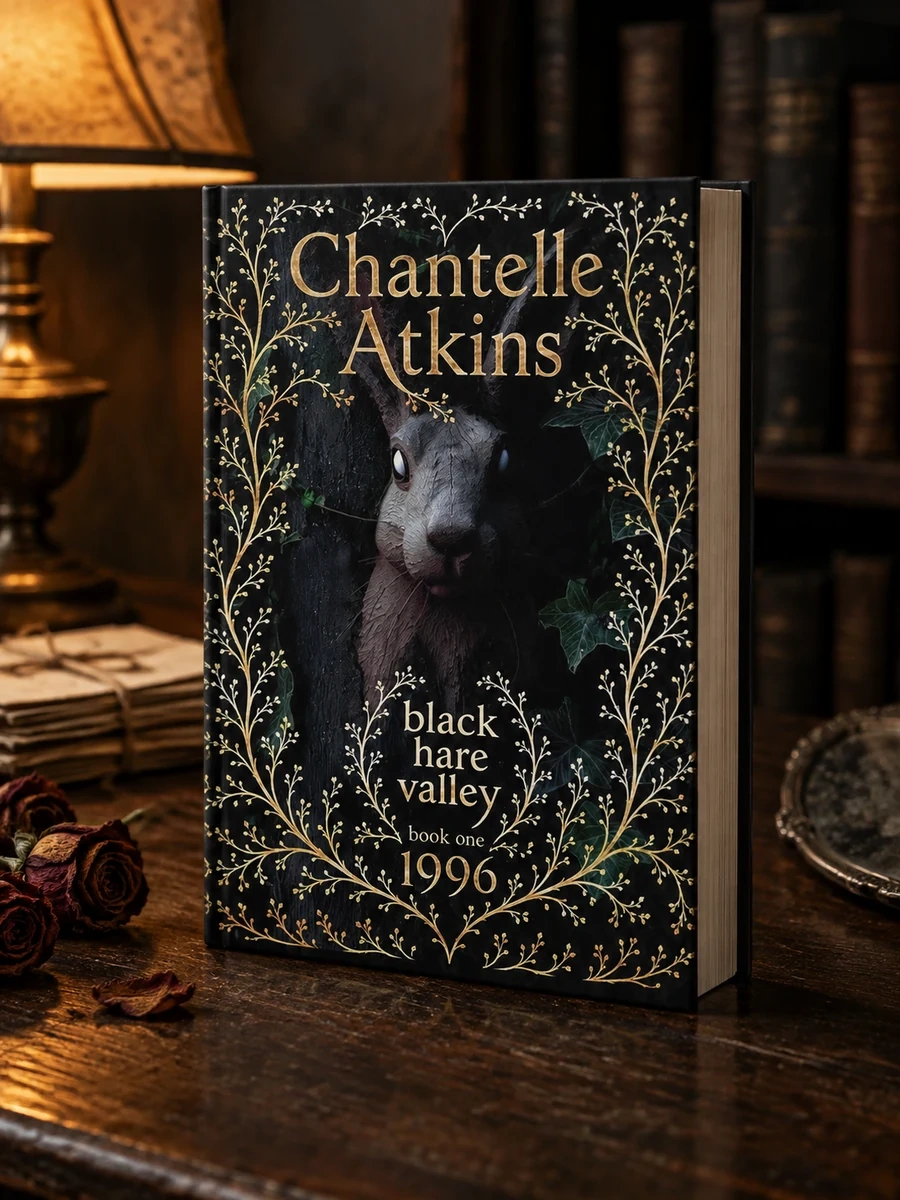
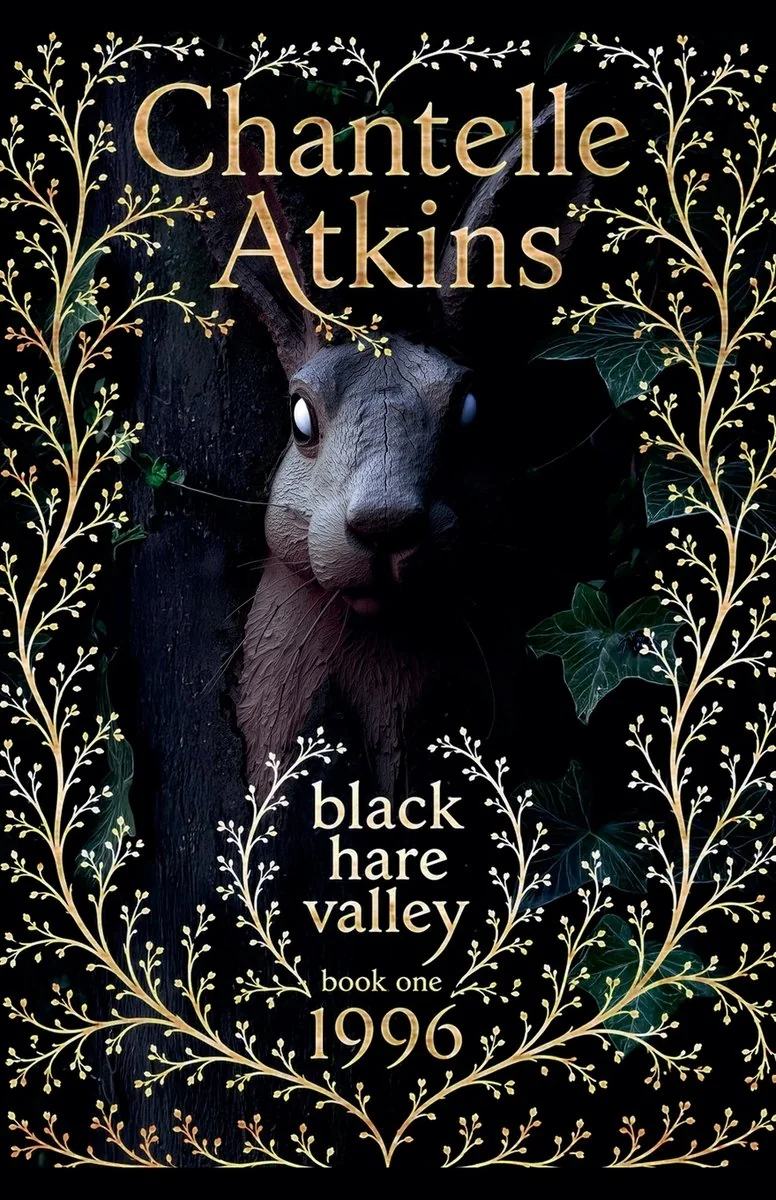
Black Hare Valley Book One: 1996
A small town hides terrible secrets that erase themselves from memory.
This novel examines the mechanics of collective amnesia in a closed community. Jaime’s journalistic instincts clash with the town’s enforced silence, driving the plot forward. The narrative focuses on the interactions between Jesse, Paddy, Willow, and Ralph as they navigate threats from authority figures like Sergeant Mayfield and Vicar Roberts. The story does not offer easy answers but instead explores how fear maintains order. The absence of Paddy serves as the catalyst for exposing the town’s rot. Atkins uses the 1996 setting to ground the supernatural elements in a specific, tangible reality. The book is organized around the gradual revelation of these hidden connections.
Set in 1996 within the fictional Black Hare Valley, this work draws on gothic traditions of haunted landscapes and repressed history. It reflects American small-town horror tropes where isolation breeds fear and silence protects the powerful.


📝 Description: Black Hare Valley Book One: 1996
💎 Our verdict on Black Hare Valley Book One: 1996
📖 Why choose it
Why this book is worth reading
Readers who appreciate atmospheric mysteries with gothic undertones will find this narrative compelling. It suits those interested in the psychological mechanics of collective memory and how secrets bind a community together through fear. The book offers a slow-burn exploration of authority figures and hidden darkness rather than fast-paced action. Those seeking clear moral resolutions may find it less satisfying, but fans of intricate character dynamics and the tension between journalistic curiosity and enforced silence will gain much from examining how the town’s rot is exposed.
⭐ Reader reviews
Reader rating
Atkins effectively constructs a claustrophobic world where the setting itself acts as a primary antagonist. The narrative succeeds in portraying the clash between individual truth-seeking and communal erasure through well-defined character interactions. The use of 1996 provides a distinct texture to the supernatural elements, grounding the dread in specific historical reality. While the plot avoids easy answers, it delivers a rich study of how fear maintains order. It is best suited for readers who enjoy slow-burn horror and complex social dynamics over immediate thrills.
You might also like
See more →






Have a question about this item?
Ask about the edition, condition, delivery or anything else — we reply by email or phone, usually within a day.
