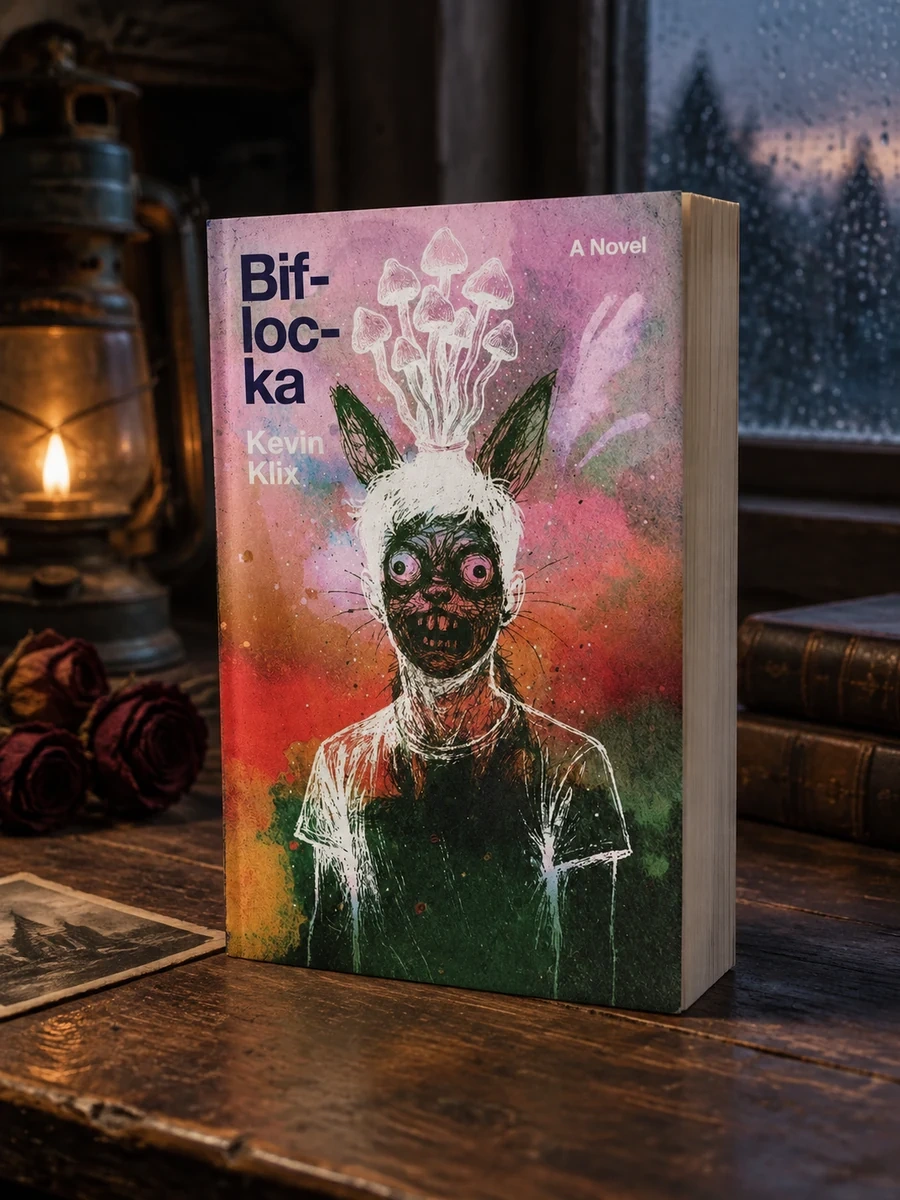
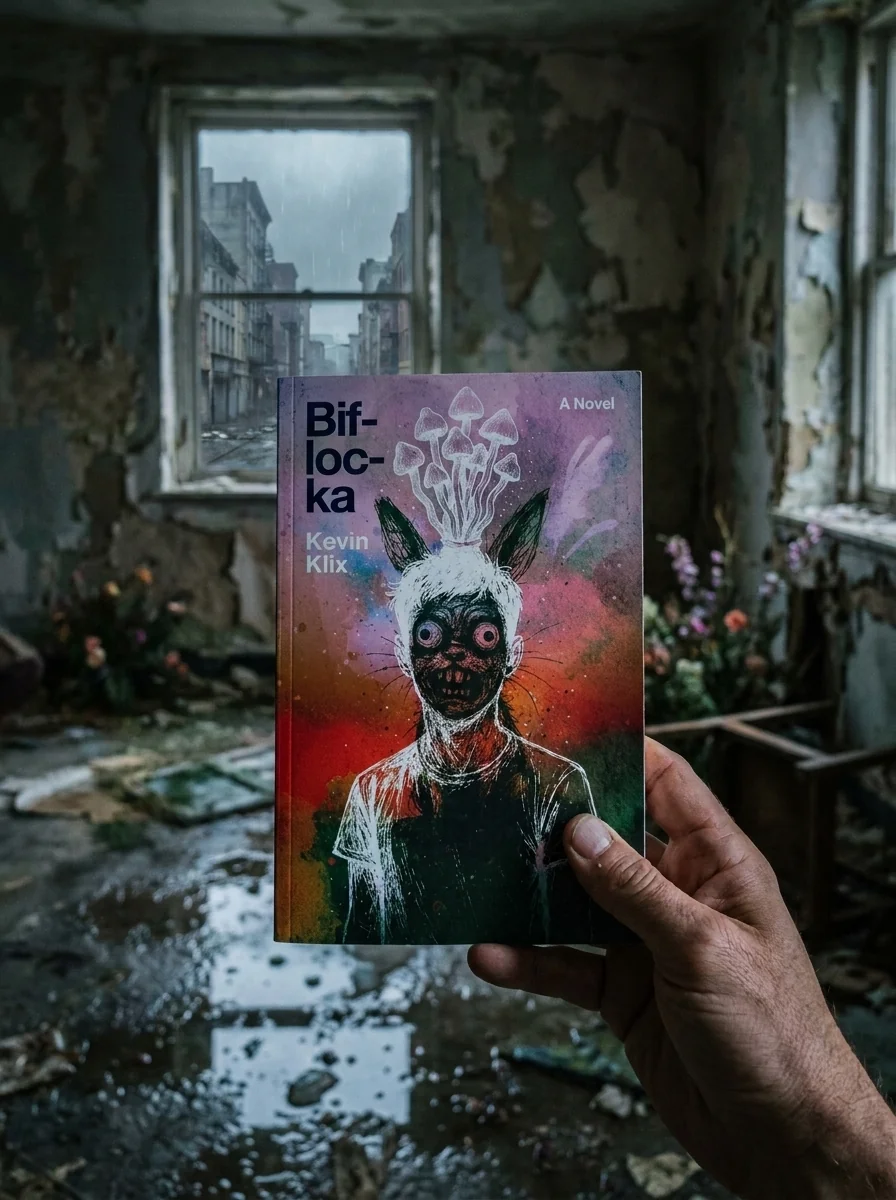
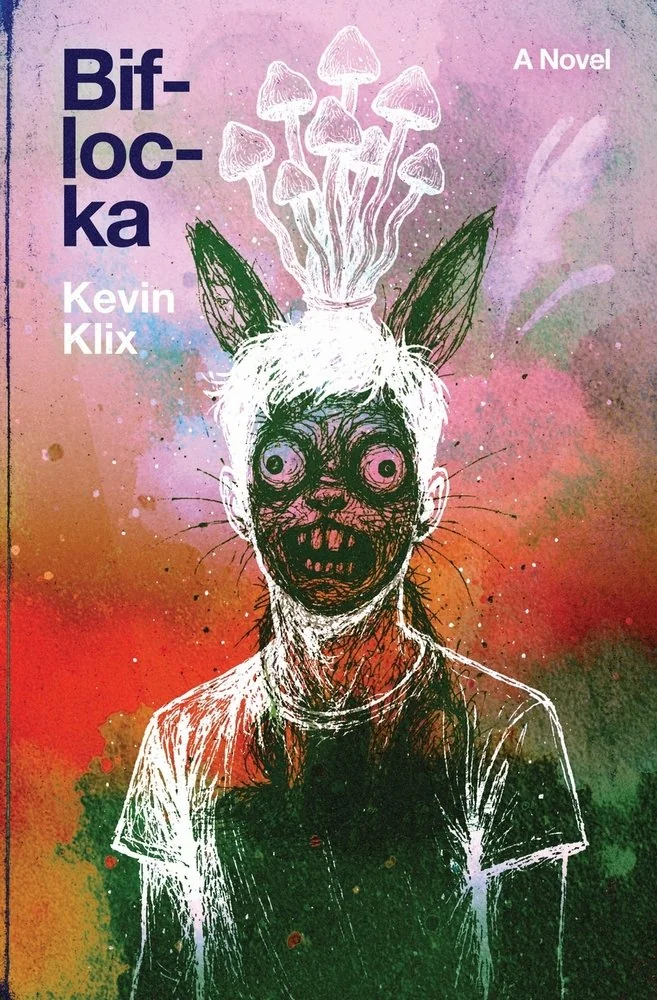
Biflocka
A fractured reality novel about a man losing his mind after taking psilocybin.
Klix’s 2025 release focuses on the disintegration of self and society through a psychedelic lens. Clyde’s journey is not one of discovery but of erosion. He navigates a landscape where time has no forward direction and people are merely echoes of their former selves. The narrative emphasizes the danger of Lucy and the ruin brought by Edgar. This approach highlights the theme of terrifying freedom. The book avoids conventional horror tropes in favor of existential dread. It is a study of what remains when all structure fails. The mutation of the world mirrors Clyde’s internal collapse.
Published in 2025 by K Publishing Co., this work sits within the tradition of supernatural fiction and gothic literature. It draws on themes of psychological collapse and hallucinatory experience. The narrative reflects contemporary anxieties about mental fragmentation and the instability of perception in a digital age.


📝 Description: Biflocka
💎 Our verdict on Biflocka
📖 Why choose it
Why this book is worth reading
Readers who crave immersive, atmospheric experiences over conventional plotting will find profound value in this text. It appeals to those fascinated by the psychological ramifications of altered states and the terrifying freedom that accompanies societal collapse. Individuals interested in gothic themes of isolation and the erosion of reality will appreciate the raw, non-linear approach to identity dissolution. This book is for the brave reader willing to navigate a landscape where time loops and static replace traditional narrative comfort, offering a stark study of what remains when structure fails.
⭐ Reader reviews
Reader rating
Klix delivers a potent meditation on mental fragmentation through a hallucinatory lens. The novel excels in creating an atmosphere of creeping dread, effectively mirroring Clyde’s internal collapse with the external mutability of his surroundings. By avoiding standard horror tropes, it achieves a unique sense of existential terror. The portrayal of Lucy and Edgar adds layers of ambiguity to the protagonist’s journey. While it may frustrate those seeking clear resolutions or linear plots, it rewards patients with its intense thematic depth. It is a demanding but rewarding exploration of loneliness and the terrifying freedom found in losing everything.
You might also like
See more →







Have a question about this item?
Ask about the edition, condition, delivery or anything else — we reply by email or phone, usually within a day.
