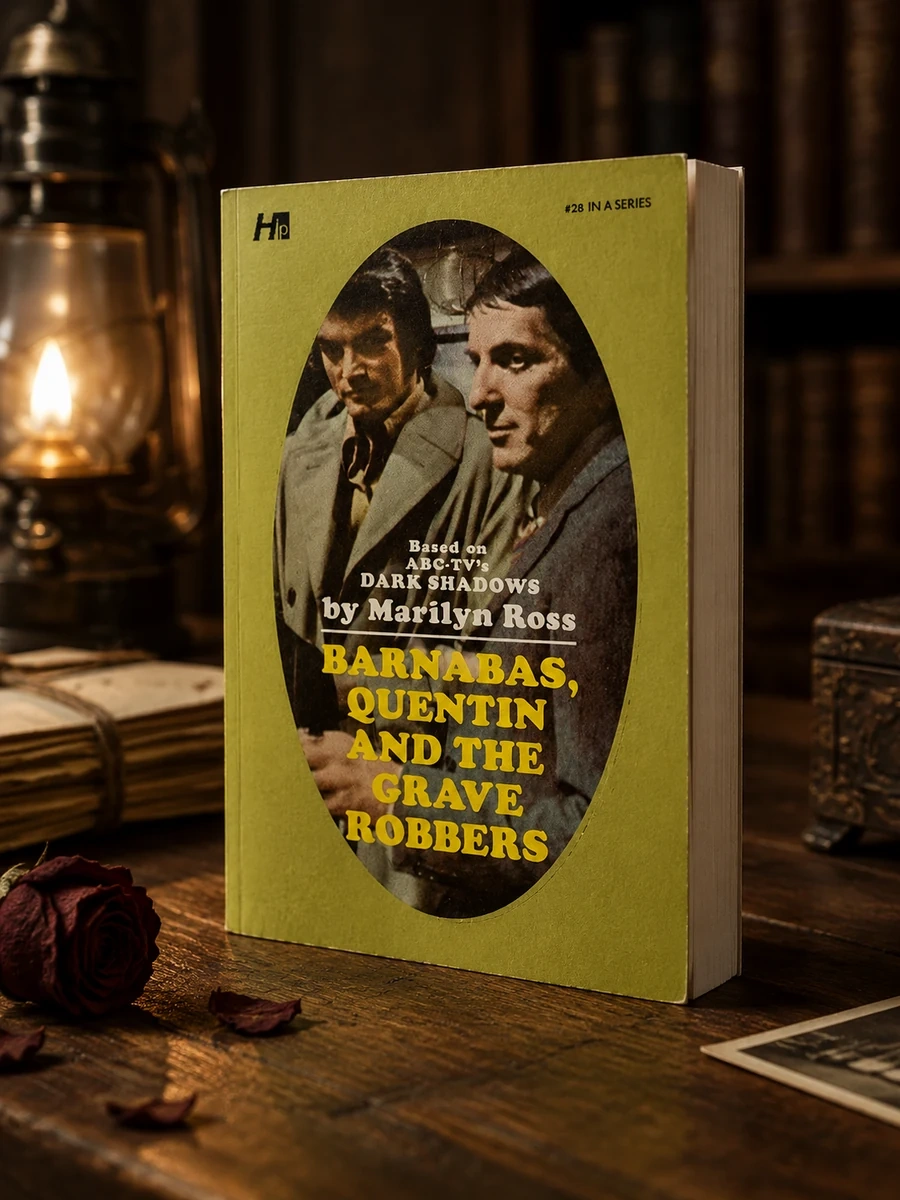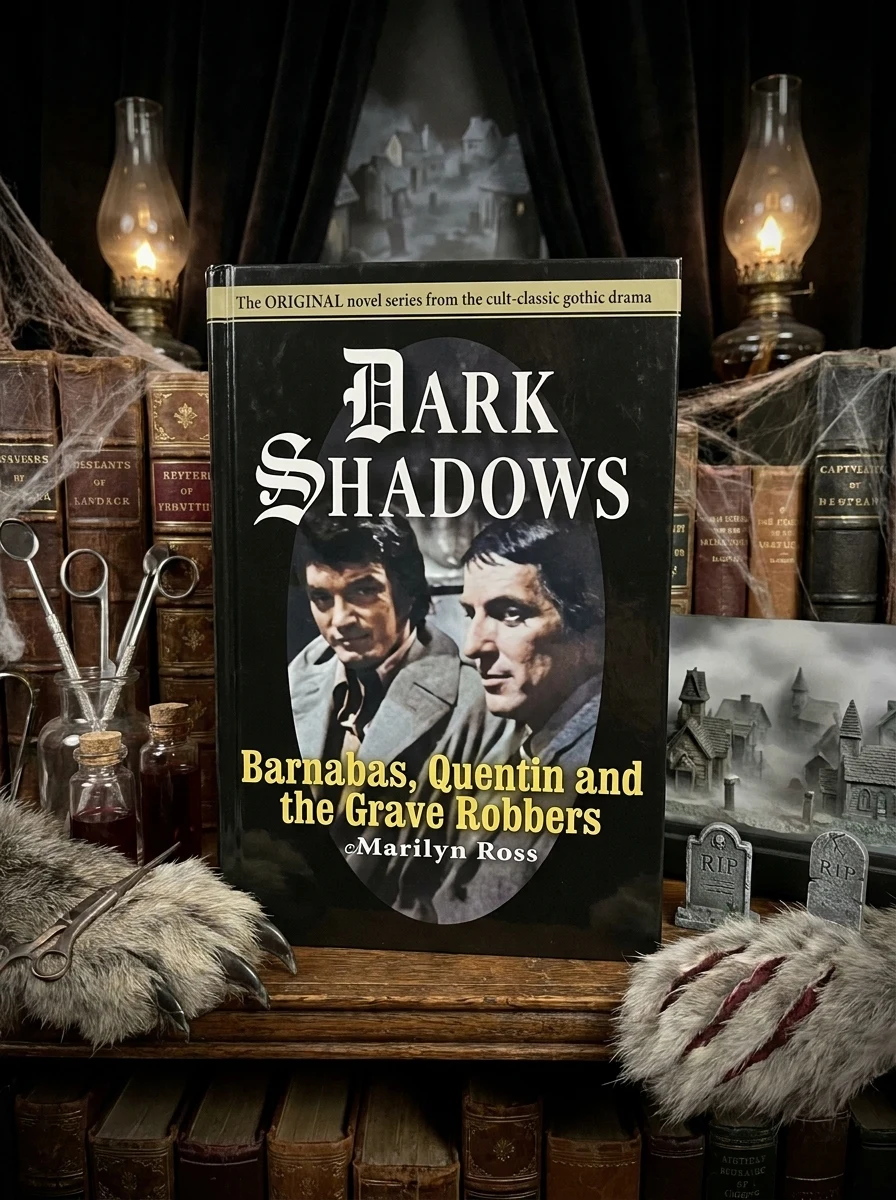
Barnabas, Quentin and the Grave Robbers: Volume 28
A gothic tale of framed guilt and supernatural threats in Volume 28.
Ross examines the psychological pressure on Paula as she faces Dr. Bentley’s offer to join his company of zombies. The narrative highlights the tension between Barnabas’s impending blame and Quentin’s potential intervention. Lily’s role as a blood-drinking antagonist drives the immediate danger. The story emphasizes the personal cost of resisting evil forces. Readers encounter a world where loyalty is tested by threats of reanimation. The text provides a close look at the dynamics between the victim, the villain, and the reluctant hero. It captures the essence of classic horror through focused character interaction.
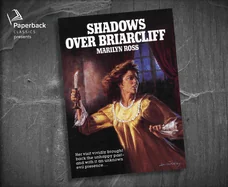
Published in 2020 by Paperback Classics, this volume continues a series originating in June 1971. It reflects mid-twentieth-century paperback horror conventions. The work engages with gothic fiction traditions involving werewolves and grave robbing. It appeals to fans of classic supernatural narratives from that era.


📝 Description: Barnabas, Quentin and the Grave Robbers: Volume 28
💎 Our verdict on Barnabas, Quentin and the Grave Robbers: Volume 28
📖 Why choose it
Why this book is worth reading
Readers seeking atmospheric character-driven supernatural thrillers will find value in this installment. The narrative focuses on the psychological pressure faced by Paula as she resists Dr. Bentley’s sinister offer to join his company of zombies. Those who enjoy exploring the dynamics between victim, villain, and reluctant hero will appreciate the examination of loyalty tested by threats of reanimation. The story highlights the personal cost of resisting evil forces through intense character interaction rather than fast-paced action. It appeals to audiences interested in gothic traditions involving werewolves and supernatural elements, offering a close look at moral stakes and internal conflict within a constrained, tense environment.
⭐ Reader reviews
Reader rating
Ross delivers a tightly focused narrative that prioritizes psychological tension over broad spectacle. The text effectively utilizes dialogue and internal monologue to reveal the characters' fears and resolve, particularly Paula’s firm rejection of Dr. Bentley’s offer. This approach highlights the moral stakes involved in resisting dark power. While it lacks non-fiction historical accounts or rapid action sequences, it succeeds in capturing the essence of classic horror through focused character interaction. The work suits those who prefer atmospheric environments and deep engagement with gothic tropes like framed guilt and supernatural reanimation. It provides a compelling study of loyalty under threat, making it a solid choice for fans of traditional, mood-driven horror fiction.