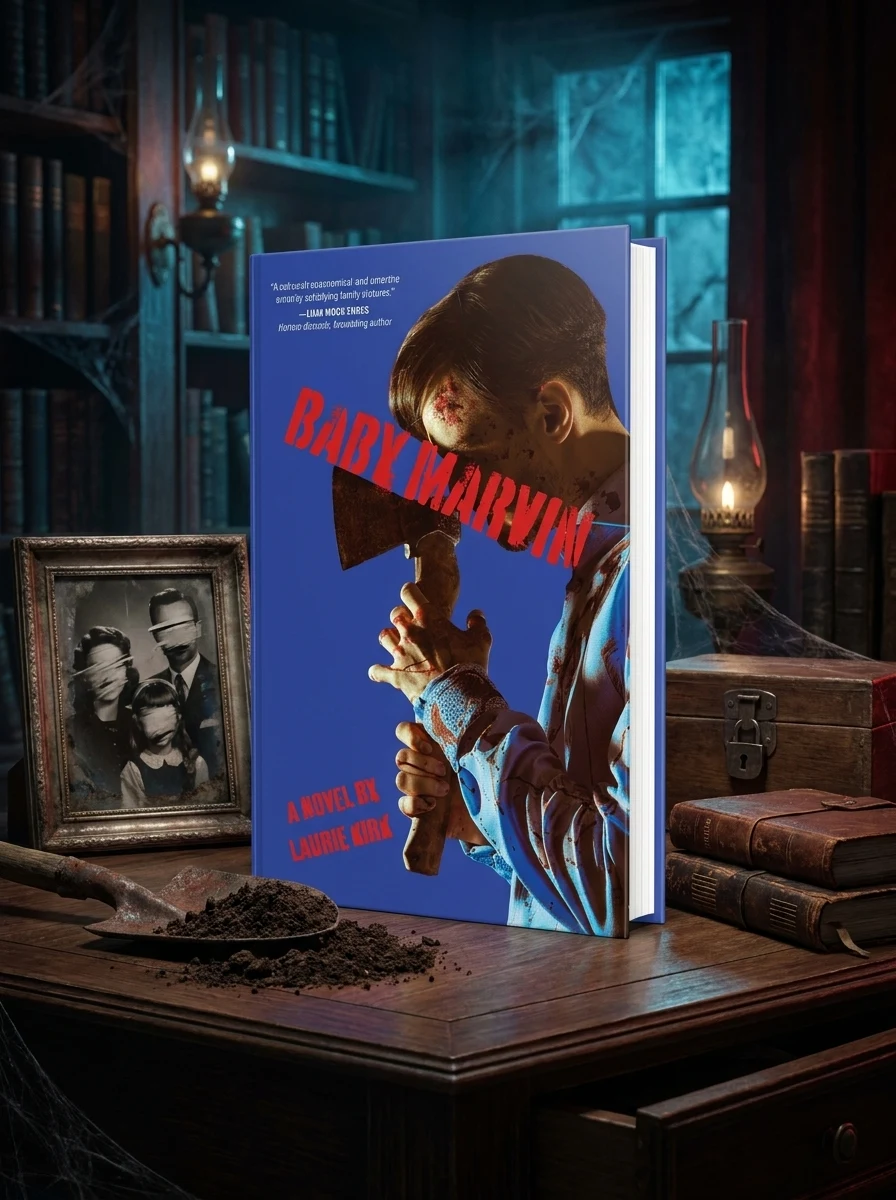
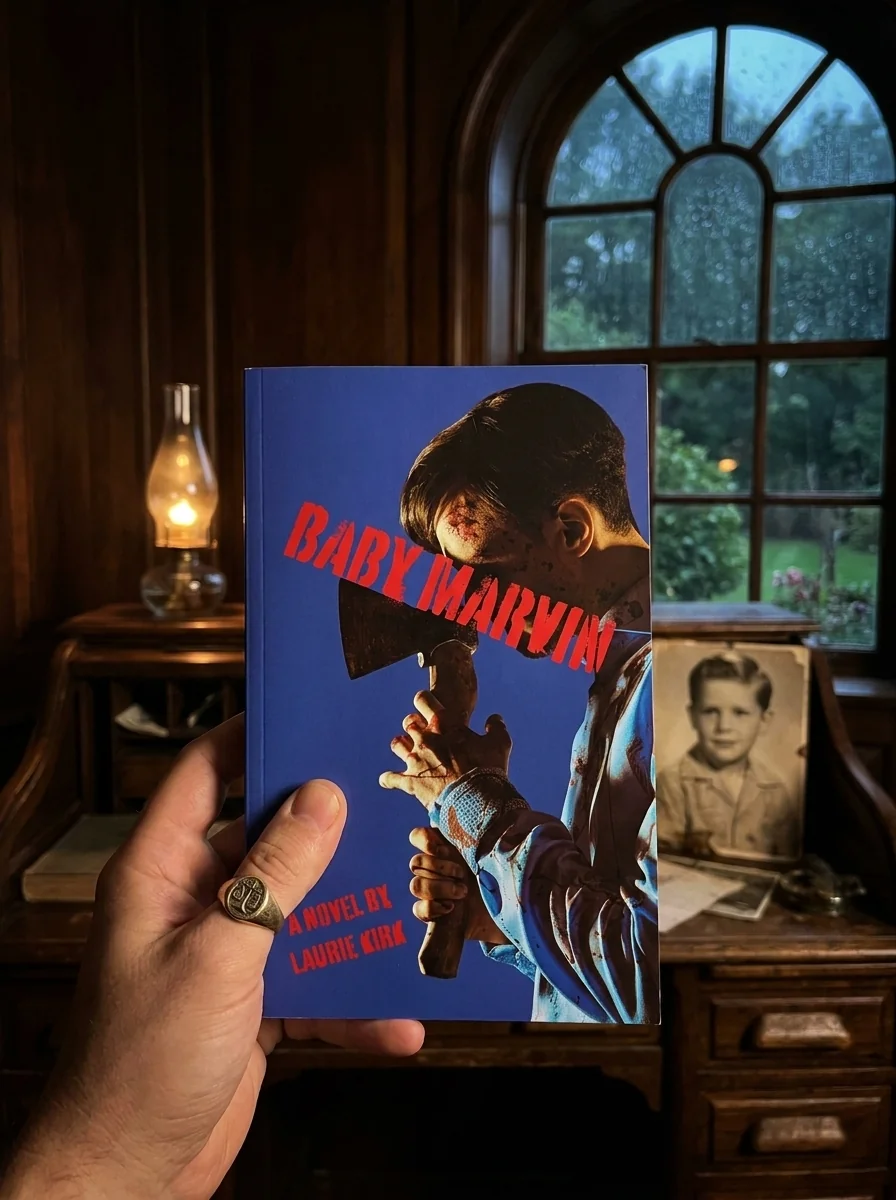
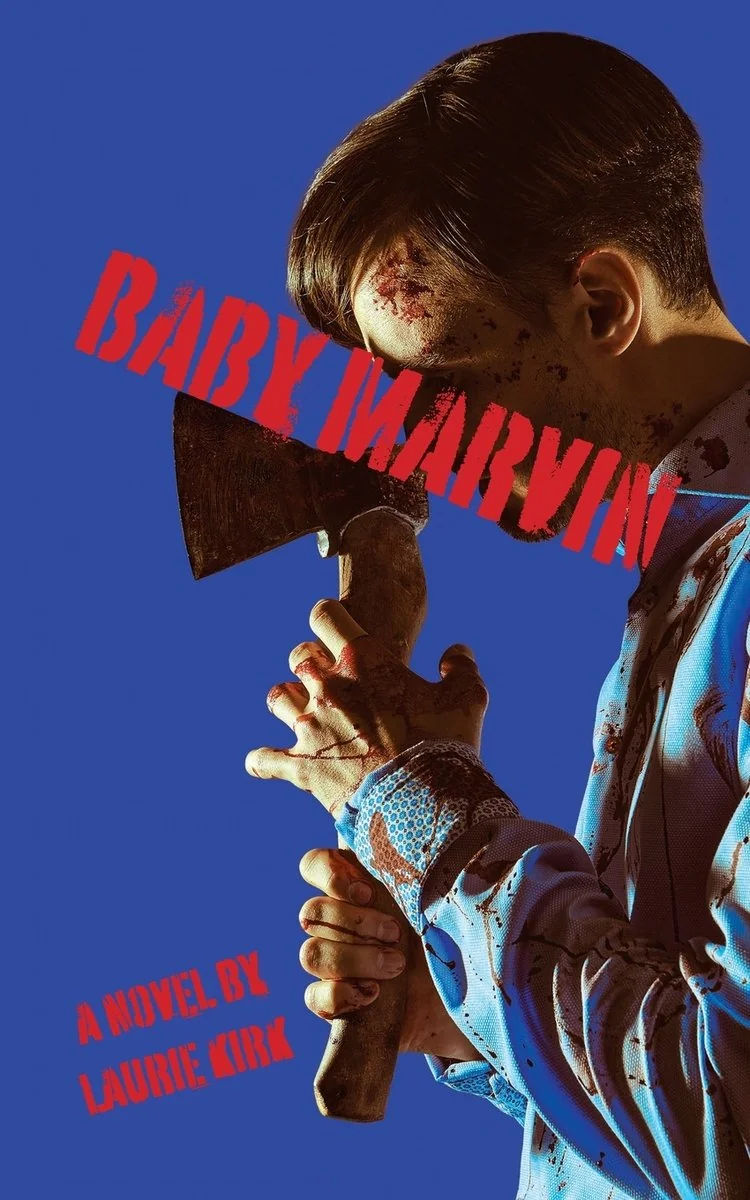
Baby Marvin
A psychological thriller about a man confronting his monstrous past with a mirror image.
The story examines the destructive power of familial expectation and the loss of childhood innocence. Kirk uses the specific imagery of 1950s propaganda to highlight the contrast between public success and private trauma. The protagonist’s journey is not one of healing but of embracing the darkness buried within himself. By linking his current actions to his past as a child actor, the narrative suggests that identity is fractured by trauma. The mirror image acts as an externalization of his repressed rage, guiding him toward a violent resolution that blurs the line between justice and madness.
The narrative sits in 1968 while referencing the 1954 Eisenhower era. It contrasts the glamour of mid-century American advertising with the decay of a Victorian mansion setting. The work engages with themes of public image versus private reality in post-war United States.


📝 Description: Baby Marvin
💎 Our verdict on Baby Marvin
📖 Why choose it
Why this book is worth reading
Readers drawn to the darker corners of American Gothic fiction will find Laurie Kirk’s work compelling due to its intense exploration of fractured identity and repressed rage. This book is ideal for those who appreciate psychological thrillers that eschew traditional healing narratives in favor of embracing inner darkness. It appeals to audiences interested in the destructive power of familial expectations and the loss of innocence, particularly when framed through historical contexts like 1950s propaganda. Those who enjoy stories where the line between justice and madness blurs will find the mirror-image motif and violent resolution deeply engaging. However, it is not suitable for readers seeking light romance or straightforward historical fiction, as the tone remains relentlessly intense and focused on private trauma rather than public success.
⭐ Reader reviews
Reader rating
Kirk successfully merges supernatural horror with psychological thriller elements, creating a bleak atmosphere defined by betrayal and loss. The use of 1950s imagery, specifically the Safe Driving Campaign, provides a striking backdrop for examining the duality of good and evil within individuals. The narrative effectively externalizes repressed anger through the mirror image, guiding the protagonist toward a violent resolution that challenges conventional notions of justice. While the story lacks a path to healing, it offers a powerful critique of familial expectation and identity fragmentation. This work suits readers who enjoy dark family dynamics and historical horror settings. It may be too intense for those preferring lighter tones, but for fans of American Gothic fiction, it delivers a memorable and unsettling examination of monstrous legacies.
📖 Read on the blog
🏛 Books from this publisher Dark Anthem Press



You might also like
See more →




Have a question about this item?
Ask about the edition, condition, delivery or anything else — we reply by email or phone, usually within a day.
