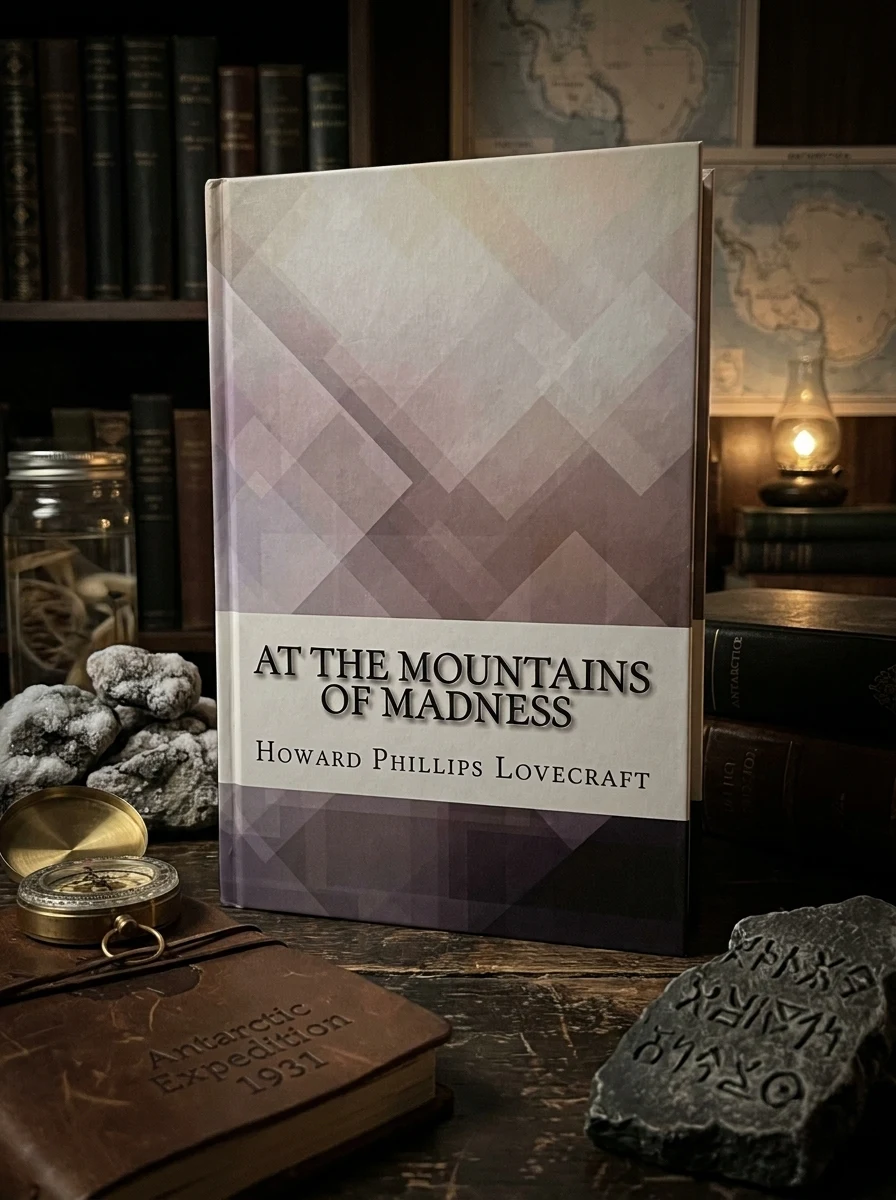
At the Mountains of Madness
A 1931 novella reinterpreting cosmic horror through science fiction.
Lovecraft crafted this work to strip away mythological elements from his previous stories. He replaced them with a rigid scientific paradigm that explains the unknown. The narrative focuses on an Antarctic expedition that discovers ancient ruins. This discovery forces the characters to confront their insignificance in the universe. The text serves as a bridge between classic supernatural fiction and modern science fiction horror. It demonstrates how Lovecraft evolved his thematic concerns over time.
Lovecraft wrote this novella in February and March 1931. It first appeared in Astounding Stories during the spring of 1936. The work represents a decisive shift in his literary approach, moving away from pure supernaturalism toward a science fiction interpretation of his established mythos.


📝 Description: At the Mountains of Madness
💎 Our verdict on At the Mountains of Madness
📖 Why choose it
Why this book is worth reading
Readers fascinated by the evolution of cosmic horror will find this text foundational, particularly those interested in how Lovecraft stripped away mythological elements to replace them with a rigid scientific explanation for the unknown. It offers a unique perspective on existential dread and humanity's insignificance within the universe, delivered through a slow, descriptive style that prioritizes detailed world-building over fast-paced action. This work is ideal for fans of speculative fiction who appreciate deep thematic concerns and atmospheric tension rather than clear moral resolutions or traditional gothic romance pacing.
⭐ Reader reviews
Reader rating
Lovecraft’s novella stands as a crucial example of his thematic evolution, successfully demythologizing the Cthulhu Mythos by framing cosmic horror through scientific inquiry. The narrative structure, relying on expedition reports and journals, effectively builds an atmosphere of chilling discovery in Antarctica. While the slow pace may deter readers seeking contemporary thriller dynamics or clear resolutions, it suits those who value intellectual dread and intricate world-building. It remains an essential study for understanding the transition from supernatural tales to science fiction horror, offering a profound exploration of human insignificance against the backdrop of ancient, unknowable ruins.