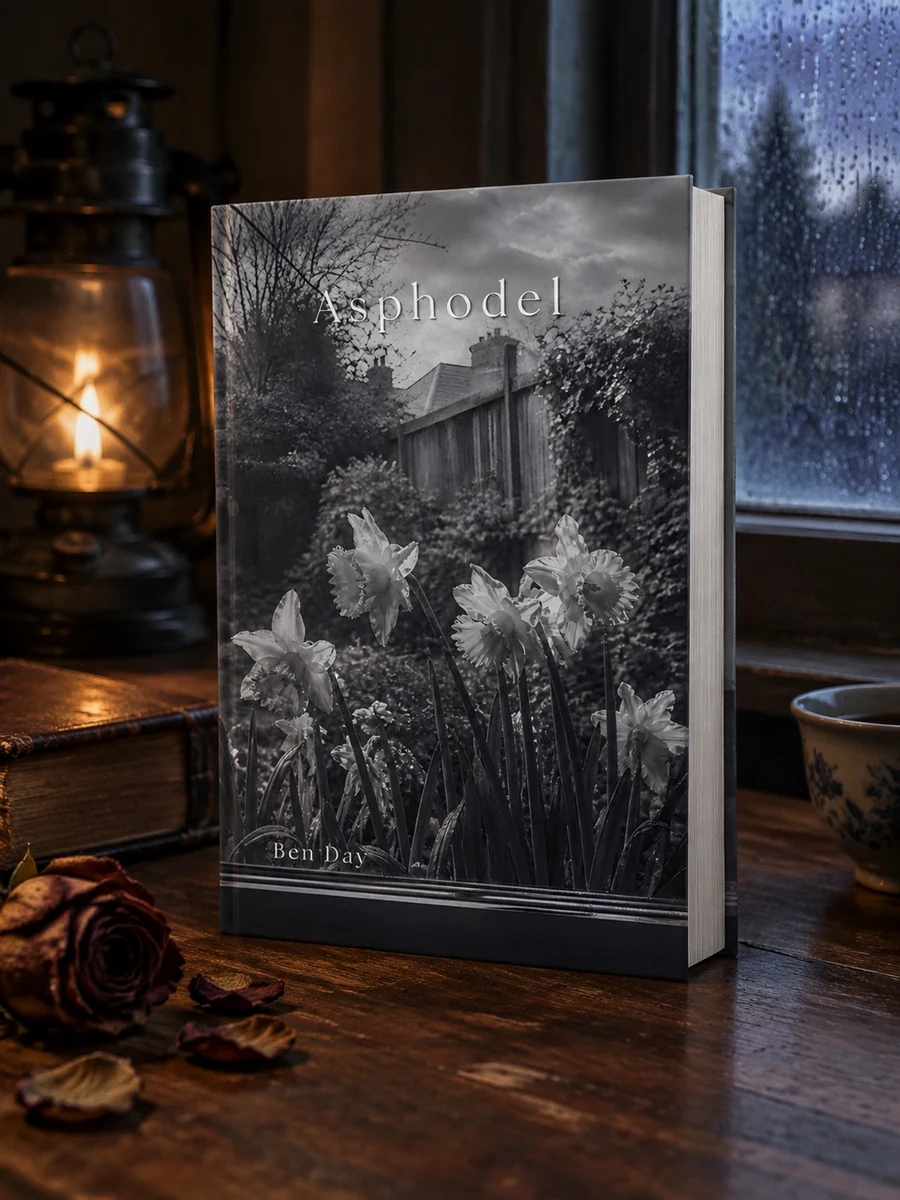
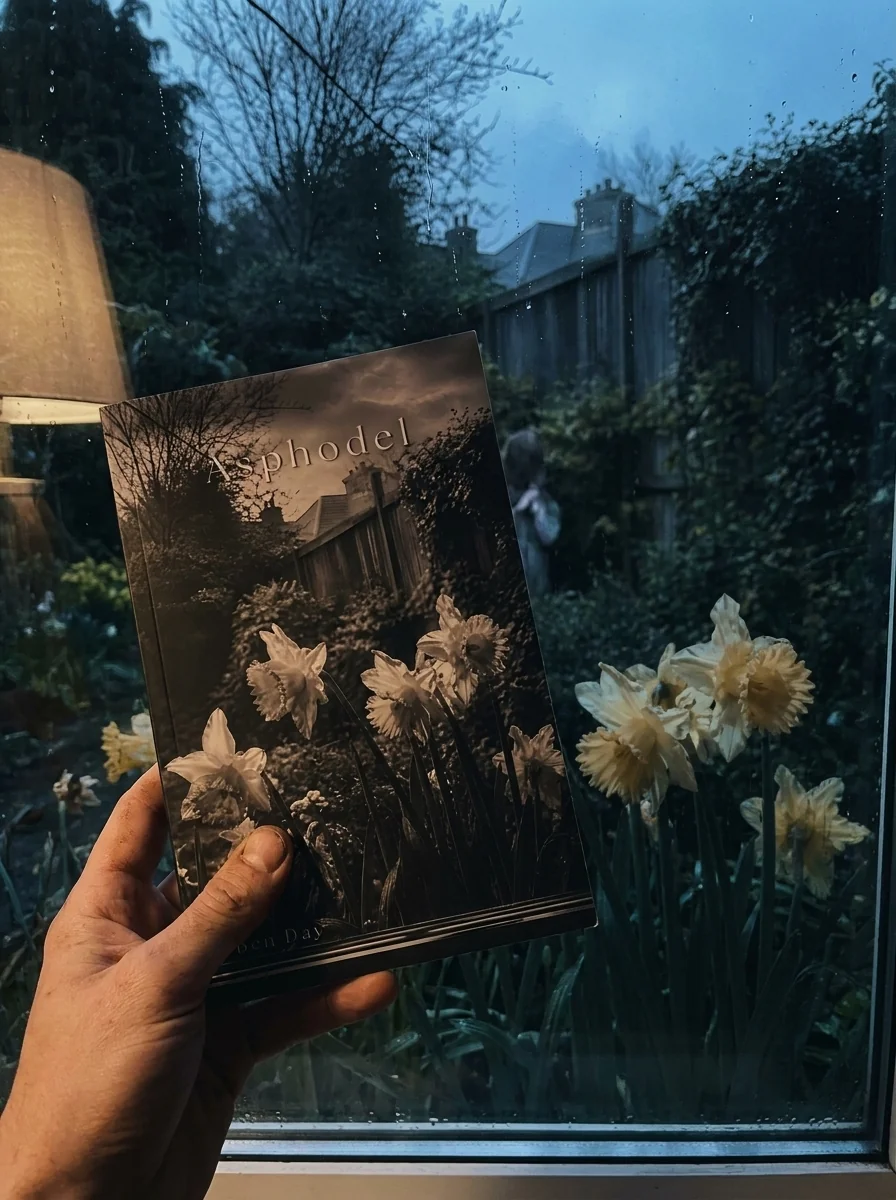
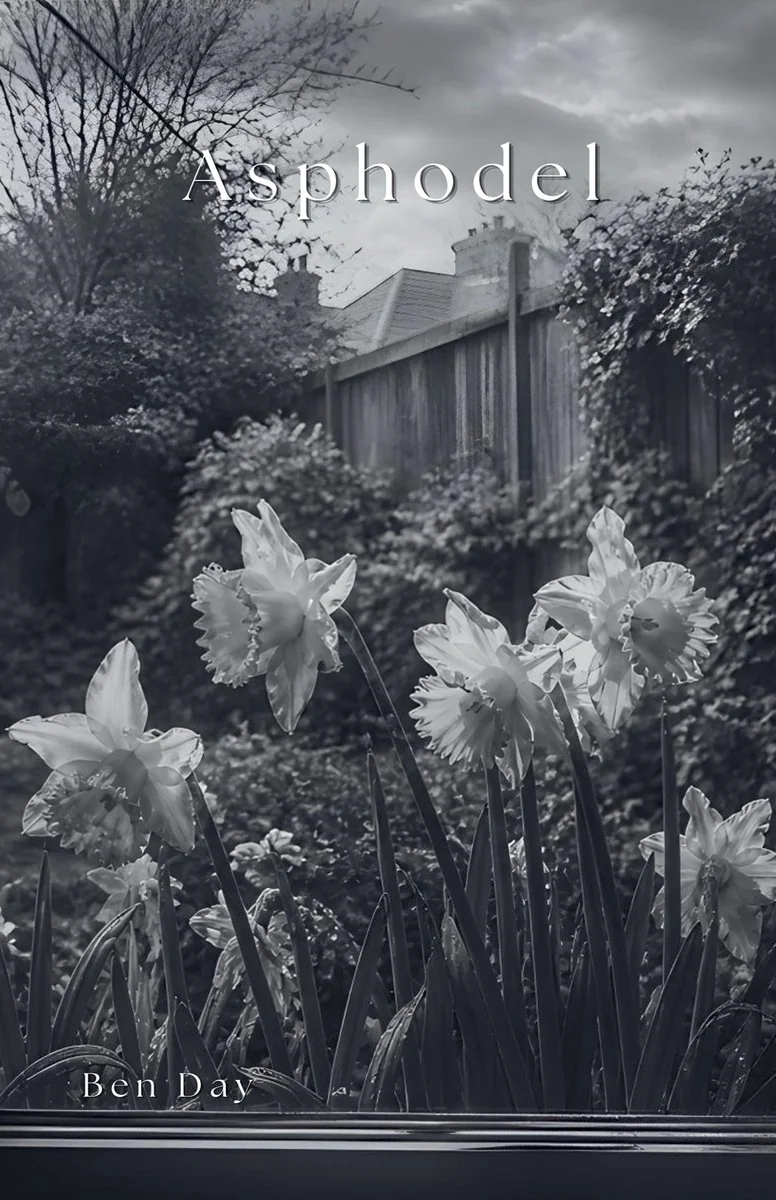
Asphodel
A woman confronts her buried self through silent garden figures in this mythic horror novelette.
Anne Cross lives in isolation after years of making other people smaller. Her quiet existence is disrupted when strange flowers appear in her garden, accompanied by a motionless figure. This entity represents the part of Anne she suppressed long ago. The narrative tracks her internal struggle as she realizes this hidden self has returned to claim its place. Day uses the imagery of growth and decay to mirror Anne’s psychological state. The story does not offer escape but rather forces an unavoidable reckoning with past actions. The structure is linear, moving from discovery to confrontation within a single sitting. The tone remains unsettling throughout, avoiding traditional horror tropes in favor of internal dread.
Asphodel emerges from the tradition of American gothic fiction, where domestic spaces become sites of supernatural horror. Ben Day writes within the contemporary landscape of psychological horror, focusing on internal decay rather than external monsters. The novelette format allows for intense, concentrated storytelling that prioritizes mood and character study over plot complexity.


📝 Description: Asphodel
💎 Our verdict on Asphodel
📖 Why choose it
Why this book is worth reading
Readers seeking a slow-burn psychological horror experience will find Asphodel deeply rewarding for its stark examination of identity and consequence. It appeals to those who appreciate mythic retellings that eschew fast-paced action or explicit violence in favor of internal dread. The book is ideal for individuals interested in the horror of recognition, offering a focused exploration of self-confrontation through minimal dialogue and atmospheric description. Those who enjoy the unsettling tone of gothic traditions without relying on gore will gain from this one-sitting read. It suits audiences looking for a narrative that mirrors psychological states through imagery of growth and decay, providing a quiet descent into the horror of facing one's buried past.
⭐ Reader reviews
Reader rating
Ben Day crafts Asphodel as a psychologically precise novelette that examines the weight of suppressed identity through a mythic lens. The work excels in its use of atmospheric description to build tension, utilizing the imagery of pale flowers and silent figures to mirror Anne’s internal struggle. By avoiding traditional horror tropes and gore, Day creates an unsettling tone that lingers long after the final page. The linear structure effectively tracks the protagonist's realization that her buried self has returned to claim its place. This approach suits readers who appreciate deliberate pacing and the horror of recognition over action. It is a focused, intense exploration of consequence, offering a stark look at how past actions define present isolation.
📖 Read on the blog
✍️ More books by this author Ben Day



🏛 Books from this publisher Ben Day
You might also like
See more →



Have a question about this item?
Ask about the edition, condition, delivery or anything else — we reply by email or phone, usually within a day.
