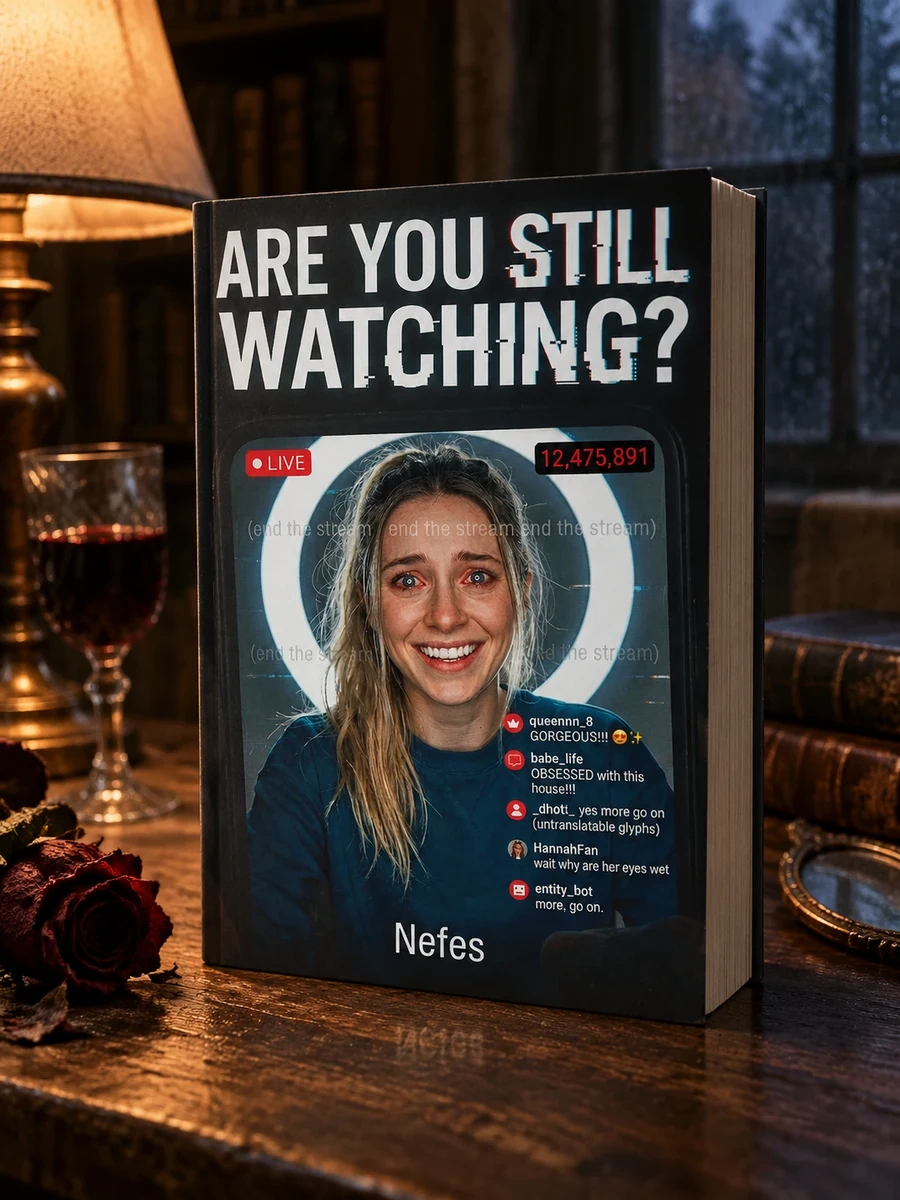
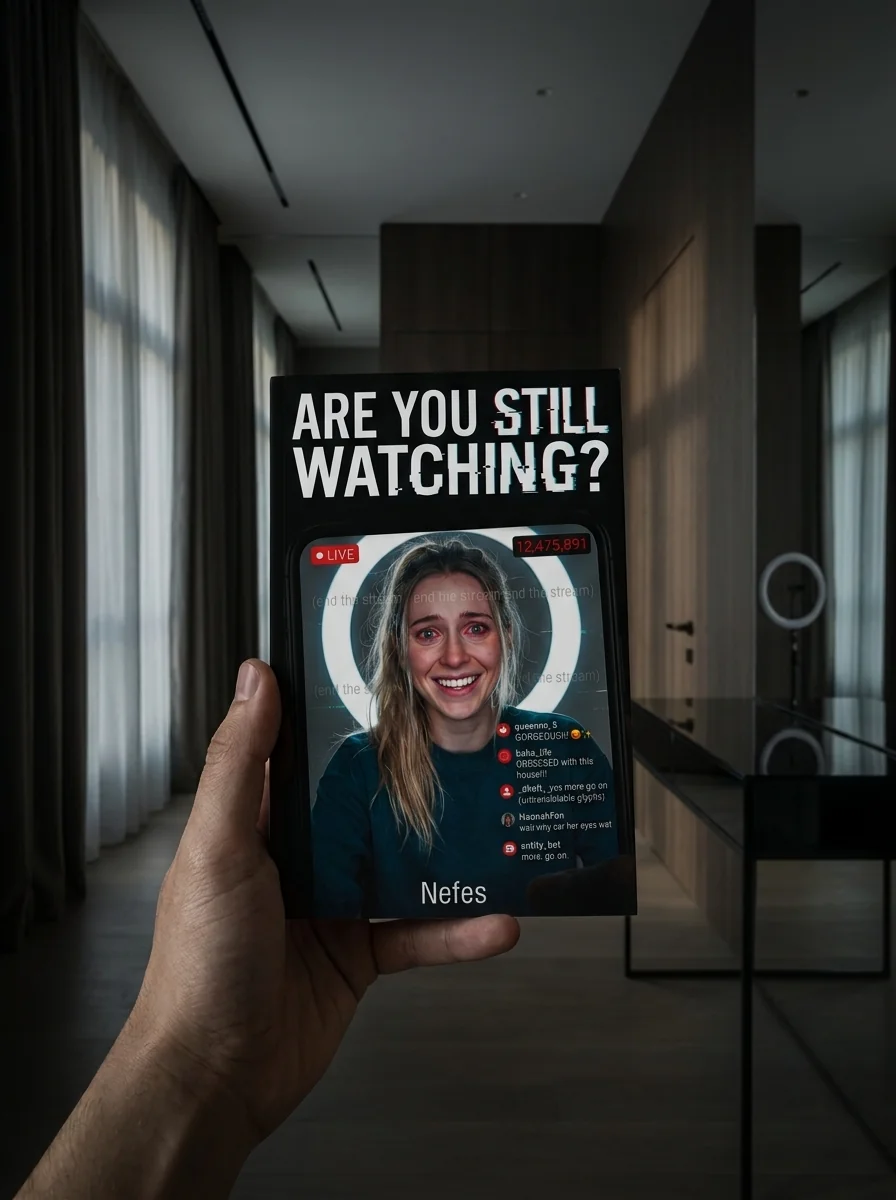
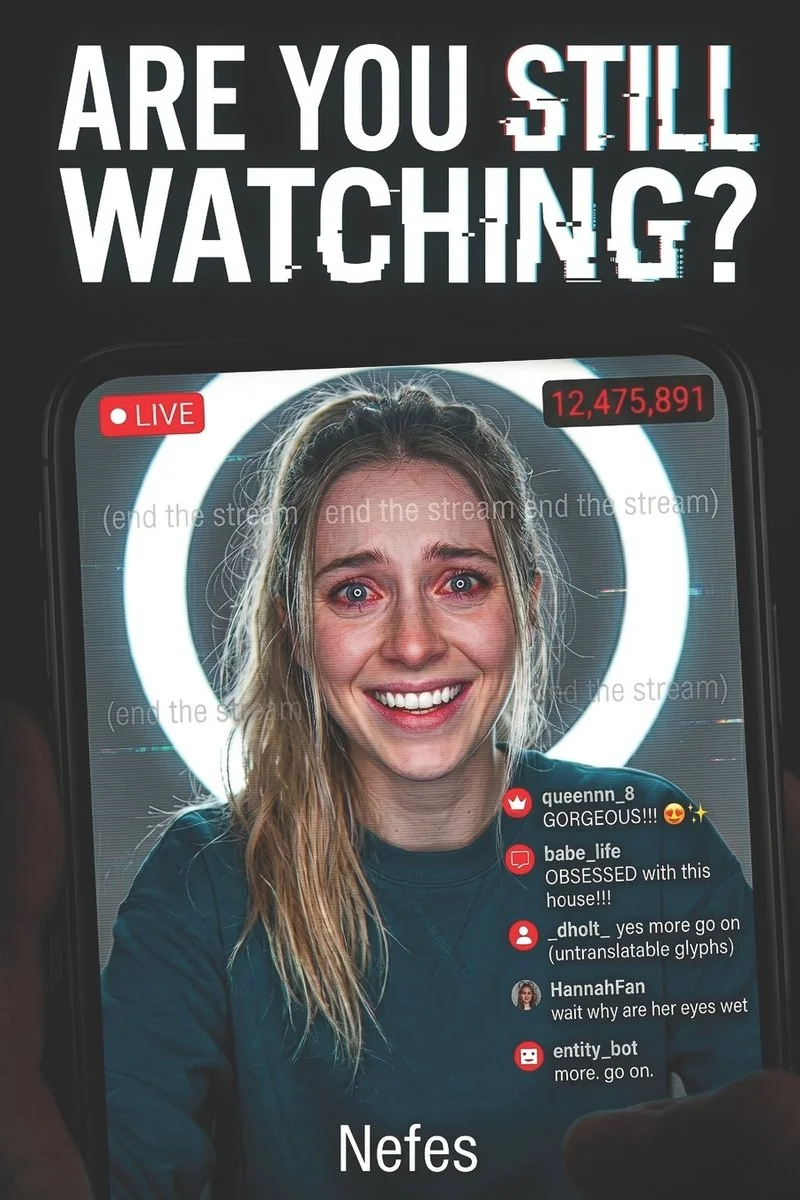
Are you still watching?
A streamer discovers a forbidden hallway in a virtual tour that reveals her erased past.
The novella follows Halley, a content creator who tours luxury homes for half a million viewers. During a Wednesday morning broadcast, she enters a freshly cleaned house that hides an extra corridor not shown on any blueprint. This space forces her to confront the sister and identity she left behind six years ago when she rebranded her channel. The narrative tracks her dissociation as the online audience stops addressing her by her current name. The story does not offer escape; it loops back to the question of whether she is still watching, emphasizing the inescapable nature of her past actions and the weight of public scrutiny on personal grief.
This 2026 independent publication engages with contemporary anxieties surrounding live-streaming culture and parasocial relationships. It reflects modern fears about digital permanence and the loss of self in online spaces, drawing on gothic traditions of haunted houses to explore internal psychological fractures rather than external supernatural threats.


📝 Description: Are you still watching?
💎 Our verdict on Are you still watching?
📖 Why choose it
Why this book is worth reading
Readers interested in the intersection of psychological trauma and digital fame will find this novella compelling. It offers a chilling exploration of how public consumption can distort personal grief, making it ideal for those who appreciate narratives where the horror stems from internal dissociation rather than external monsters. The book suits fans of modern gothic fiction who enjoy seeing traditional dread adapted to streaming culture, providing a unique perspective on the weight of erased identities and the inescapable nature of one's past.
⭐ Reader reviews
Reader rating
Nefes crafts a tense atmosphere by blending the mundane mechanics of live streaming with supernatural dread, creating a narrative that feels both immediate and timeless. The portrayal of Halley’s dissociation is particularly effective, illustrating how parasocial obsession can accelerate mental unraveling. This work best suits readers who enjoy psychological horror that critiques digital culture without sacrificing emotional depth. While it avoids traditional jump scares, its persistent inquiry into identity and grief provides a lingering sense of unease. It is a sophisticated entry for those seeking mature themes and complex examinations of the dark side of online existence.
📖 Read on the blog
🏛 Books from this publisher Independently Published








You might also like
See more →
Have a question about this item?
Ask about the edition, condition, delivery or anything else — we reply by email or phone, usually within a day.
