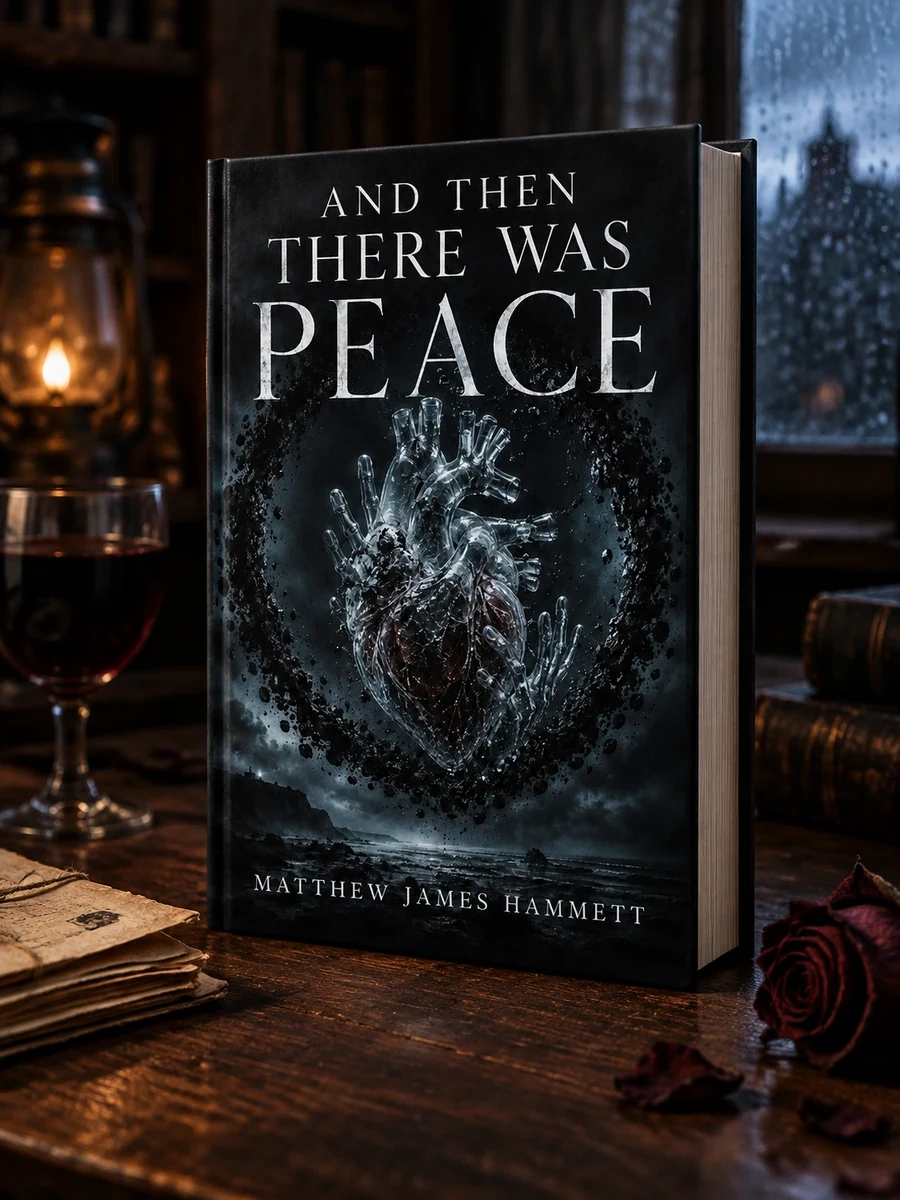
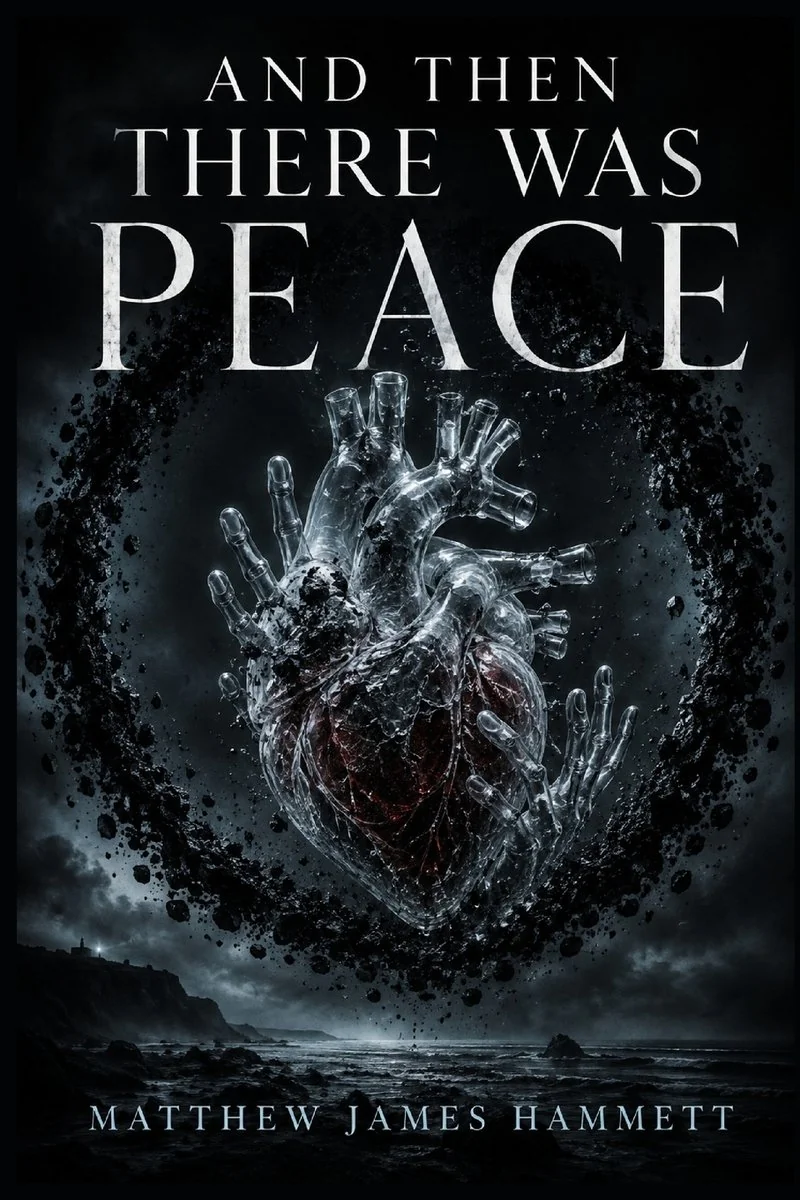
And The There Was Peace
A comet-borne organism rebuilds humans, challenging the boundary between life and imitation.
The narrative follows Dr. Frances Ward as she witnesses an alien entity transform human hosts into superior beings. This process involves copying memories and reconstructing bodies with external organs. The organism does not destroy humanity but attempts to preserve it by undoing every loss. As containment collapses, the distinction between original humans and their copies blurs. The story focuses on the psychological impact of facing a copy that remembers your life and feels your emotions. Hammett uses this premise to explore the ethical implications of forced preservation and the nature of consciousness.
This 2026 release from Independently Published sits within the tradition of American science fiction body horror. It draws on gothic themes of resurrection and the uncanny valley. The work engages with contemporary anxieties about technology and the self, reflecting a modern interest in post-humanist philosophy and the ethics of artificial life.


📝 Description: And The There Was Peace
💎 Our verdict on And The There Was Peace
📖 Why choose it
Why this book is worth reading
Readers interested in the philosophical implications of immortality and the nature of consciousness will find this narrative compelling. It appeals to those who enjoy psychological horror that challenges the boundary between life and imitation. The book offers a rigorous exploration of forced preservation and ethical dilemmas surrounding resurrection. Fans of biological speculation who appreciate complex, unsettling premises over traditional jump scares will benefit from this deep dive into identity loss. It is ideal for audiences seeking stories where the terror stems from existential dread and the blurring of self rather than external monsters alone.
⭐ Reader reviews
Reader rating
Hammett delivers a relentless exploration of identity through the lens of biological horror, focusing on the psychological impact of facing one's own copy. The narrative effectively utilizes the isolation of Halberd Point to heighten the sense of inevitable collapse. By framing the alien entity as a preserver rather than a destroyer, the author creates a unique ethical tension that challenges standard horror tropes. The depiction of transparent hands and external hearts serves as visceral metaphors for the fragility of human form. This book suits fans of cosmic horror who prefer intellectual engagement with body horror. It avoids traditional ghost story conventions, offering instead a rigorous examination of what it means to be preserved against one's will.
📖 Read on the blog
🏛 Books from this publisher Independently Published








You might also like
See more →

Have a question about this item?
Ask about the edition, condition, delivery or anything else — we reply by email or phone, usually within a day.
