
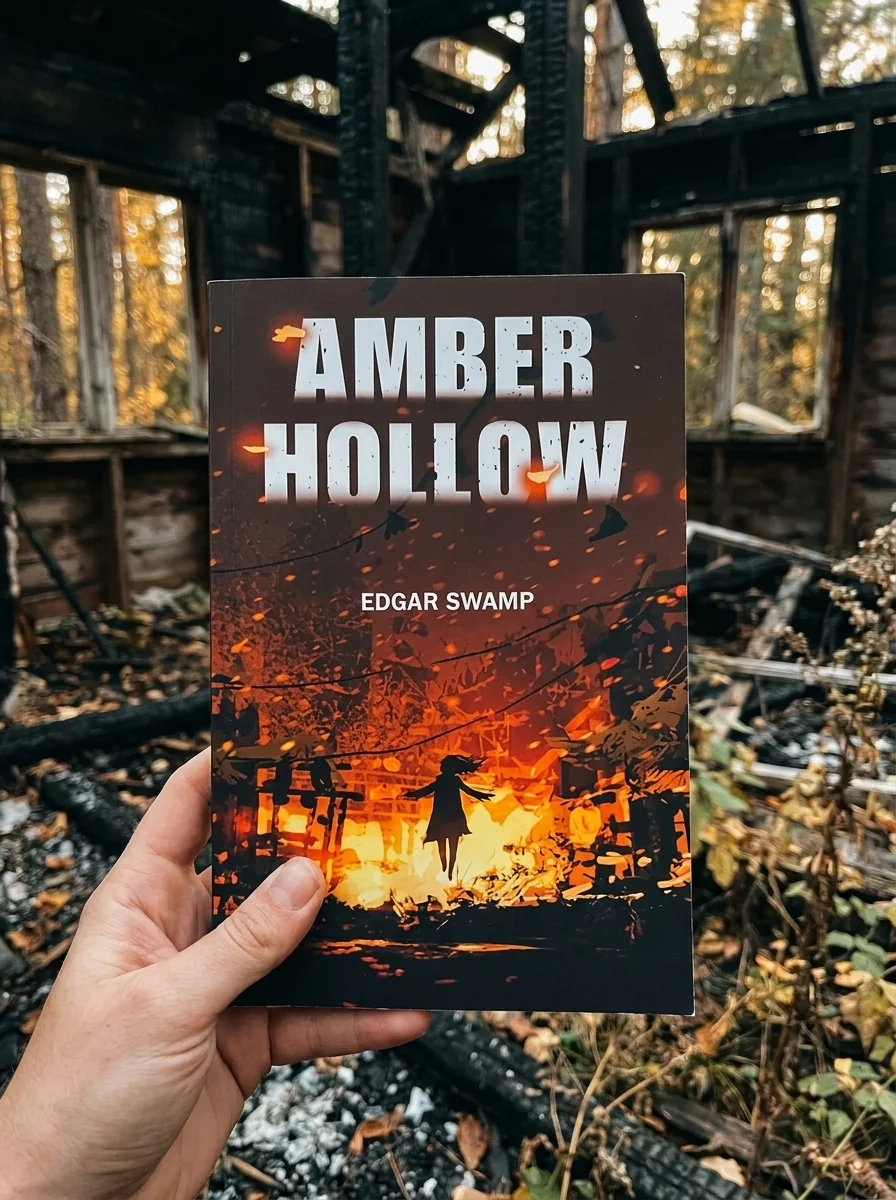
Amber Hollow
A mystery about five survivors hiding secrets after a Wisconsin village fire.
The narrative focuses on the aftermath of a catastrophic fire in 1991 that left only five people alive from a population of six hundred. These survivors provide conflicting details about the event, all linking back to Anthony Guntram. The book explores the mysterious culture of Amber Hollow where reality is unstable. Swamp uses these contradictions to build tension rather than relying on supernatural elements alone. The story examines how isolation and trauma warp memory and truth. It does not explain the tragedy but instead focuses on the survivors' inability to agree on what happened. This approach creates a sense of unease that persists throughout the reading experience.
The story is set in an isolated Northern Wisconsin village during the early 1990s. It draws on traditions of small-town gothic horror and psychological suspense. The narrative reflects a period where community secrets were often kept close within tight-knit groups.


📝 Description: Amber Hollow
💎 Our verdict on Amber Hollow
📖 Why choose it
Why this book is worth reading
Readers who prioritize atmospheric dread over conventional plot resolution will find this narrative deeply rewarding. Those interested in the psychology of trauma and the unreliability of memory should engage with this text, as it forces an active participation in constructing truth from conflicting testimonies. It appeals to mystery enthusiasts who enjoy ambiguous endings and complex character dynamics rooted in isolation. However, readers seeking linear plots or clear explanations of the central tragedy may find the persistent ambiguity frustrating. The book offers a unique exploration of how silence and secrecy warp reality, making it essential for fans of psychological tension and unreliable narration who are willing to sit with discomfort rather than demand closure.
⭐ Reader reviews
Reader rating
Edgar Swamp crafts a compelling study of communal silence and hidden truths through the lens of a catastrophic village fire. By juxtaposing survivor memories against official records, he exposes how sanity dissolves at the town line, creating a pervasive sense of unease without relying on supernatural elements. The narrative structure effectively drives tension through contradiction, making Amber Hollow itself feel like a character enforcing its own will. This approach suits audiences interested in small-town secrets and psychological horror over traditional jump scares. While the lack of resolution may alienate some, it successfully forces readers to question the nature of truth. The book stands as a strong example of atmospheric dread, offering intellectual stimulation alongside emotional discomfort for those who appreciate complex, ambiguous storytelling.
📖 Read on the blog
✍️ More books by this author Edgar Swamp



You might also like
See more →




Have a question about this item?
Ask about the edition, condition, delivery or anything else — we reply by email or phone, usually within a day.
