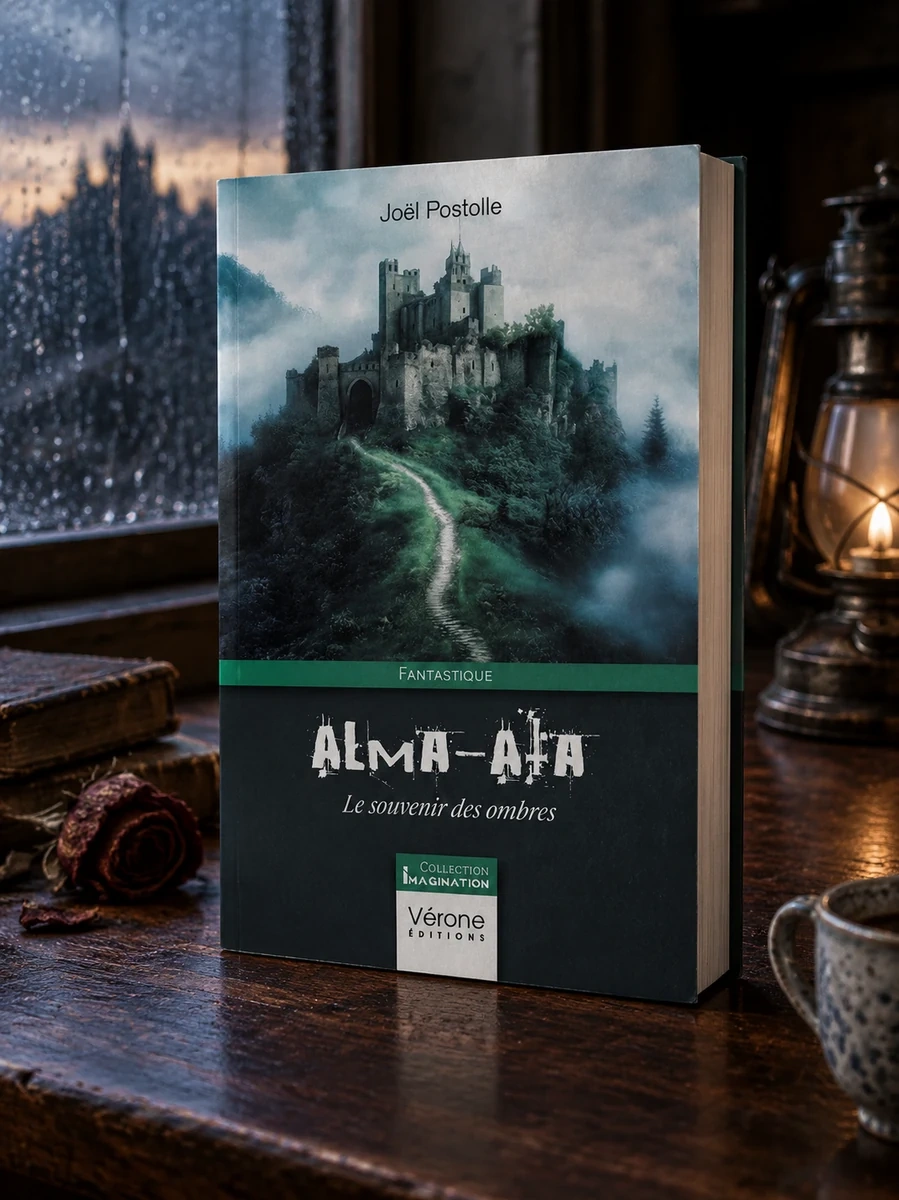
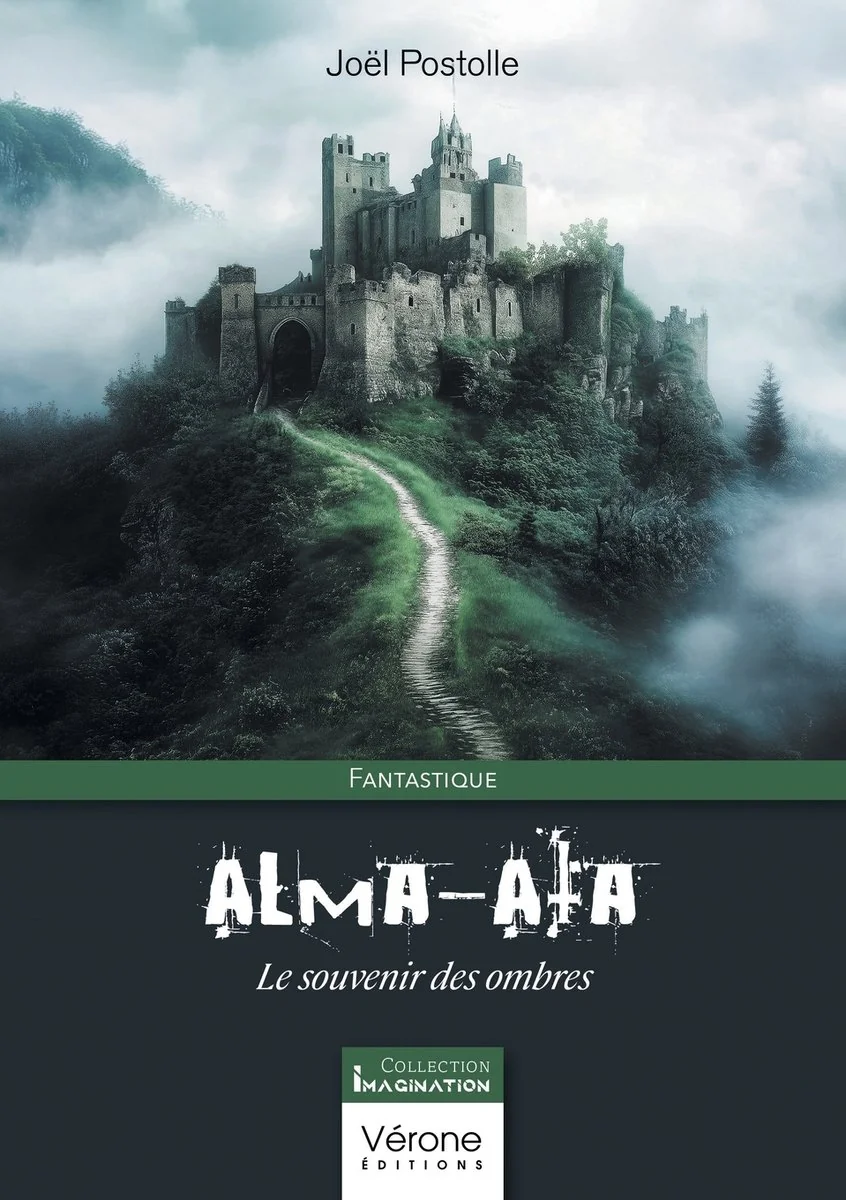
Alma-Ata: Le souvenir des ombres
A mysterious woman arrives at an isolated hamlet, triggering supernatural terror amidst the onset of war.
Postolle constructs a chilling atmosphere where the boundary between human cruelty and supernatural evil blurs. The arrival of Helena acts as a catalyst, exposing the fragility of the hamlet’s social order. As the strange mist envelops the chateau ruins, the community faces threats that are both political and paranormal. Olga’s dialogue with her son Paul highlights the theme of humanity sliding toward barbarism. The setting in August 1939 provides a backdrop of impending global conflict, which amplifies the local horror. Postolle uses the isolated environment to intensify the sense of dread. The narrative does not rely on complex plot twists but rather on the gradual erosion of safety and sanity within the closed community.
This 2025 release by Verone Editions follows Postolle’s previous work. The author lives in Saou, Drome. The story is set in August 1939 at the hamlet of Noyas and the ruins of Chateau de Noyas.


📝 Description: Alma-Ata: Le souvenir des ombres
💎 Our verdict on Alma-Ata: Le souvenir des ombres
📖 Why choose it
Why this book is worth reading
Readers who appreciate atmospheric horror rooted in specific historical moments and rural isolation will find this book compelling. Joel Postolle crafts a chilling environment where the boundary between human cruelty and supernatural evil blurs, offering a slow-burn narrative that prioritizes tension over action. Those weary of fast-paced urban thrillers will likely enjoy the gradual erosion of safety within a closed community. The story serves as a poignant exploration of humanity sliding toward barbarism, mirrored by bloodthirsty entities rising from the night. It appeals to those who favor psychological depth and gothic imagery over explicit gore, providing a unique lens through which to view the descent into chaos during the onset of war.
⭐ Reader reviews
Reader rating
Alma-Ata: Le souvenir des ombres excels in constructing a chilling atmosphere where supernatural terror intertwines with the political dread of August 1939. Postolle effectively uses the isolated hamlet setting to intensify feelings of claustrophobia and impending doom, making the encroaching mist feel like an active antagonist. The narrative does not rely on complex twists but rather on the steady unraveling of sanity within a fragile social order. This approach suits readers who enjoy psychological horror and gothic traditions that emphasize mood over plot mechanics. It is particularly strong for those interested in how global history impacts local communities, offering a nuanced look at fear without resorting to excessive violence or urban clichés.
📖 Read on the blog
🏛 Books from this publisher Verone Editions


You might also like
See more →
Have a question about this item?
Ask about the edition, condition, delivery or anything else — we reply by email or phone, usually within a day.
