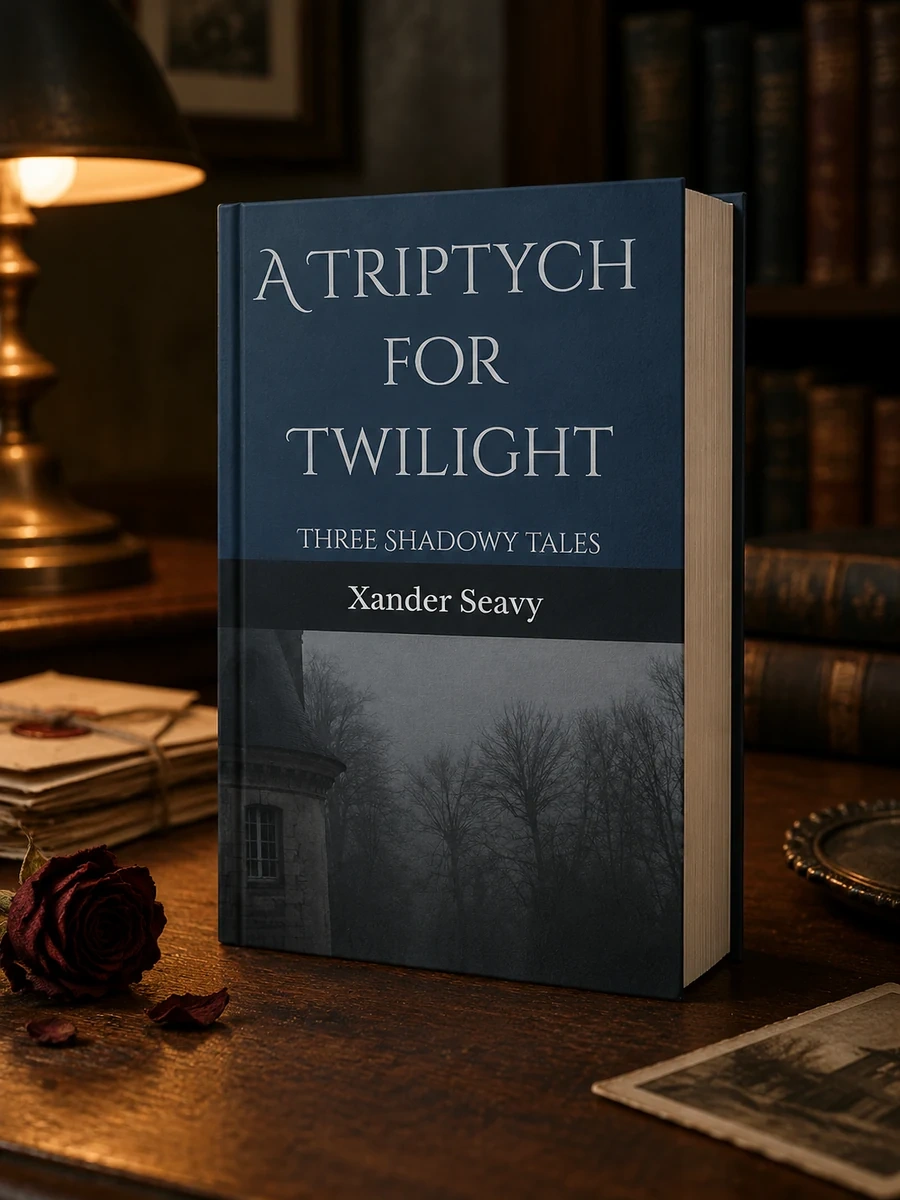
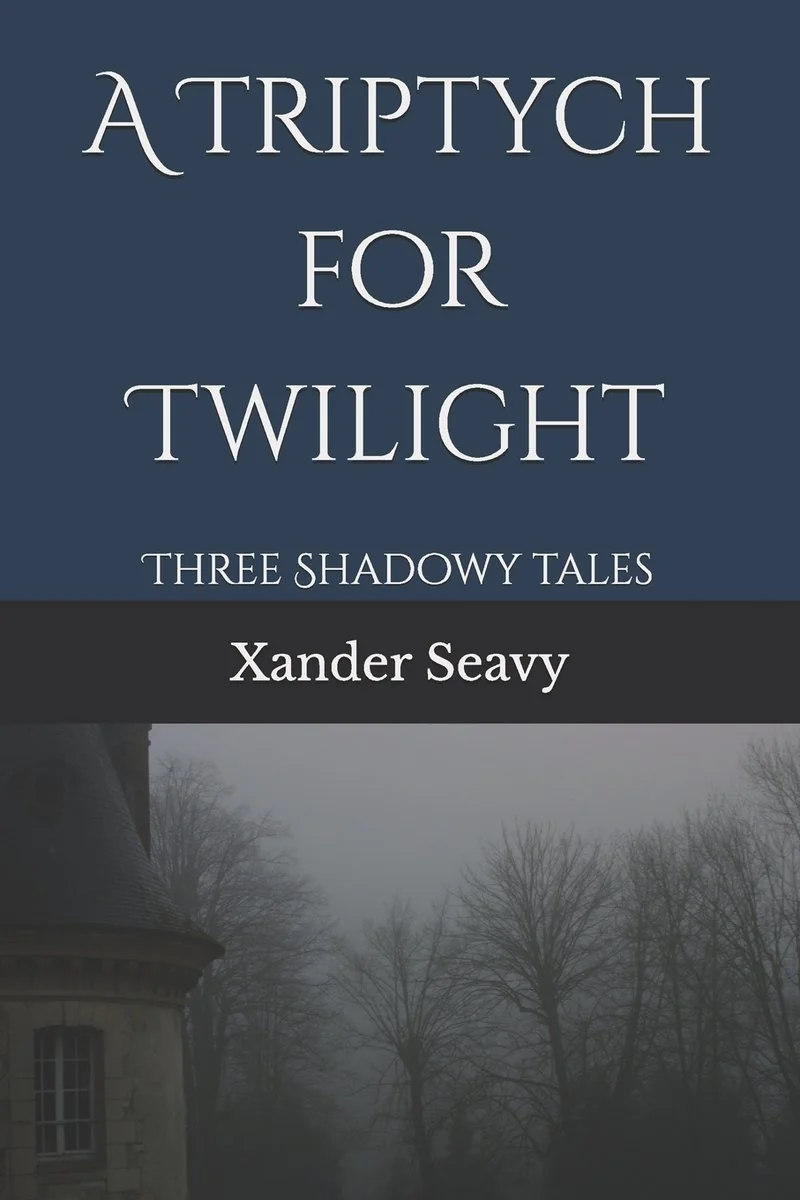
A Triptych for Twilight: Three Shadowy Tales
Three supernatural tales set in the shadowy village of Mittelwald by Xander Seavy.
Seavy constructs a narrative framework where beauty masks terror. The book examines how ordinary people interact with the unknown. A peasant girl faces a spectral bargain. A laborer meets a glacier-borne legend. A socialite discovers dark culinary secrets. The stories use folklore to explore fear of the unfamiliar and the cost of desire.
The book draws on gothic and supernatural fiction traditions, situating its horror in a rural, scenic setting. It utilizes folklore elements to create tension between natural beauty and chilling terror, appealing to fans of atmospheric dread rather than explicit gore.


📝 Description: A Triptych for Twilight: Three Shadowy Tales
💎 Our verdict on A Triptych for Twilight: Three Shadowy Tales
📖 Why choose it
Why this book is worth reading
This collection is ideal for readers who appreciate slow-burning, atmospheric horror over visceral shock or rapid pacing. Those drawn to the intersection of scenic beauty and hidden dread will find Seavy’s Mittelwald a compelling setting. The book suits fans of traditional folklore motifs and gothic fiction who enjoy exploring the cost of desire through supernatural encounters. It is particularly recommended for those interested in how ordinary individuals confront the unknown, whether through spectral bargains, ancient legends, or dark culinary secrets. By focusing on rural settings and psychological unease rather than urban thrills, it offers a refined experience for connoisseurs of eerie, mood-driven narratives that linger long after reading.
⭐ Reader reviews
Reader rating
Seavy effectively constructs a triptych where scenic beauty masks underlying terror, appealing to enthusiasts of gothic fiction. The narrative framework successfully examines ordinary people interacting with the unknown, utilizing folklore to explore fear of the unfamiliar. The first tale’s ambiguous spectral bargain and the second’s tension between science and legend provide varied entry points into the eerie. While the final chapter introduces dark culinary secrets, the collection remains grounded in traditional motifs rather than modern psychological horror. It suits readers seeking atmospheric depth over fast-paced action. Those preferring urban-based thrillers may find it too slow, but fans of rural gothic will appreciate its consistent tone and exploration of mundane versus eerie boundaries.
📖 Read on the blog
🏛 Books from this publisher Independently Published








You might also like
See more →

Have a question about this item?
Ask about the edition, condition, delivery or anything else — we reply by email or phone, usually within a day.
