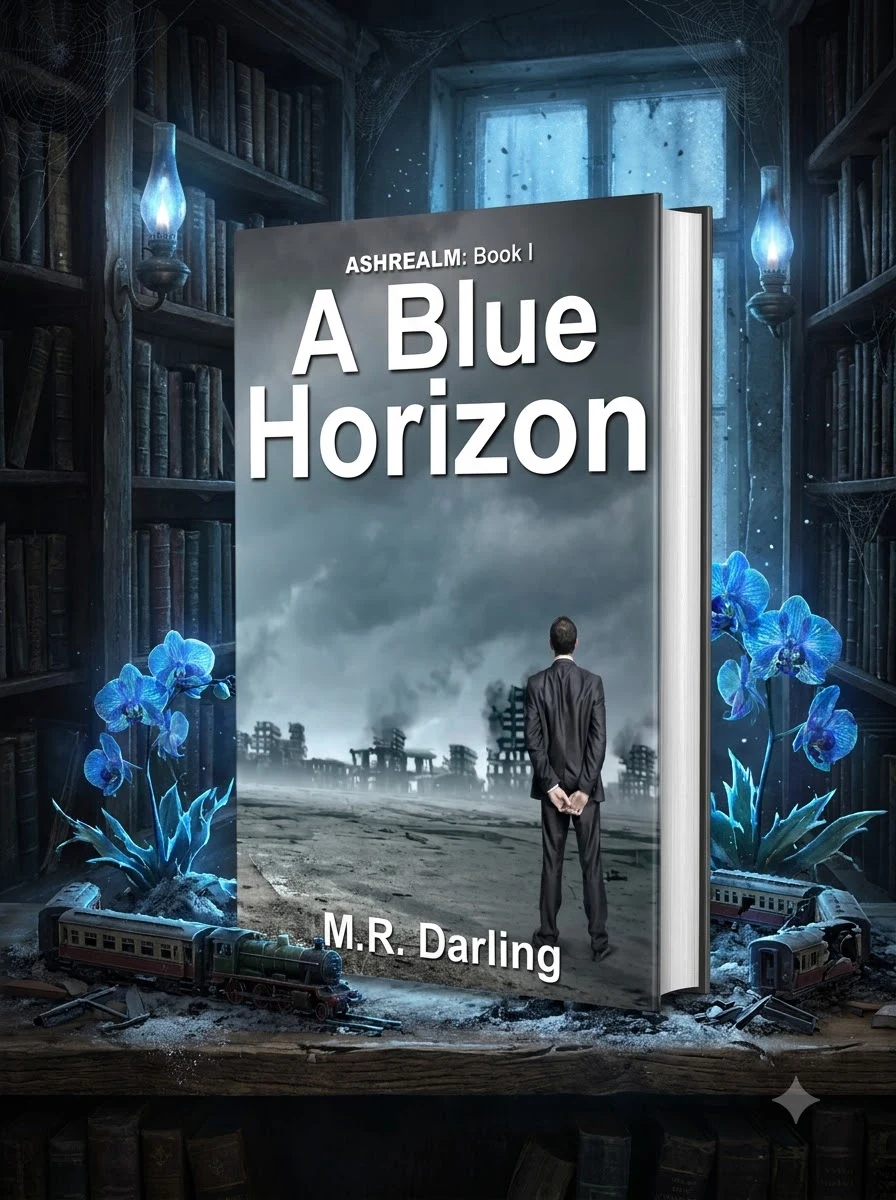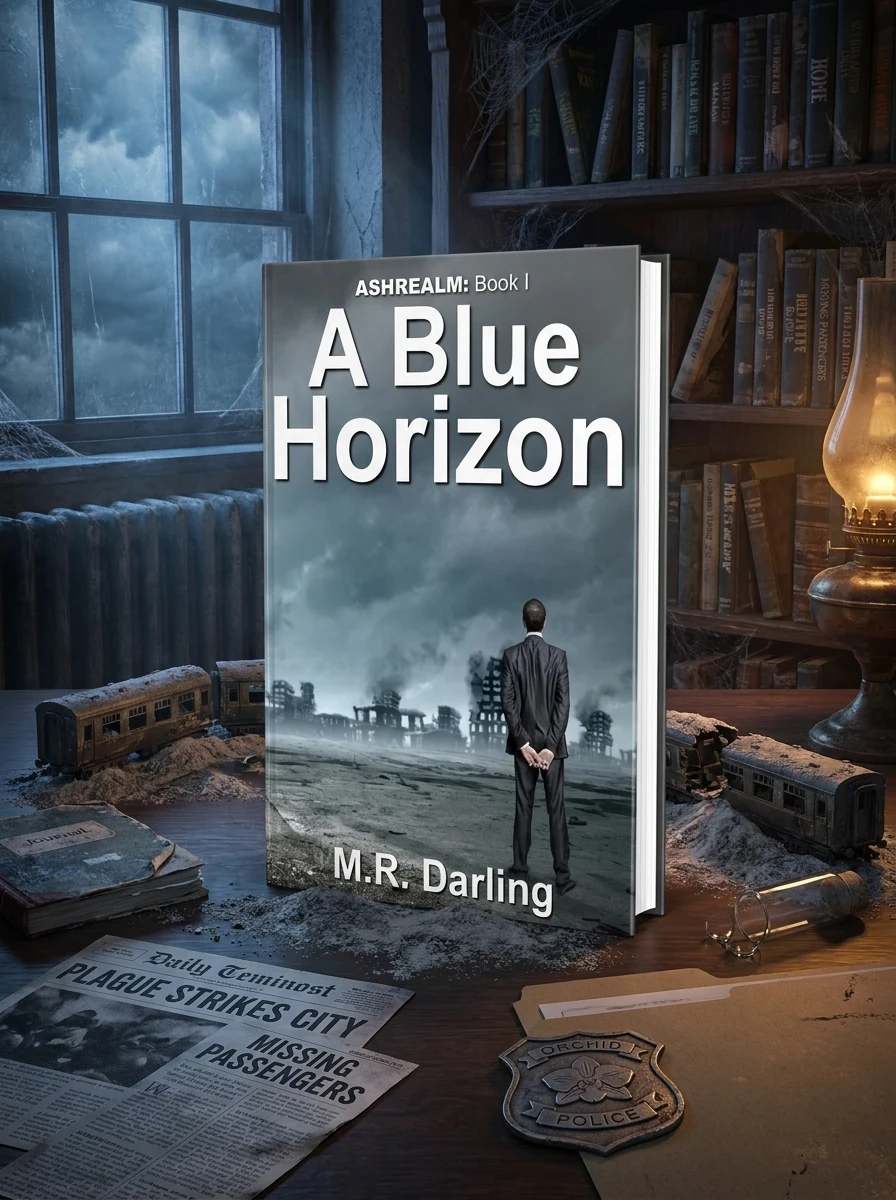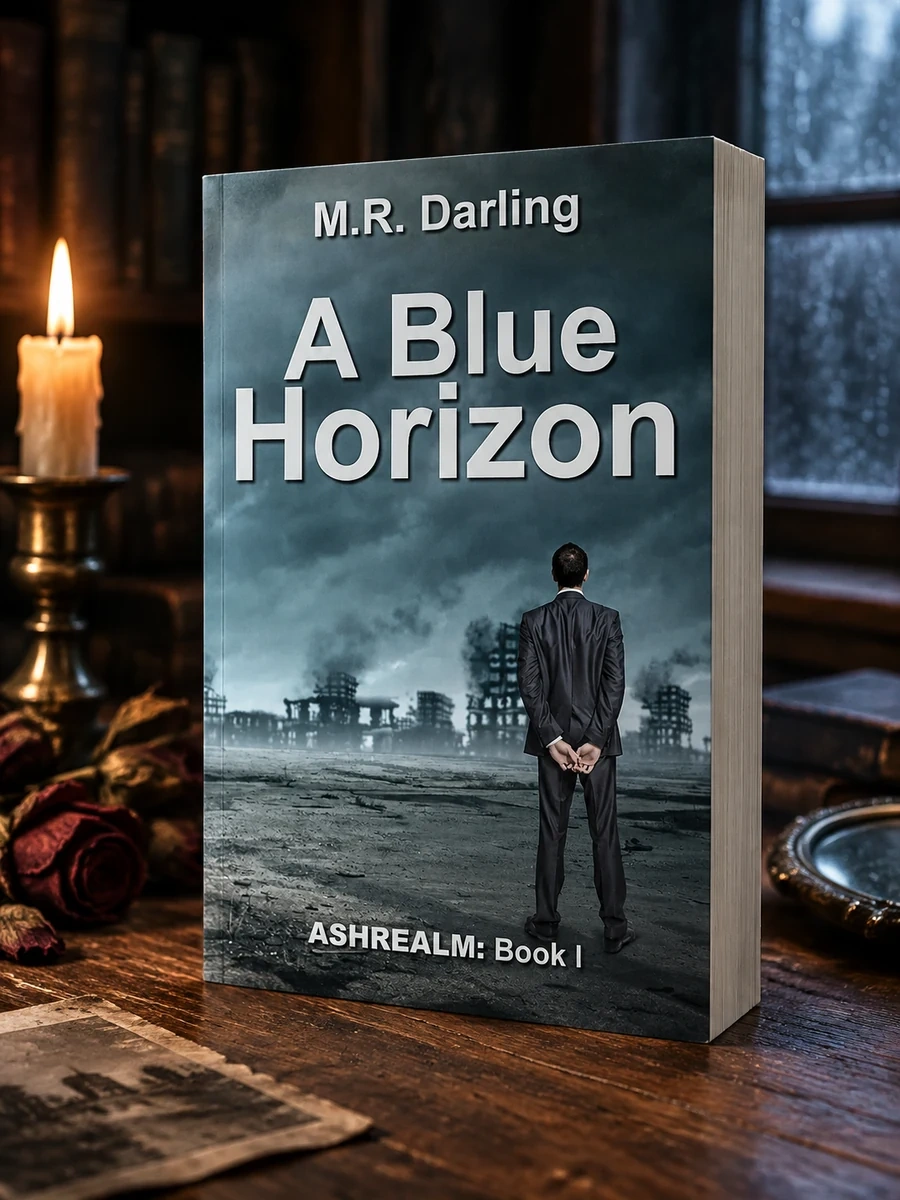
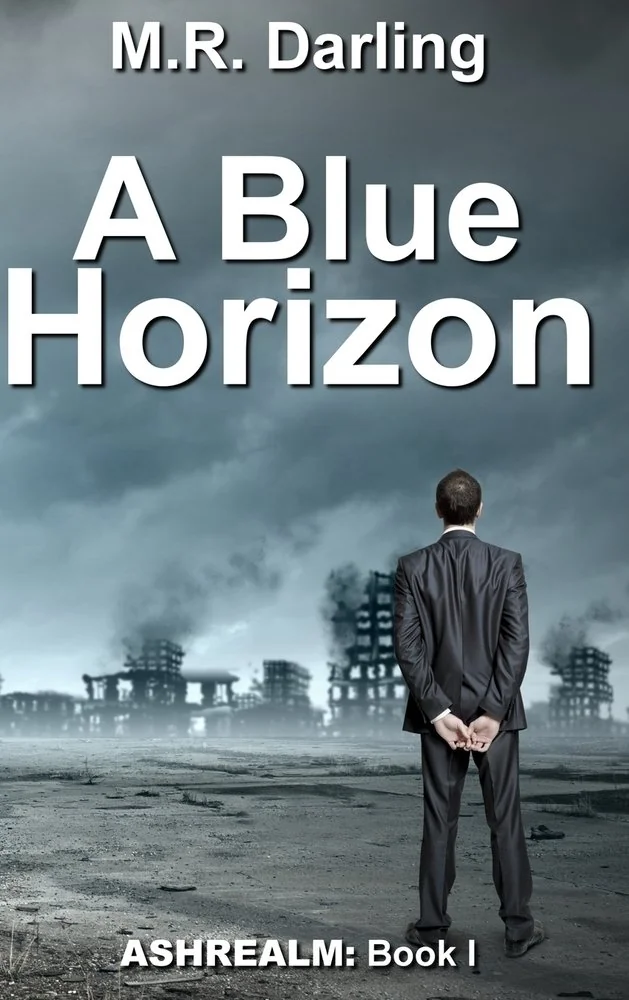
A Blue Horizon
A covert military group investigates a plague turning a city to ash.
The narrative focuses on Orchid, a covert military organization with governmental ties, responding to a catastrophic event. A plague strikes a city, slowly turning everything to ash. Two destroyed trains and missing passengers suggest a terrorist attack and a new biological weapon. Darling contrasts this official view with the reality known by a lone survivor. The story examines the gap between public perception and hidden truth. It utilizes the framework of a military investigation to explore supernatural horror. The plot does not rely on complex political maneuvering but rather on the immediate mystery of the ash plague. Readers looking for detailed character backstories may find the scope limited. The text prioritizes the atmospheric dread of the turning city over extensive dialogue or secondary plots.
Published in 2016 by M.R. Darling, this work sits within contemporary horror fiction. It draws on the tradition of supernatural fiction and gothic themes involving biological catastrophe and institutional secrecy.


📝 Description: A Blue Horizon
💎 Our verdict on A Blue Horizon
📖 Why choose it
Why this book is worth reading
Readers seeking atmospheric dread over complex political maneuvering will find this narrative compelling. It appeals to those interested in the intersection of military investigation and supernatural horror, offering a focused exploration of isolation and hidden truths. The book is ideal for audiences who prefer immediate mystery and apocalyptic imagery over extensive character backstories or secondary plots. By prioritizing the tension between public perception and reality, it satisfies those drawn to the gap between official narratives and the terrifying unknown.
⭐ Reader reviews
Reader rating
Darling effectively constructs a mood of pervasive dread through the lens of a covert military response to an ash plague. The narrative succeeds in blending supernatural elements with investigative thriller tropes, creating a unique tone that emphasizes isolation and unseen threats. While it lacks detailed character backstories, this limitation serves its purpose by keeping the focus on the immediate aftermath of the disaster. The work is best suited for readers who enjoy cosmic horror and gothic traditions that prioritize atmosphere over extensive dialogue. It offers a potent examination of institutional secrecy without getting bogged down in long-term political fallout.