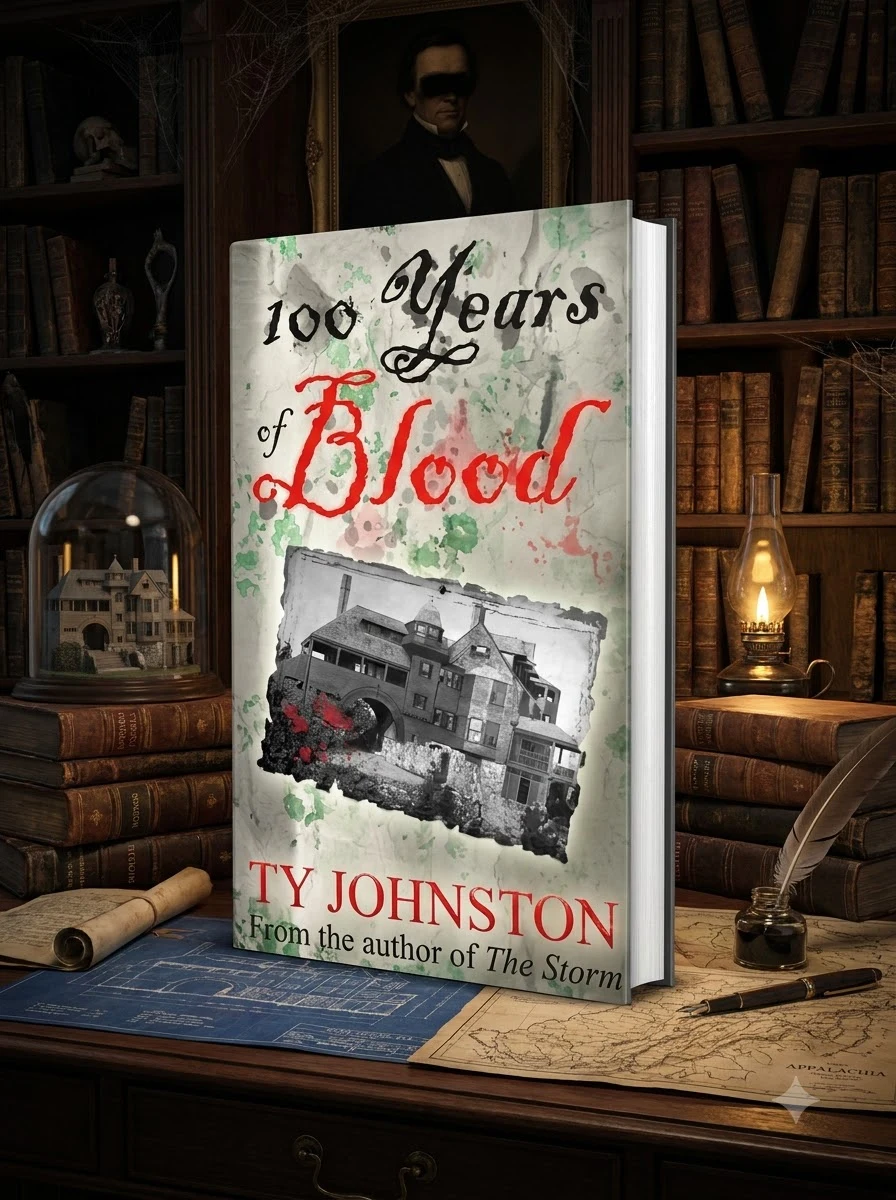
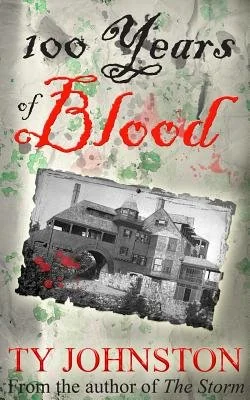
100 Years of Blood
A century-spanning gothic saga of a house and its unaging residents in Appalachia.
Johnston examines the structural and social decay of a single family home across one hundred years. The narrative moves from the initial surveying of land to the eventual dark end of the Abingdon line. It highlights the tension between physical isolation and the inevitable intrusion of society. The author uses the setting of early twentieth-century Appalachia to ground the supernatural elements in a specific time and place.
The work is set in an isolated county among the foothills of Appalachia, beginning in the early years of the twentieth century. It reflects on the decline of English nobility through the lens of Lord Richard Abingdon’s retirement and the subsequent growth of a town named after him.


📝 Description: 100 Years of Blood
💎 Our verdict on 100 Years of Blood
📖 Why choose it
Why this book is worth reading
Readers who appreciate complex, multi-generational narratives steeped in gothic atmosphere will find this text rewarding. It offers a unique exploration of how physical isolation fails to shield occupants from external societal forces and supernatural elements. The book is ideal for those who enjoy ambiguous endings that challenge perceptions of reality rather than providing clear resolutions. Those interested in the structural and social decay of aristocratic power, grounded in early twentieth-century Appalachia, will gain much from its eerie undertones. It suits readers willing to engage with a story that raises more questions than answers, inviting them to question what is real within the confines of the Abingdon estate.
⭐ Reader reviews
Reader rating
Johnston crafts a compelling century-spanning saga that effectively grounds supernatural elements in the specific time and place of early twentieth-century Appalachia. The narrative structure successfully illustrates the tension between isolation and intrusion, highlighting the inevitable decay of the Abingdon line. While the text provides more questions than answers, this ambiguity is a strength for fans of psychological horror who enjoy deciphering mysteries. The work excels in atmosphere but may frustrate readers seeking straightforward historical accounts or clear resolutions. It is best suited for those who appreciate eerie undertones and long-form family sagas where the setting itself becomes a character driving the supernatural dread.