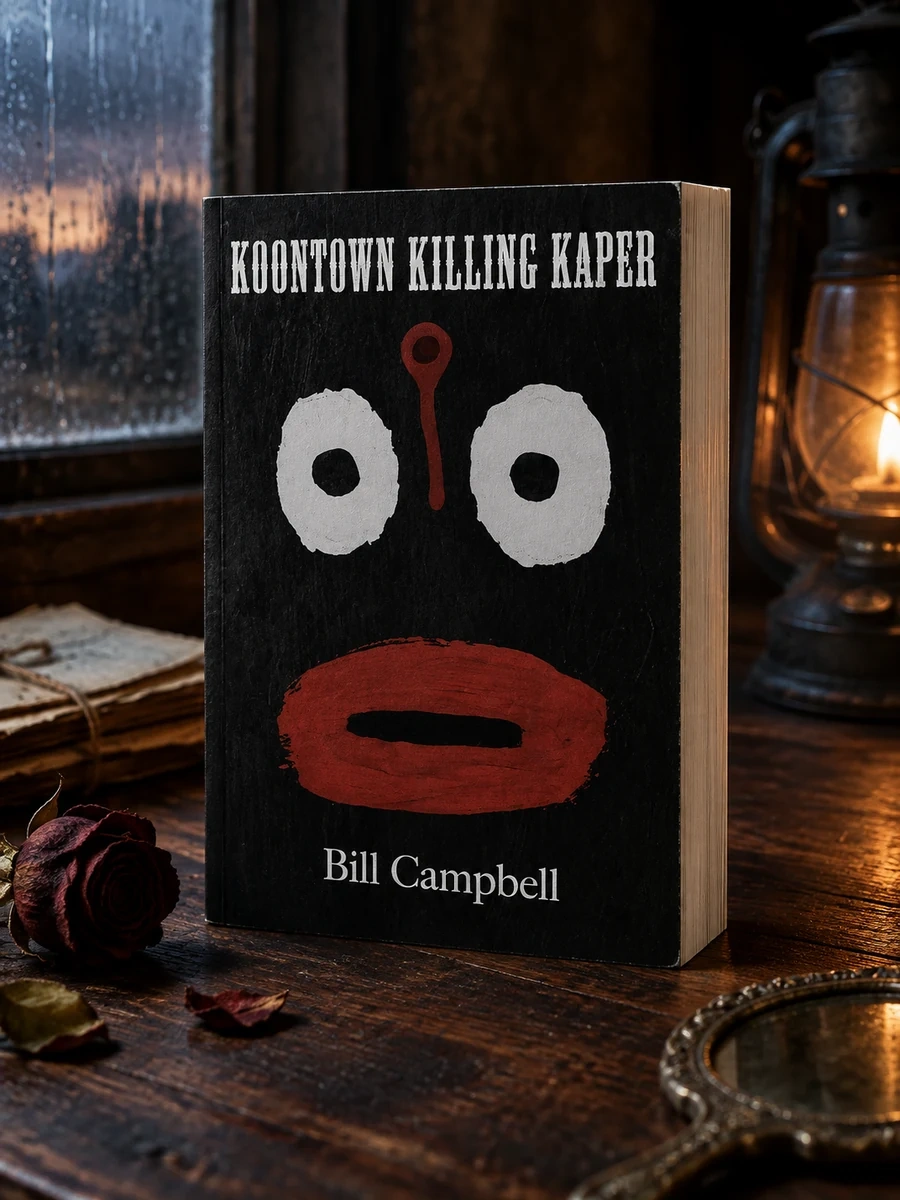

Koontown Killing Kaper (UK)
A satirical thriller where a former model investigates rapper murders blamed on vampire crack babies.
Genevieve Noire, a private eye and ex-model, tackles the Koontown murders. The victims are rappers, and the public blames supernatural entities. Campbell writes with a sharp pen to expose societal fears. The story mocks the way communities react to unexplained violence. It relies on horror tropes to make its point about modern paranoia. The tone is ironic rather than purely terrifying. This approach separates it from traditional genre fiction.
Published by Rosarium Publishing in 2013, this work sits at the intersection of horror and social satire. It reflects early twenty-first century anxieties about urban crime and media sensationalism. The text engages with contemporary debates on race and supernatural folklore in American popular culture.


📝 Description: Koontown Killing Kaper (UK)
💎 Our verdict on Koontown Killing Kaper (UK)
📖 Why choose it
Why this book is worth reading
Readers who appreciate subversive fiction and genre parody with a dark edge will find this text rewarding. It offers a gleeful evisceration of stereotypes prevalent in popular culture, appealing to those who recognize the absurdity of viral rumors and media-driven panic. The narrative provides sharp cultural commentary through an ironic lens, making it ideal for audiences interested in how communities react to unexplained violence. Those seeking straightforward police procedurals without satire may find it lacking, but fans of social critique wrapped in horror tropes will enjoy the author's unique perspective on modern paranoia.
⭐ Reader reviews
Reader rating
Campbell delivers a sharp, satirical thriller that functions as a critique of contemporary social tropes and conspiracy theories. By centering on a former supermodel turned private investigator, the narrative navigates chaotic accusations with an ironic lens. The work excels in mocking modern urban legends while drawing on horror traditions to expose societal fears. It suits readers who enjoy subversive fiction and wish to see the ridiculousness of viral rumors highlighted through a darkly humorous plot. The text does not shy away from its critical stance, offering a clear view of cultural commentary rather than traditional terror. This approach separates it from standard genre fiction, rewarding those who value sharp penmanship over straightforward scares.