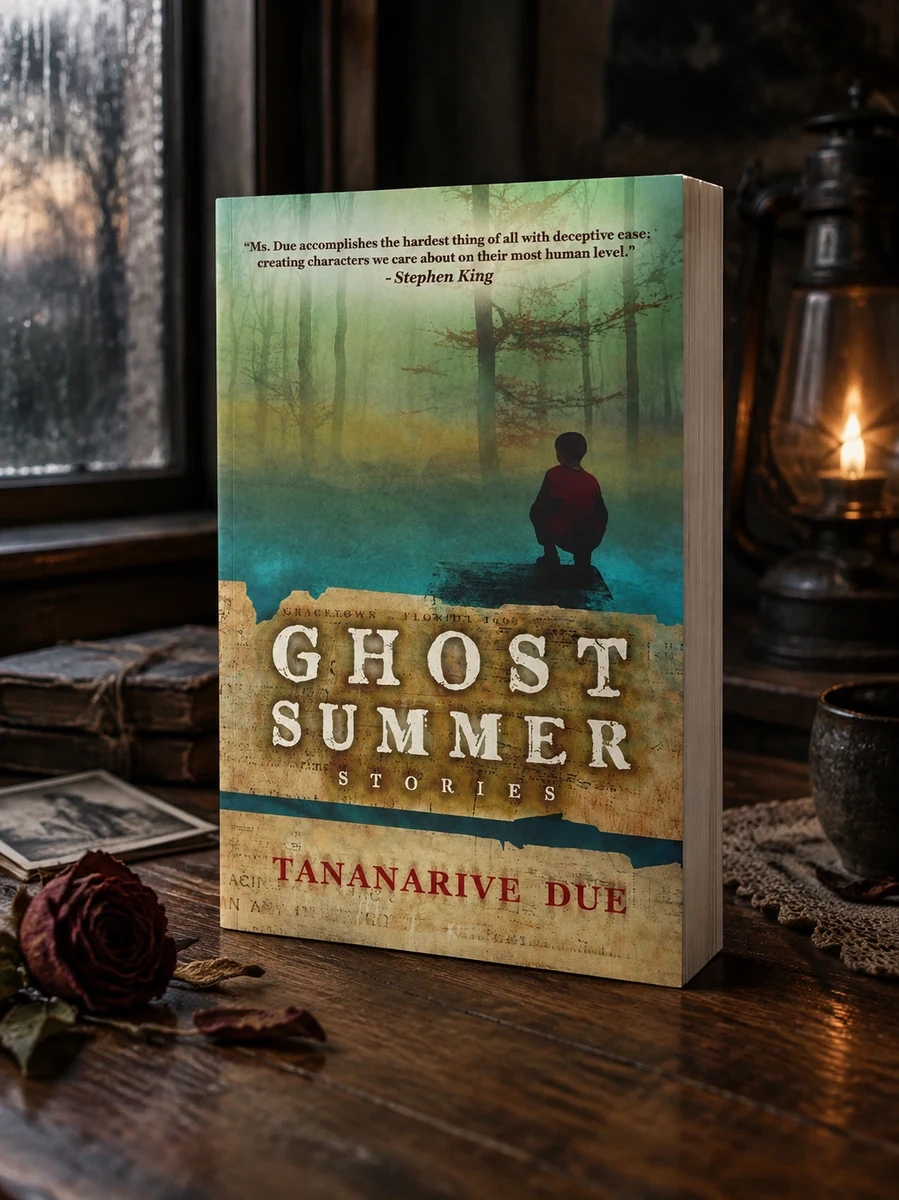

Ghost Summer: Stories
A debut collection exploring horror through empathy and speculative futures in Florida.
Due’s work challenges standard genre expectations by focusing on the human cost of supernatural encounters. The narratives do not rely on jump scares but instead build tension through psychological depth and social commentary. Gracetown serves as a central setting where past and future collide, creating a unique atmosphere of dread. The stories examine how different characters cope with forces they cannot understand or control. This approach creates a reading experience that is both unsettling and deeply moving. The collection stands apart from typical horror anthologies by prioritizing emotional resonance over visceral terror.
Published in 2015 by Prime Books, this collection sits within the contemporary American horror landscape. It reflects a shift toward more diverse voices and socially conscious storytelling in the genre. The work engages with postmodern fears while honoring classic Gothic traditions of place and memory.


📝 Description: Ghost Summer: Stories
💎 Our verdict on Ghost Summer: Stories
📖 Why choose it
Why this book is worth reading
Readers who prioritize emotional resonance and psychological depth over visceral shock will find this collection deeply rewarding. It appeals to those interested in how social issues intersect with supernatural elements, offering a nuanced exploration of fear through character-driven narratives. The book is ideal for audiences who appreciate atmospheric pacing and are willing to engage with slower, more contemplative storytelling. By focusing on the human cost of encounters with the unknown, it provides a moving examination of isolation and connection. Those seeking fast-paced action or pure jump scares may find less satisfaction here, but readers valuing empathy and speculative futures in horror will discover a unique and unsettling perspective on reality.
⭐ Reader reviews
Reader rating
Tananarive Due’s debut collection distinguishes itself by challenging standard genre expectations through its focus on the human cost of supernatural encounters. Rather than relying on jump scares, the narratives build tension via psychological depth and social commentary, creating an atmosphere of dread that feels uncomfortably real. The work excels in providing empathetic portraits of individuals touched by Otherness, grounding the fantastical in lived experience. This approach creates a reading experience that is both unsettling and deeply moving. It suits readers who appreciate character-driven horror and those interested in the intersection of social issues with supernatural elements. The collection stands apart from typical anthologies by prioritizing emotional resonance over visceral terror, offering a cohesive vision of fear.