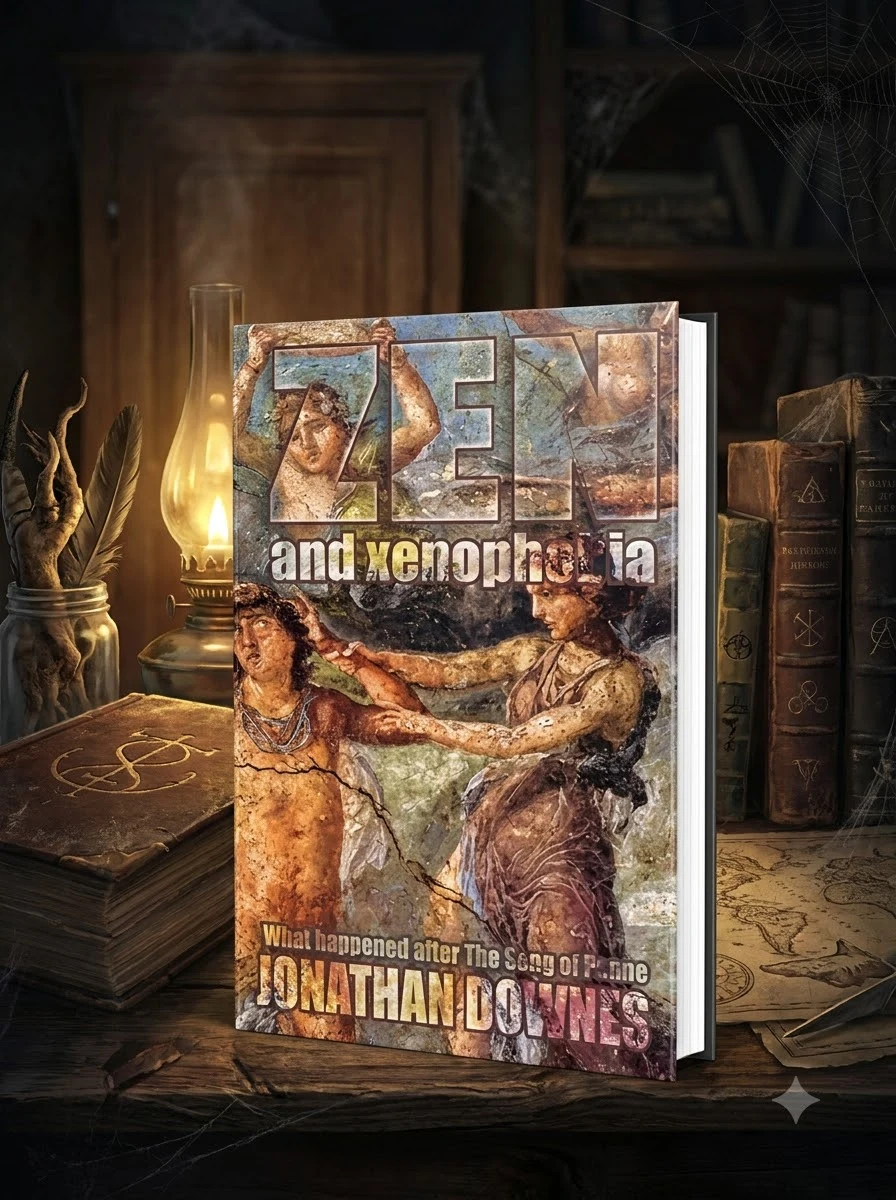

Zen and Xenophobia: What happened after The Song of Panne
A sequel documenting life with a forest Godling in a home airing cupboard.
This text picks up the narrative thread from three years ago. It details the continued existence of a hairy humanoid forest Godling within the author's residence. The entity occupies the airing cupboard formerly used by Downes' father. Corinna, the author's wife, is central to this domestic arrangement. The work uses Kipling’s terminology to identify the creature. It does not offer new plot twists but extends the existing chronicle. The focus remains on the mundane aspects of sharing space with a supernatural entity. Readers looking for traditional horror tropes or fictional adventures should look elsewhere. This is a record of ongoing personal experience rather than a crafted novel.
Published in 2018 by Fortean Fiction, this work sits within the tradition of contemporary supernatural memoirs. It bridges personal anecdote with literary reference, specifically invoking Kipling to contextualize the mythical entity encountered in modern domestic life.


📝 Description: Zen and Xenophobia: What happened after The Song of Panne
💎 Our verdict on Zen and Xenophobia: What happened after The Song of Panne
📖 Why choose it
Why this book is worth reading
Readers who appreciate the quiet unease of domestic horror will find value in this unique perspective. It offers a refreshing departure from sensationalist vampire tales or psychological thrillers, focusing instead on the practicalities of sharing a home with a divine entity. Those interested in the intersection of Kipling’s literary terminology and modern life will enjoy the specific nomenclature used to describe the Godling. It is ideal for audiences who prefer observational realism over crafted fiction, seeking a grounded account of supernatural cohabitation that prioritizes daily adjustments over plot twists.
⭐ Reader reviews
Reader rating
Downes succeeds in maintaining a tone of personal observation without descending into sensationalism or academic pretension. By grounding the narrative in the mundane details of an airing cupboard and family dynamics, he creates a compelling record of ongoing experience rather than a traditional novel. The book suits readers who enjoy contemporary accounts of domestic supernatural encounters that feel authentic and unembellished. It effectively utilizes Kipling’s framework to lend literary weight to the entity, appealing to those who appreciate subtle, atmospheric horror rooted in personal history and everyday reality.
📖 Read on the blog
🏛 Books from this publisher Fortean Fiction


You might also like
See more →


Have a question about this item?
Ask about the edition, condition, delivery or anything else — we reply by email or phone, usually within a day.
