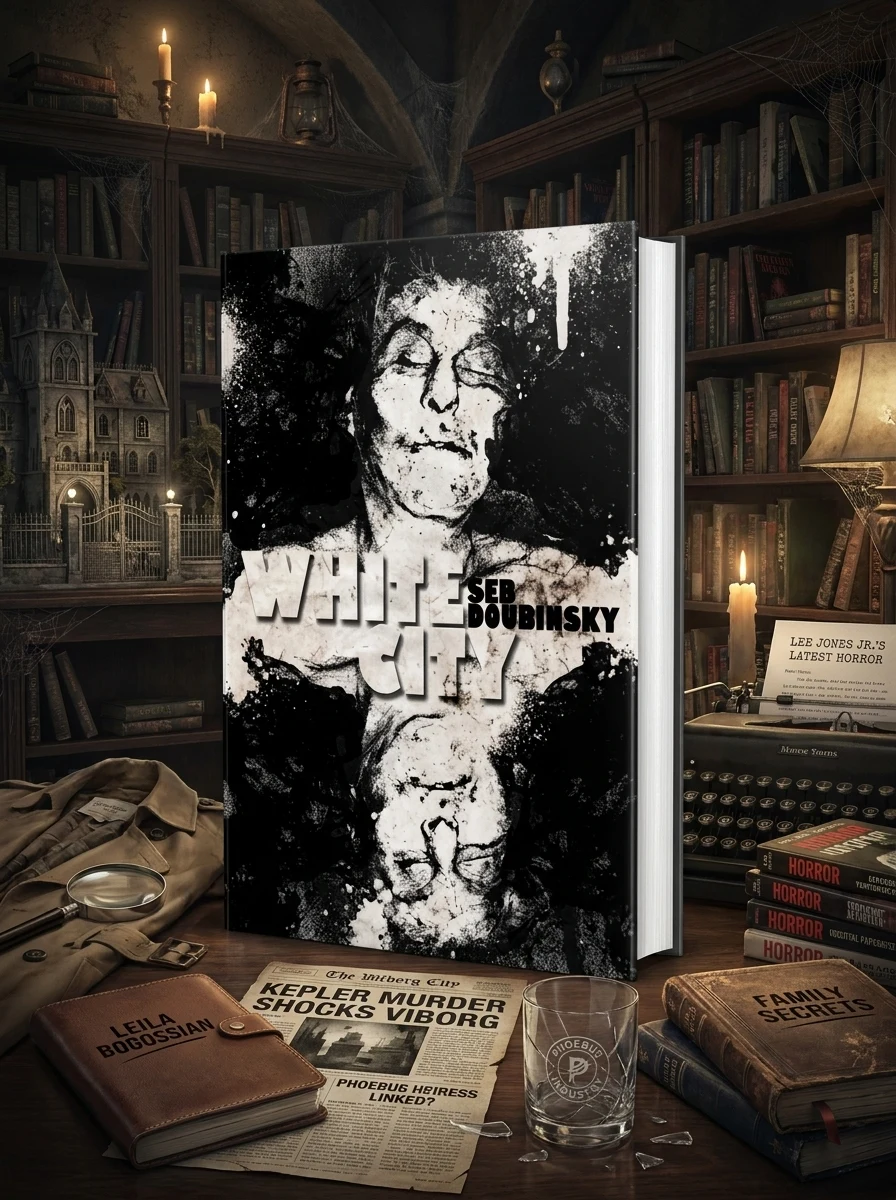

White City
A murder in Viborg City exposes dark secrets among three unlikely investigators.
Doubinsky uses the setting of White City to explore themes of privilege and decay. The author is known for horror writing, which influences the tone here. The plot follows the investigation into Niels Kepler's death. Sigrid Wulff, Leila Bogossian, and Lee Jones Jr. are drawn together by the case. Their paths cross in a district defined by its lack of visible activity. The story reveals how family secrets can poison public life. Phoebus Industry plays a role in this dynamic. The narrative does not offer easy answers. It focuses on the psychological impact of corruption. The characters are forced to face their own histories. This creates a tense and claustrophobic atmosphere.
The story is set in Viborg City, the capital of the Nordic Alliance. It focuses on the White District, an affluent area where nothing seems to happen. The narrative reflects a tradition of Nordic noir, emphasizing bleak settings and complex social structures.


📝 Description: White City
💎 Our verdict on White City
📖 Why choose it
Why this book is worth reading
Readers who appreciate slow-burn mysteries with strong atmospheric dread will find White City compelling. It suits those interested in the psychological toll of investigating crime within a place designed to hide it. Fans of Nordic noir and supernatural fiction alike will enjoy the exploration of privilege and decay. The narrative offers no easy answers, focusing instead on how family secrets poison public life. Those willing to confront bad craziness from the pasts of its characters will find this tale tense and claustrophobic. It is ideal for readers who prefer ambiguity over fast-paced action or clear moral resolutions.
⭐ Reader reviews
Reader rating
Seb Doubinsky’s White City presents a grim portrait of Viborg City, specifically its affluent White District. The narrative begins with the murder of Niels Kepler, disrupting the quiet complacency of a neighborhood where residents dream of residence but rarely experience drama. This event pulls three distinct figures into a tangled web of corruption and hidden family histories. Doubinsky structures the plot around the intersection of corrupt politics and personal trauma, forcing characters to confront their own histories. The story reveals how Phoebus Industry plays a role in this dynamic, creating a tense atmosphere. Readers who enjoy psychological horror and gothic urban decay will find this work deeply engaging.
📖 Read on the blog
✍️ More books by this author Seb Doubinsky


🏛 Books from this publisher JournalStone



You might also like
See more →



Have a question about this item?
Ask about the edition, condition, delivery or anything else — we reply by email or phone, usually within a day.
