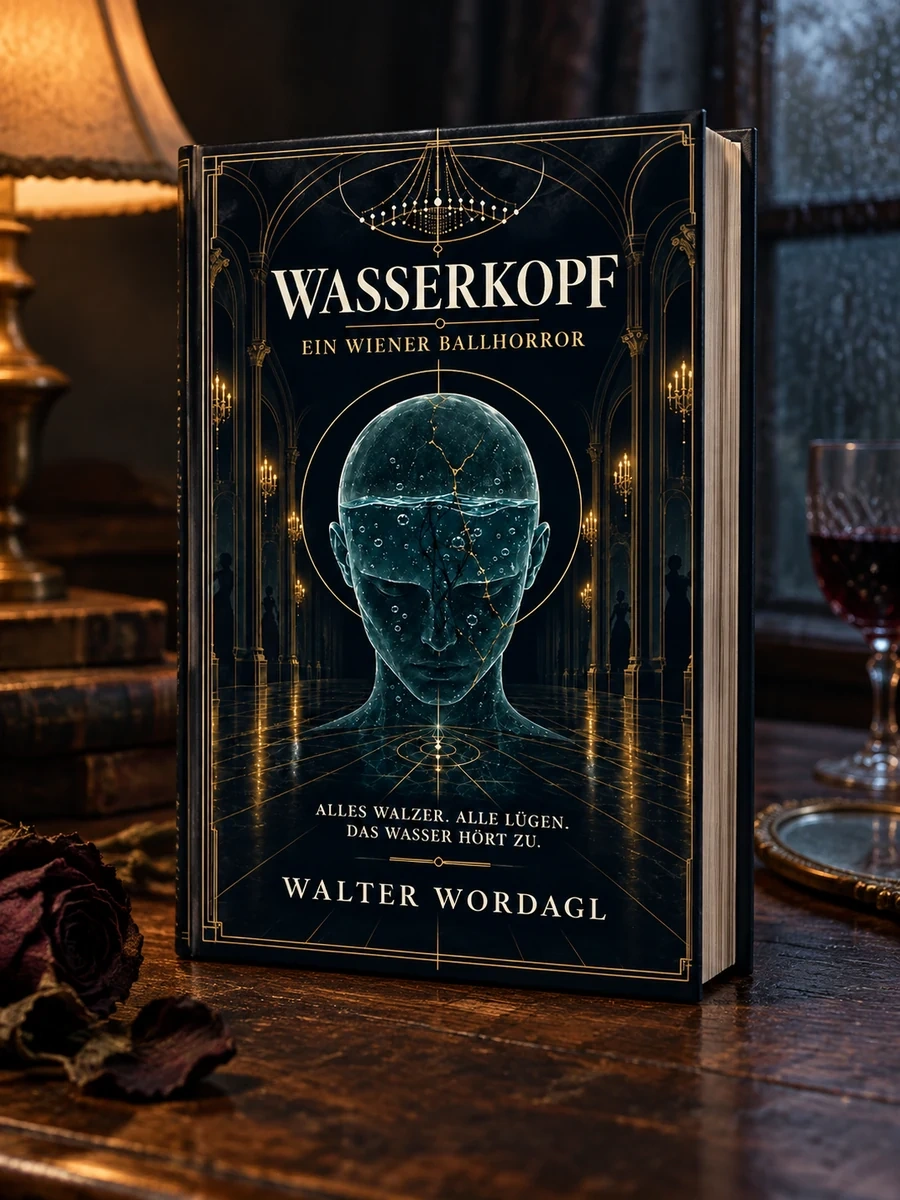
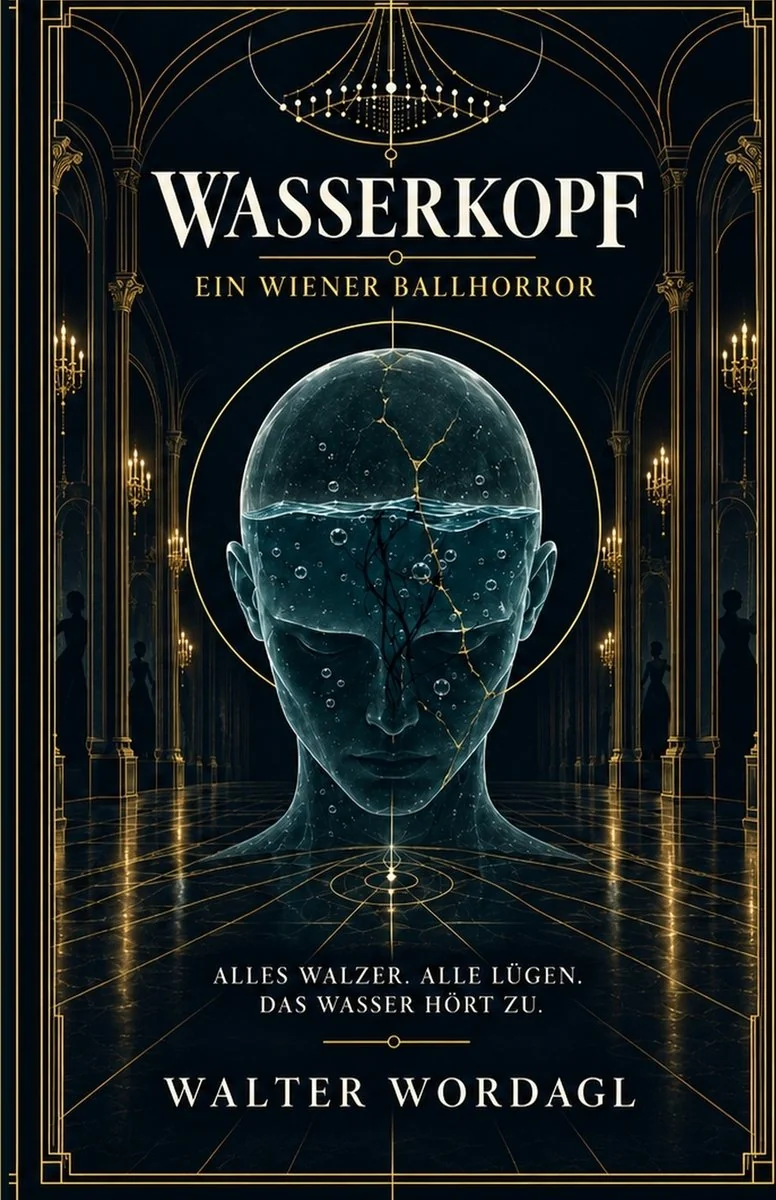
Wasserkopf: Ein Wiener Ballhorror
A Viennese horror novel about deadly balls and a reporter uncovering dark secrets.
The narrative follows Mara Horvath as she traces a link between multiple deaths at Vienna’s prestigious dance events. Each victim represents a facet of society that maintains control through intimidation or exclusion. The investigation reveals a hidden history tied to a 1919 legend and an underground cistern. Wordagl uses the setting of the ball season to explore how pressure builds until it becomes lethal. The text critiques the refusal to speak truth in favor of maintaining appearances.
The story is set in Vienna during the 2027 ball season, referencing specific events like the Zuckerbackerball and Opera Ball. It draws on a legend from 1919 and explores the city's tradition of maintaining social order through secrecy and performance.


📝 Description: Wasserkopf: Ein Wiener Ballhorror
💎 Our verdict on Wasserkopf: Ein Wiener Ballhorror
📖 Why choose it
Why this book is worth reading
Readers seeking a dense, atmospheric narrative that prioritizes social critique over simple thrills will find value here. The book appeals to those interested in how cultural rituals mask underlying violence and class prejudice. It offers a unique perspective on Vienna’s high society, revealing the lethal consequences of maintaining appearances. Those who appreciate horror that examines power dynamics, media greed, and the silencing of truth through a gothic lens will gain insight into the destructive nature of societal control. The story provides a heavy, thought-provoking experience for audiences willing to engage with complex themes rather than seeking light entertainment or straightforward supernatural fantasy divorced from context.
⭐ Reader reviews
Reader rating
Wordagl crafts a chilling examination of Viennese society where the ball season becomes a pressure cooker for lethal outcomes. The narrative effectively uses the setting to critique class prejudice and the refusal to speak truth. By linking modern deaths to a 1919 legend, the author grounds the horror in historical weight and social decay. The tone is appropriately heavy, avoiding light entertainment to focus on the psychological toll of intimidation and exclusion. This work suits readers who enjoy gothic fiction rooted in specific European traditions and those interested in psychological horror tied to real cultural events. It is a rigorous read for those who appreciate horror that challenges societal norms rather than merely thrilling.
📖 Read on the blog
🏛 Books from this publisher Independently Published








You might also like
See more →
Have a question about this item?
Ask about the edition, condition, delivery or anything else — we reply by email or phone, usually within a day.
