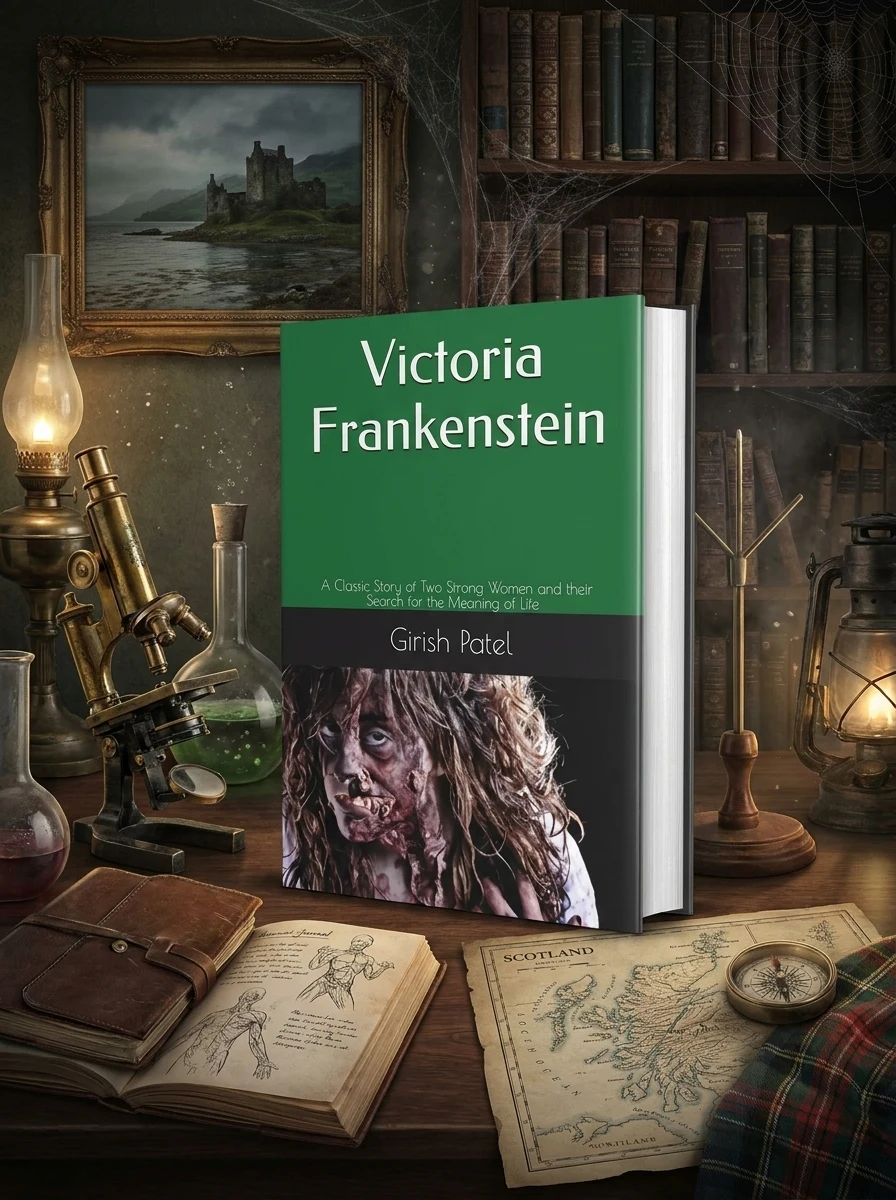
Victoria Frankenstein
A gender-swapped retelling of Frankenstein set in 1778 London and Scotland.
This novel shifts the focus to Victoria, who defies eighteenth-century expectations to study science. Her grief over Caroline’s death drives her to seek answers that elude male colleagues. Professor Waldman becomes a pivotal figure in her research, leading to the creation of a female Daemon. The story tracks Victoria’s journey from London to Loch Ness as she confronts the consequences of her work. Patel explores themes of maternal loss and scientific hubris through this revised lens. The narrative structure mirrors the original quest but centers on female agency and emotional revelation.
The story is set in 1778 London and Scotland, reflecting eighteenth-century attitudes toward women in academia. It engages with gothic fiction traditions while challenging the male-centric perspective of early nineteenth-century literature.


📝 Description: Victoria Frankenstein
💎 Our verdict on Victoria Frankenstein
📖 Why choose it
Why this book is worth reading
Readers who appreciate historical fiction infused with supernatural elements will find this retelling compelling. It offers a fresh perspective on the familiar Frankenstein mythos by centering female agency and emotional revelation. The narrative explores maternal loss and scientific ambition, making it ideal for those interested in psychological horror and gothic traditions. By shifting the focus to Victoria’s grief and defiance of societal expectations, the book provides a nuanced look at isolation and hubris. Those seeking a faithful adaptation of the original text may prefer Shelley’s work, but this version appeals to readers wanting to see classic themes revisited through a revised lens that challenges gender norms inherent in the source material.
⭐ Reader reviews
Reader rating
Patel successfully reimagines the Frankenstein narrative by placing the creator in Victoria’s role, offering a distinct departure from the original. The book excels in exploring themes of maternal loss and scientific ambition within an eighteenth-century context. While it draws heavily on Gothic traditions, it subverts gender roles to emphasize female agency. Readers who enjoy historical fiction with supernatural undertones will find the journey from London to Loch Ness engaging. However, those seeking a strict adaptation of Shelley’s early nineteenth-century novel might find this divergent. The narrative structure mirrors the original quest but centers on emotional revelation, making it a strong choice for fans of psychological horror and dark fantasy who appreciate character-driven plots over mere plot fidelity.
📖 Read on the blog
🏛 Books from this publisher Createspace Independent Publishing Platform



You might also like
See more →


Have a question about this item?
Ask about the edition, condition, delivery or anything else — we reply by email or phone, usually within a day.
