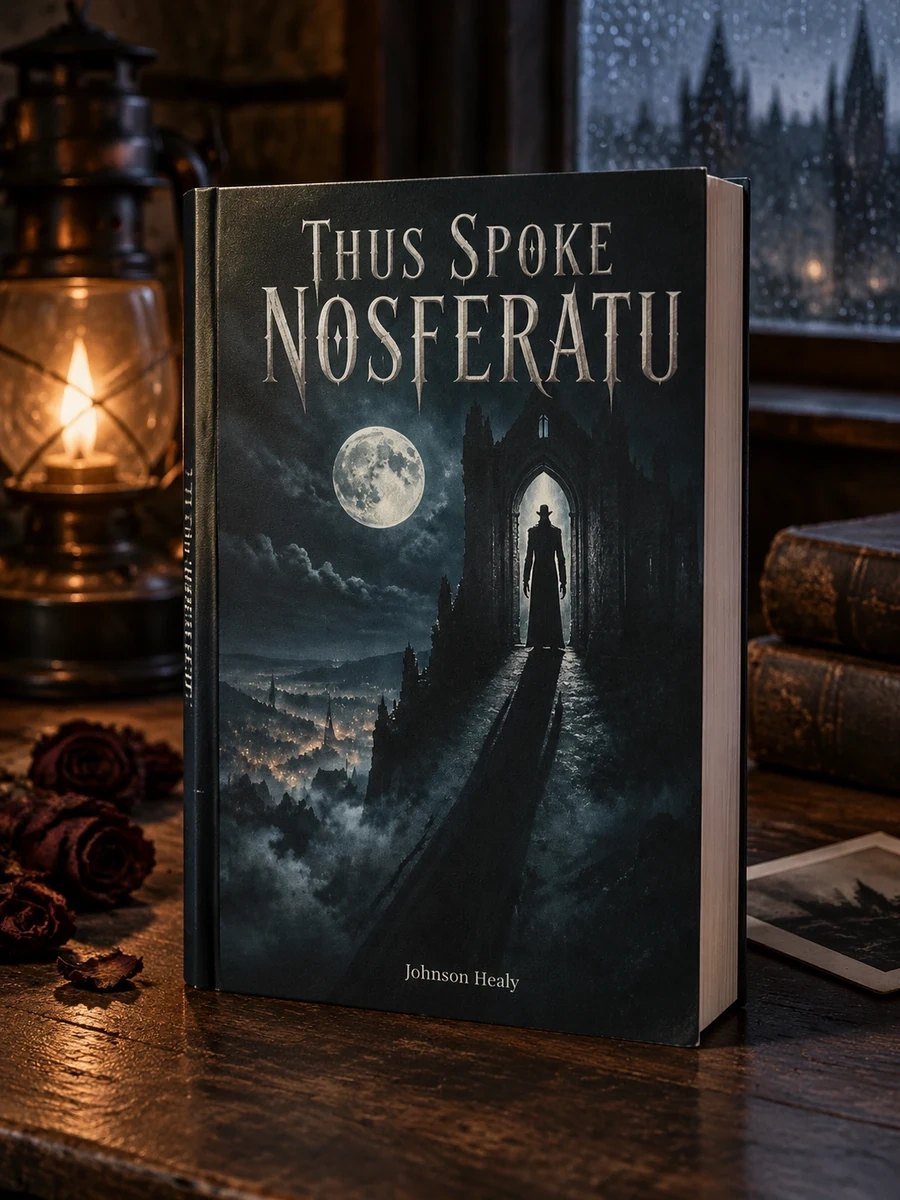
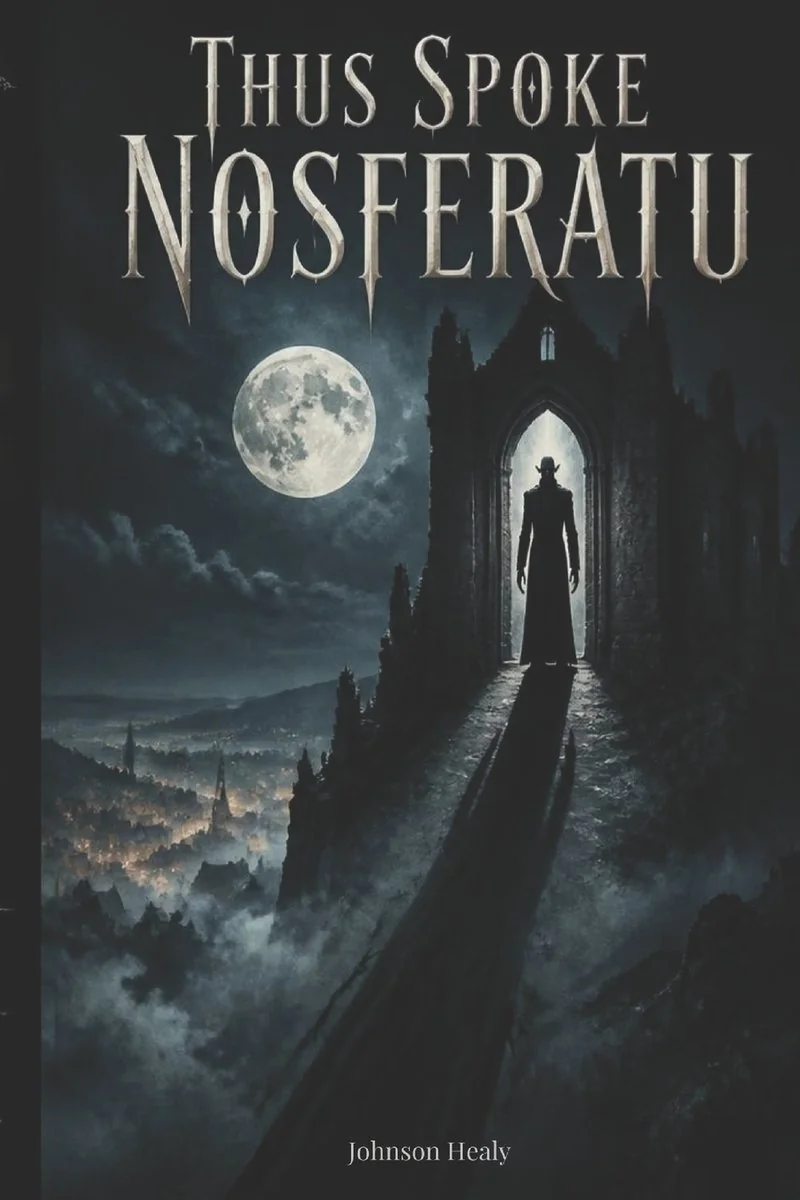
Thus Spoke Nosferatu
A gothic retelling following Thomas Hutter's journey to Transylvania.
This novel examines the intersection of love and terror through the lens of classic vampire lore. It focuses on the psychological unraveling of a man who ignores warnings about an ancient evil. The story highlights the contrast between rational ambition and the inexplicable forces of the supernatural. Healy uses the setting of the Carpathians to amplify the sense of isolation and dread. The narrative does not rely on jump scares but rather on the slow accumulation of fear. It asks how ordinary people cope when confronted with entities that defy logic. The work is grounded in the tradition of European gothic fiction, emphasizing mood over plot twists.
The book sits within the tradition of gothic and supernatural fiction. It reimagines classic vampire tales set in Transylvania and the Carpathians. The narrative draws on European folklore and the legacy of Count Orlok. It addresses themes relevant to modern readers who believe they have outgrown old fears.


📝 Description: Thus Spoke Nosferatu
💎 Our verdict on Thus Spoke Nosferatu
📖 Why choose it
Why this book is worth reading
This book is essential for readers who appreciate slow-burn atmospheric experiences and the psychological unraveling of characters confronting ancient evils. It appeals to those drawn to gothic fiction where mood outweighs plot twists, offering a deep exploration of how ordinary people cope with entities that defy logic. Readers interested in the contrast between rational ambition and supernatural dread will find resonance in Hutter’s journey through the Carpathians. It is ideal for fans who value literary depth and the subtle accumulation of fear over fast-paced action or contemporary horror tropes, providing a compelling look at how shadows fall on towns and linger long after.
⭐ Reader reviews
Reader rating
Johnson Healy crafts an atmospheric retelling that successfully examines the intersection of love and terror through classic vampire lore. The narrative excels in its use of the Carpathian setting to amplify isolation and dread, focusing on the psychological impact of encountering the monstrous within ordinary lives. By ignoring warnings and strange symbols, Hutter’s rational ambition clashes with inexorable supernatural forces, creating a compelling study of human vulnerability. This work suits readers seeking a grounded, mood-driven Gothic experience rather than jump scares or modern twists. It is a thoughtful exploration of ancient darkness moving through a world that believes it has outgrown its fears, offering a timeless reflection on desire and dread.