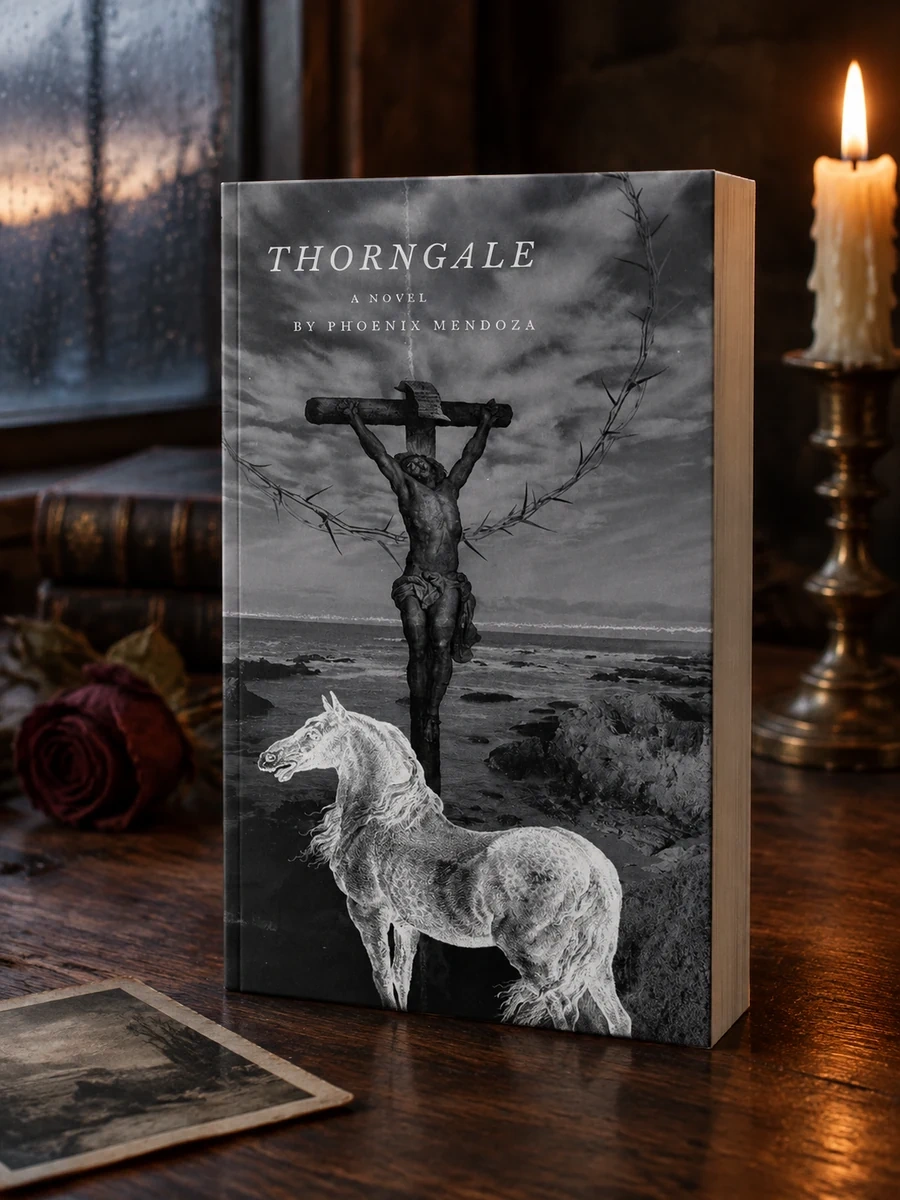
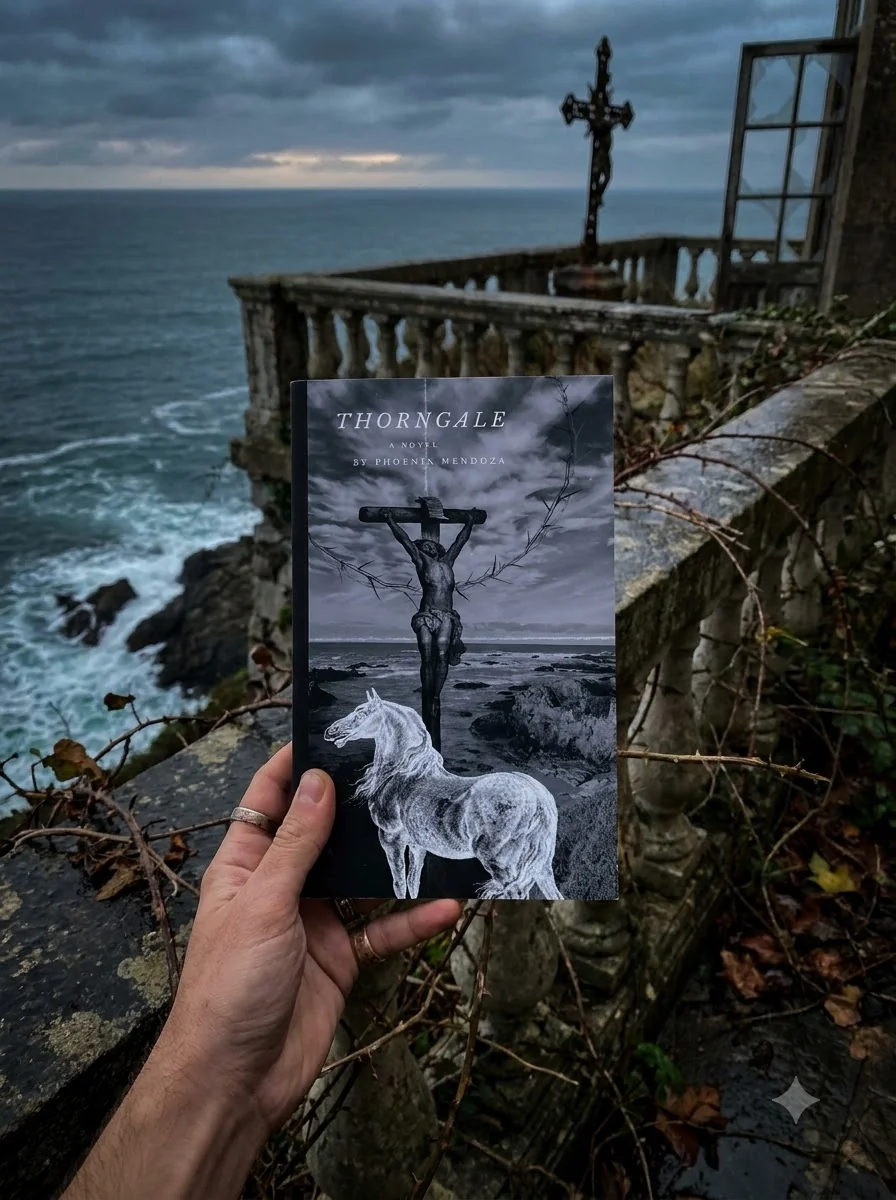
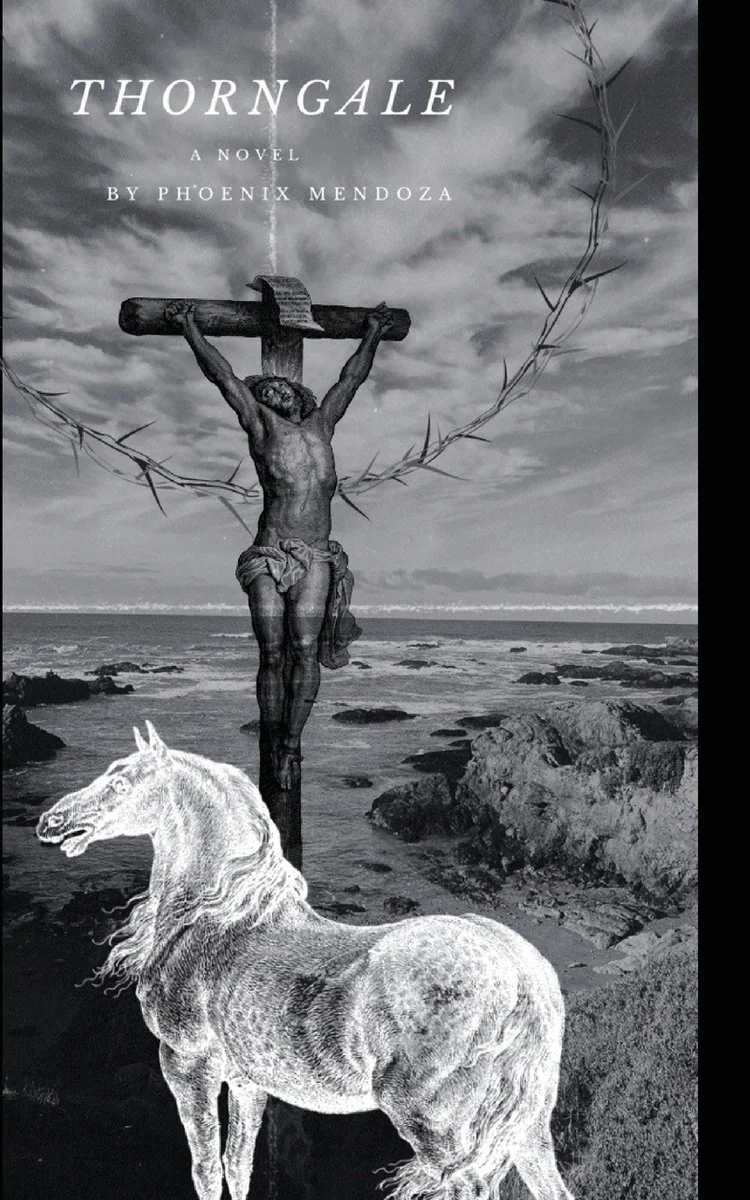
Thorngale
A claustrophobic gothic tale of two brothers in a decaying Cornish estate.
Mendoza explores the parasitic relationship between Alexander and Francis within the confines of their neglected home. The narrative does not rely on external threats but rather on the internal decay of the brothers' minds and spirits. By juxtaposing dreamlike childhood memories with the sharp reality of their 1928 downfall, the author highlights the destructive nature of absolute power and religious fanaticism. The setting itself, a cliffside estate in decline, mirrors the moral rot at the story's core. This approach creates a dense, atmospheric experience that prioritizes character psychology over plot mechanics.
The novel draws on the tradition of English gothic fiction and the historical decay of the British nobility. It is set against the backdrop of early twentieth-century England, specifically focusing on the northern Cornish coast as a place of spiritual and physical isolation.


📝 Description: Thorngale
💎 Our verdict on Thorngale
📖 Why choose it
Why this book is worth reading
Readers seeking a dense, atmospheric experience rooted in psychological erosion rather than external threats will find this text compelling. It appeals to those interested in the destructive nature of absolute power and religious dogma within familial structures. The narrative offers a claustrophobic exploration of obsessive love and fatal devotion between two brothers, prioritizing character psychology over plot mechanics. Those who appreciate shifting timelines that emphasize mental decay over linear progression will gain insight into the moral rot mirrored by the decaying cliffside estate. This book is ideal for enthusiasts of gothic horror who value cutting intensity and insular settings over traditional monster-driven plots.
⭐ Reader reviews
Reader rating
Phoenix Mendoza delivers a chilling narrative that prioritizes the psychological erosion of its protagonists over conventional plot mechanics. The text oscillates between dreamlike childhood fragments and their 1928 downfall, creating a claustrophobic tension akin to tightening concertina wire. By juxtaposing insular upbringing with final descent into madness, Mendoza highlights the parasitic dynamics between Alexander and Francis. This approach suits readers who appreciate psychological horror rooted in religious dogma and familial abuse. The decaying Cornish estate serves as a potent mirror for internal rot, offering a dense atmospheric experience. It is best suited for those comfortable with non-linear structures and intense, insular character studies rather than lighthearted supernatural fiction.
You might also like
See more →





Have a question about this item?
Ask about the edition, condition, delivery or anything else — we reply by email or phone, usually within a day.
