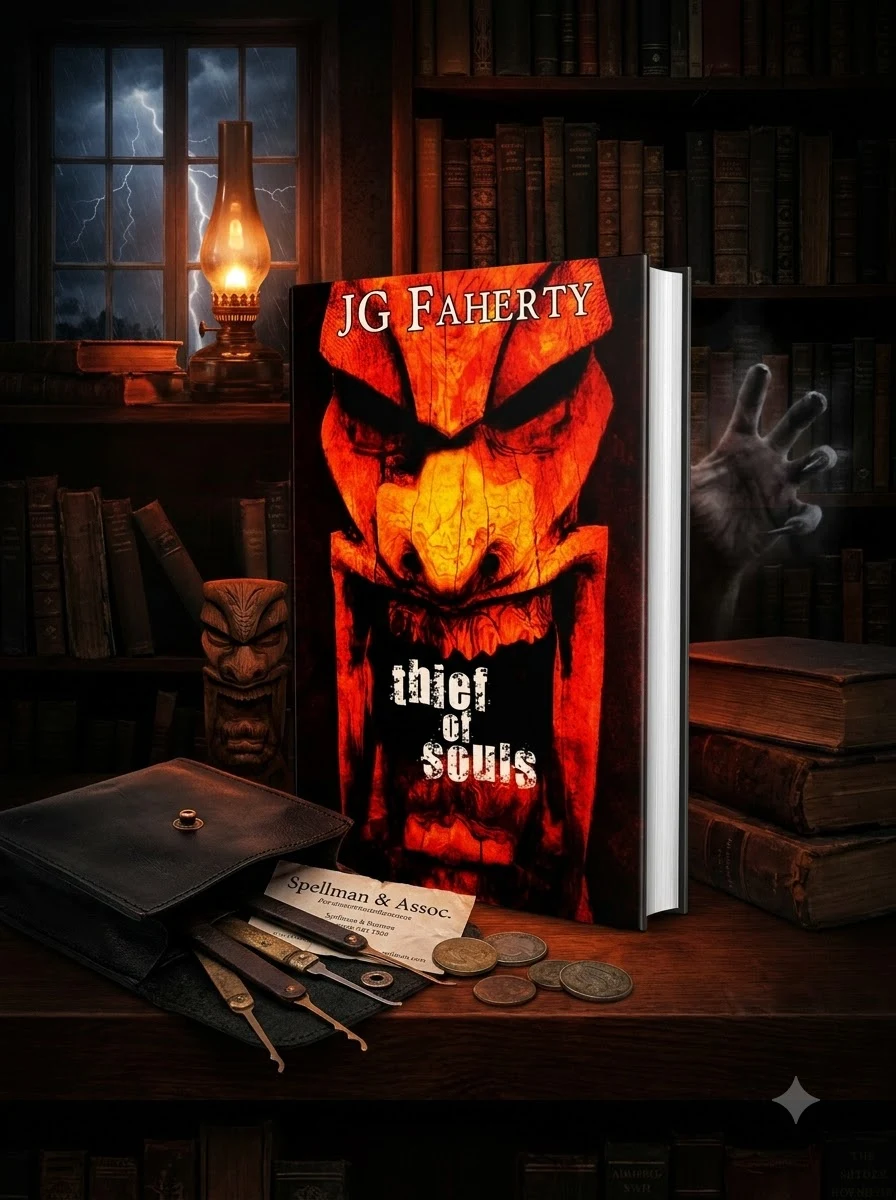

Thief of Souls
A burglar is hunted by a supernatural entity demanding repentance for his sins.
Perry Spellman’s descent into theft stems from financial ruin caused by a bad investment. His plan to rob three houses unravels when he becomes the target of a terrifying scam. He blames his ex-partner, but the threat evolves into something far more sinister. The antagonist is a force that will not stop until Perry repents or dies. This shift transforms the plot from a standard crime story into a gothic horror tale. The narrative emphasizes psychological tension over physical action. Perry’s isolation grows as he realizes no human is helping him. The story explores themes of guilt, punishment, and the inability to escape one’s past. D'Auria uses these elements to create a sense of inevitable doom. The focus remains on Perry’s internal conflict as he faces an impossible choice.
Published in 2016 by Createspace Independent Publishing Platform, this work sits within the tradition of American horror fiction. It blends crime narrative structures with gothic supernatural elements. The story reflects contemporary anxieties about financial failure and moral accountability.


📝 Description: Thief of Souls
💎 Our verdict on Thief of Souls
📖 Why choose it
Why this book is worth reading
Readers who appreciate the slow burn of psychological horror over visceral gore will find this narrative compelling. Perry Spellman’s internal conflict serves as a mirror for anyone grappling with inescapable past mistakes. The book offers a claustrophobic atmosphere that intensifies the sense of inevitable doom. It is ideal for those who enjoy stories where the antagonist is an abstract force rather than a human villain. The exploration of spiritual damnation through the lens of criminal guilt provides a unique thematic depth. Fans of goic tales focusing on moral decay and supernatural retribution will find the relentless tone satisfying. The narrative avoids easy resolutions, offering a stark examination of consequences.
⭐ Reader reviews
Reader rating
D'Auria successfully blurs the line between crime fiction and supernatural horror, creating a tense atmosphere where guilt becomes a tangible threat. The protagonist’s isolation is palpable as he realizes no human ally can save him from an otherworldly entity. While the pacing may feel slow to action-oriented readers, the focus on psychological deterioration rewards those seeking depth. The text avoids elaborate world-building, keeping the narrative tight and claustrophobic. This approach effectively mirrors Perry’s entrapment within his own conscience. The story excels in depicting the erosion of mental stability under spiritual pressure. It is best suited for readers who prefer atmospheric dread and moral ambiguity over clear-cut villains or fast-paced resolutions.
📖 Read on the blog
✍️ More books by this author Don D'Auria




🏛 Books from this publisher Createspace Independent Publishing Platform





You might also like
See more →


Have a question about this item?
Ask about the edition, condition, delivery or anything else — we reply by email or phone, usually within a day.
