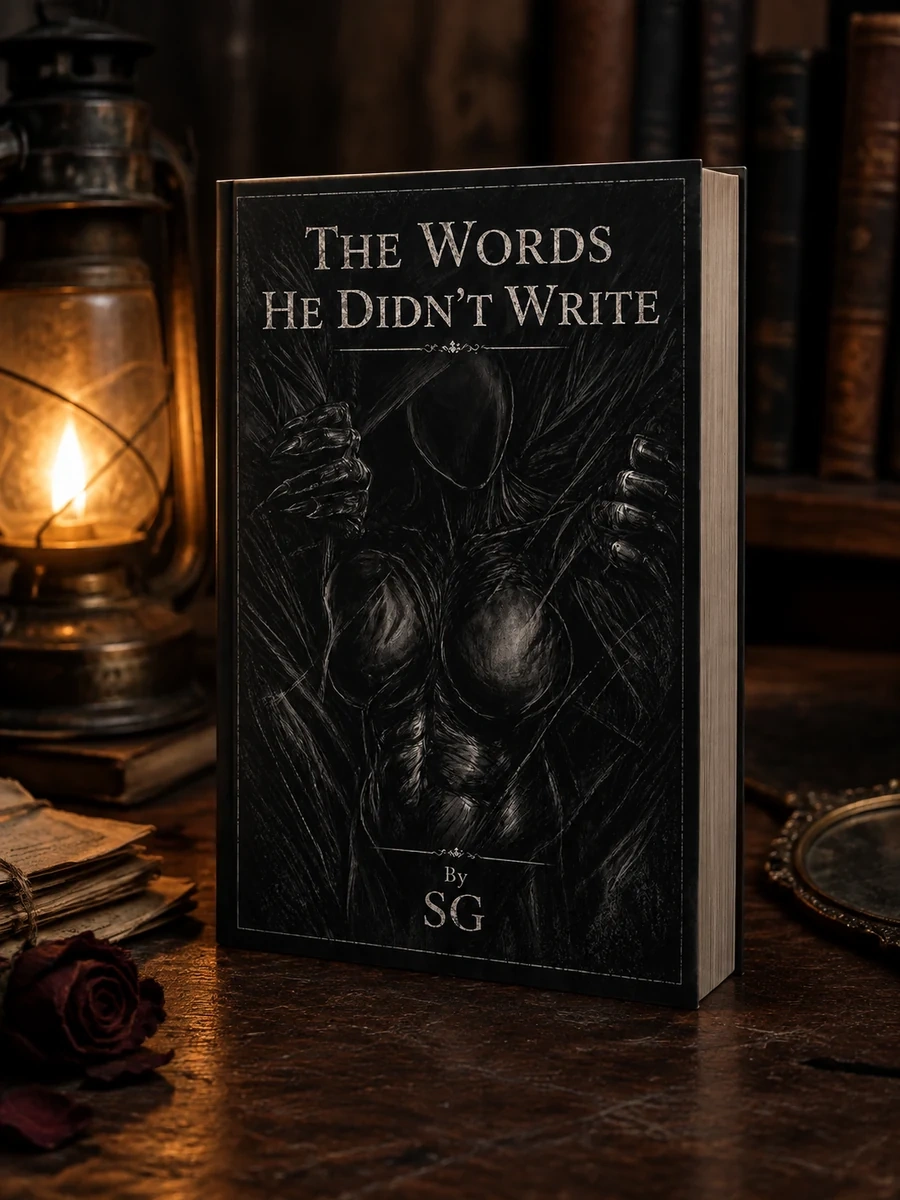
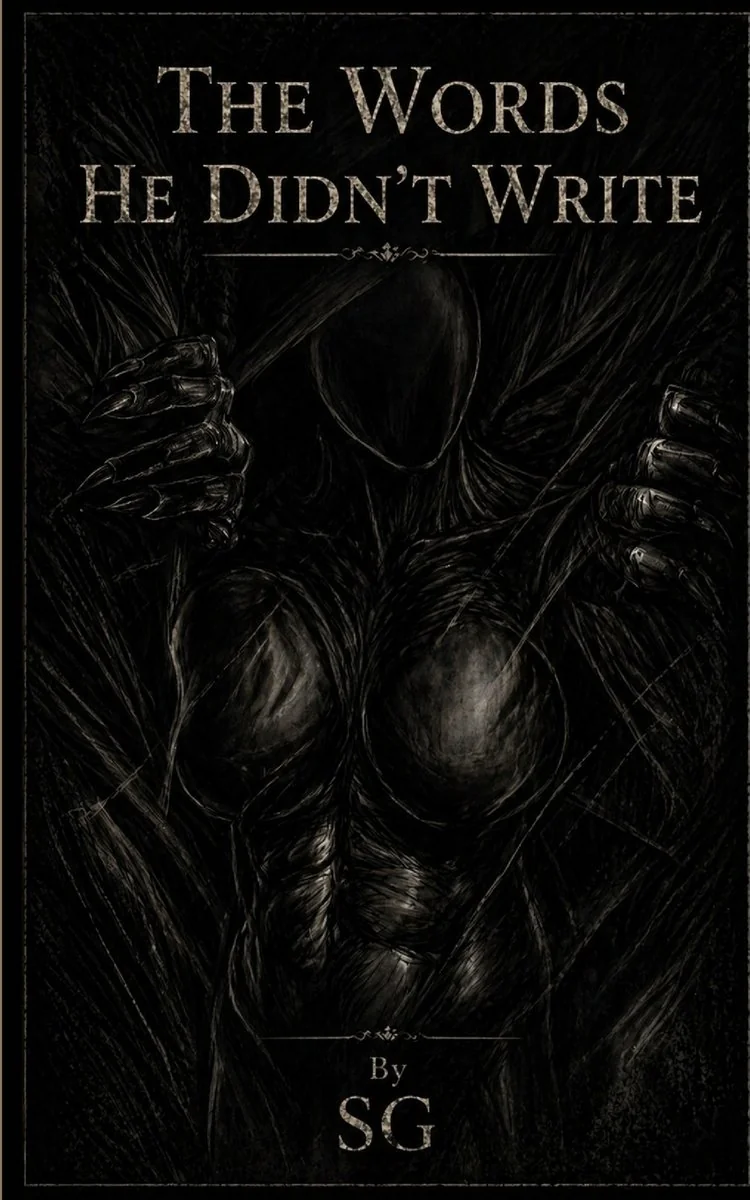
The Words He Didn't Write
A writer discovers a note in his own hand leading to a town that watches him back.
Elliot Voss struggles with creative silence until a mysterious entry in his notebook pulls him toward Gravenhollow. This location defies normal logic, maintaining an unchanged population for over a century. The environment feels predatory, suggesting that something is reading Elliot rather than the other way around. He and four companions enter this space to face the consequences of being completely known. The narrative explores the danger of answering back to such forces. It treats identity as something fragile when exposed to total observation. The story does not offer escape but rather a confrontation with the cost of visibility.
This work sits within the American independent publishing landscape of 2026. It draws on gothic horror traditions where isolated towns serve as metaphors for internal decay. The narrative reflects contemporary anxieties about authorship and the loss of personal voice in a consuming world.


📝 Description: The Words He Didn't Write
💎 Our verdict on The Words He Didn't Write
📖 Why choose it
Why this book is worth reading
Readers seeking atmospheric tension and psychological dread will find value in this narrative exploration of identity under total surveillance. The book appeals to those who enjoy the fragility of self when exposed to a predatory gaze, offering a slow-burn confrontation with the cost of visibility. It is ideal for audiences who prefer literary horror over action, focusing on the mystery of Gravenhollow and its silent inhabitants. Those interested in how observation becomes consumption will appreciate the nuanced examination of creativity and truth. The story does not offer easy escape or clear resolution, making it suitable for readers comfortable with ambiguous endings and deep, unsettling introspection regarding the nature of being known.
⭐ Reader reviews
Reader rating
Gupta crafts a compelling study of creative silence and the terror of perfect understanding. The narrative effectively builds dread through the static, frozen nature of Gravenhollow, where streets feel observed and identity is fragile. By focusing on the heavy price of being fully seen, the text avoids cheap scares in favor of existential unease. The portrayal of an entity that consumes through knowledge rather than violence offers a fresh take on cosmic horror tropes. While it lacks fast-paced action or clear resolutions, its strength lies in its grounded mystery and atmospheric precision. It suits readers who appreciate slow-burn psychological horror and are willing to engage with complex themes of visibility and consumption without the comfort of traditional narrative closure.
📖 Read on the blog
🏛 Books from this publisher Independently Published








You might also like
See more →
Have a question about this item?
Ask about the edition, condition, delivery or anything else — we reply by email or phone, usually within a day.
