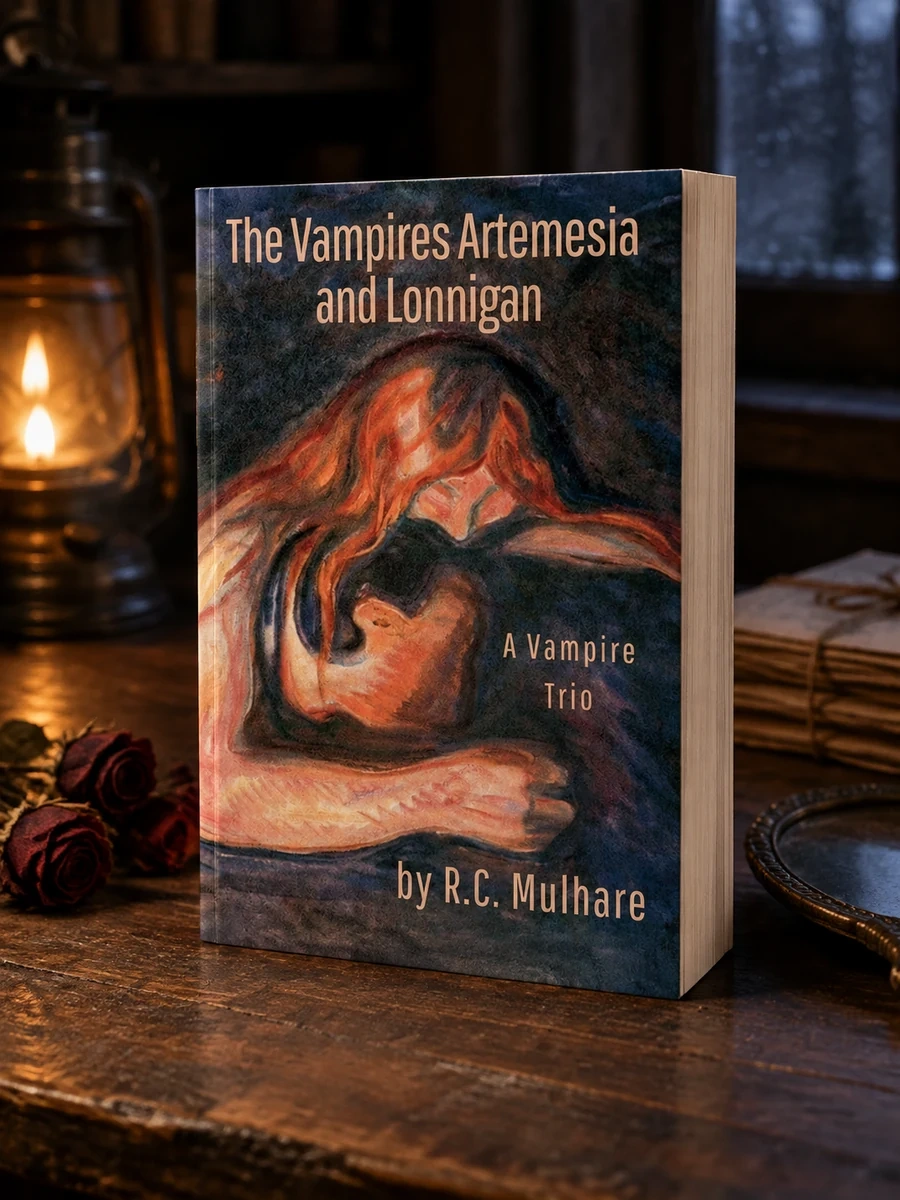
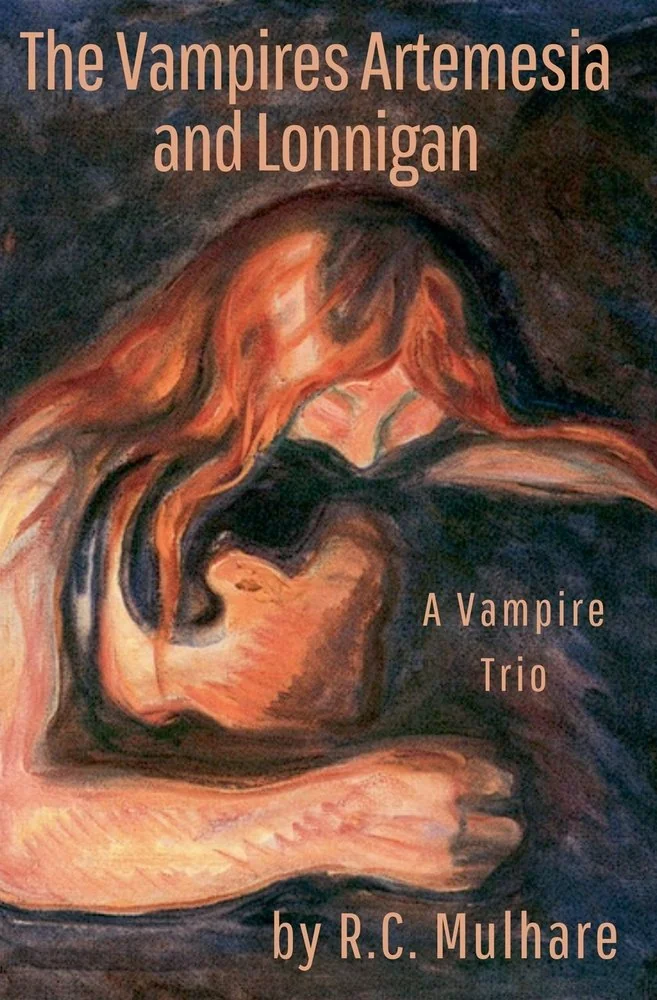
The Vampires Artemesia and Lonnigan
A collection of three vampire tales set in New England by R C Mulhare.
The volume examines the predatory habits of two vampires operating in New England. Mulhare uses the settings of Portland docks and Witch City shadows to ground the supernatural elements in recognizable geography. The text avoids modern tropes, focusing instead on traditional fears of the night. The three tales are linked by the persistent threat posed by the duo. Their actions drive the plot forward without deviation. The narrative style remains consistent with classic horror conventions. The book does not attempt to humanize its monsters. It presents them as a direct danger to the innocent. This approach creates a steady rhythm of tension. The reader is left to wonder if justice will prevail.
The work sits within the tradition of American gothic horror, specifically drawing on the regional atmosphere of New England. It references Portland, Maine, and the Witch City, grounding the supernatural elements in these specific locations to enhance the sense of place.


📝 Description: The Vampires Artemesia and Lonnigan
💎 Our verdict on The Vampires Artemesia and Lonnigan
📖 Why choose it
Why this book is worth reading
Readers who appreciate atmospheric dread and the mechanics of predatory horror will find this collection rewarding. It appeals specifically to those interested in New England regional lore, utilizing settings like Portland docks and Witch City shadows to enhance the terror. The book is ideal for fans of unsentimental supernatural fiction where monsters remain monstrous. Those seeking lighthearted paranormal romance or complex historical analysis may find the tone too stark. However, for audiences who enjoy classic horror conventions without deviation, this volume offers a steady rhythm of tension and a direct confrontation with evil.
⭐ Reader reviews
Reader rating
R.C. Mulhare delivers a potent collection that eschews modern tropes in favor of traditional vampiric terror. The narrative focuses on the predatory habits of Artemesia and Lonnigan, grounding supernatural fear in specific New England geography. By avoiding character redemption or complex backstories, the author presents these figures as forces of nature, maintaining a consistent tone of escalating dread across three linked tales. This approach suits readers who prefer straightforward predatory horror over psychological nuance. The work effectively utilizes gothic traditions to create an unsparing examination of night-time threats. It is a strong recommendation for purists who value atmospheric tension and classic horror conventions above all else.