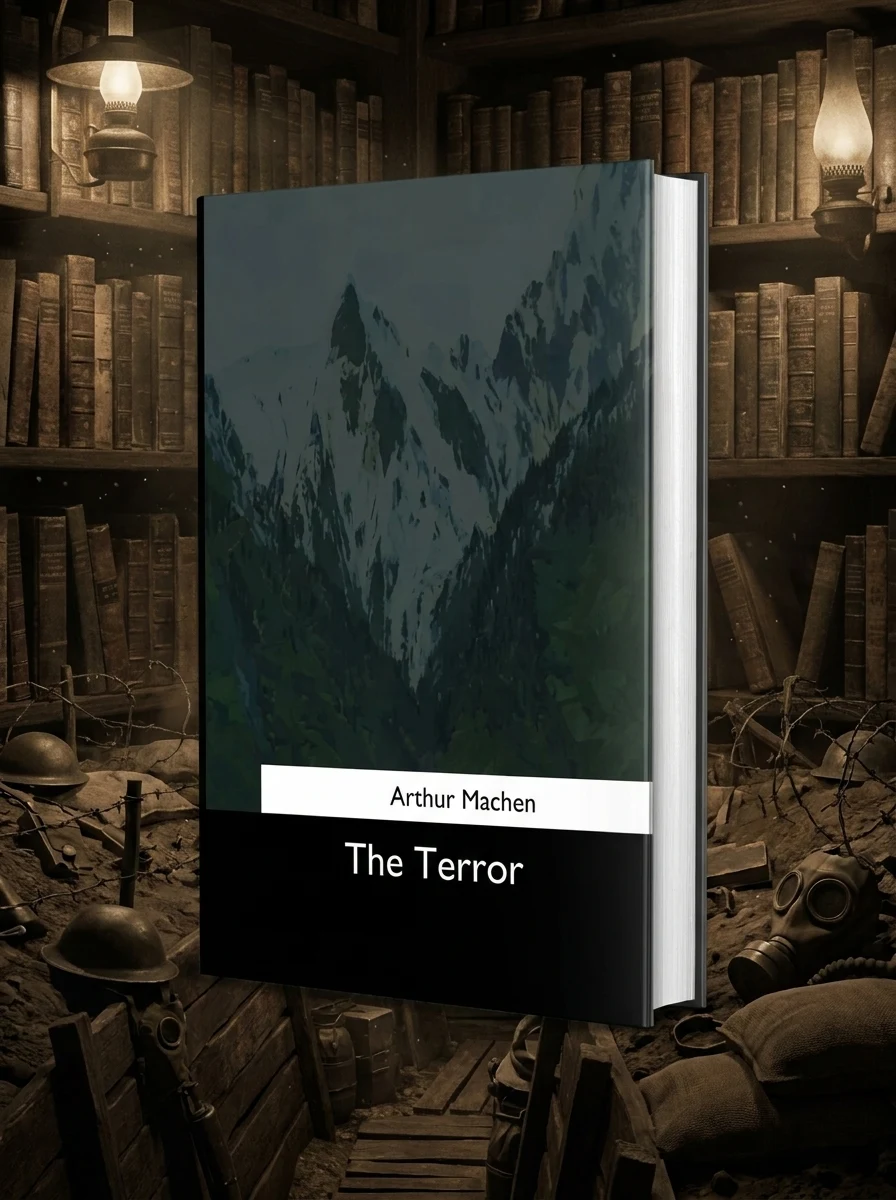

The Terror
A first-person account of a hidden supernatural threat behind WWI trenches.
The narrative focuses on the period from October 1914 to July 1916, a time when lines remained static for reasons beyond typical supply chain issues. Machen argues that while the nation worked energetically to mend shortages in munitions and personnel, an infinitely greater moment loomed behind these struggles. The author uses the death of a prominent airman as a starting point to discuss delays in the war. He notes that he lacks specific dates for this incident because he does not preserve cuttings. This omission highlights the informal nature of his record. The text implies that overcoming this new danger allowed the secret to finally emerge, shifting the focus from standard military logistics to an extraordinary circumstance.
The book addresses the Western Front during the First World War, specifically the period between October 1914 and July 1916. It reflects on the national effort to mend shortages in men and munitions while hinting at a supernatural undercurrent affecting the war's progress.


📝 Description: The Terror
💎 Our verdict on The Terror
📖 Why choose it
Why this book is worth reading
Readers interested in the intersection of military history and supernatural fiction will find this narrative compelling. It offers a unique perspective on the static Western Front, suggesting that logistical delays were caused by hidden threats rather than mere supply chain failures. The book appeals to those who enjoy first-person accounts that blend personal reflection with broader historical observations. It is suitable for audiences seeking stories where unexplained phenomena disrupt standard tactical analysis. By revealing a secret previously too dangerous to share, it provides insight into the psychological weight of the war effort without relying on straightforward factual records.
⭐ Reader reviews
Reader rating
Arthur Machen crafts a compelling narrative that recontextualizes the immobility of the Western Front through a supernatural lens. The text effectively distinguishes ordinary logistical failures from an incredible danger, using the death of a prominent airman as a catalyst for revelation. This approach suits readers who appreciate historical events intersecting with unexplained phenomena. However, those seeking straightforward tactical analysis may find the supernatural elements distracting. The reliance on a first-person perspective blends personal reflection with broader observations, creating a tone that is both intimate and ominous. It stands as a distinctive contribution to early twentieth-century horror fiction.
📖 Read on the blog
✍️ More books by this author Arthur Machen








🏛 Books from this publisher Createspace Independent Publishing Platform






You might also like
See more →

Have a question about this item?
Ask about the edition, condition, delivery or anything else — we reply by email or phone, usually within a day.
