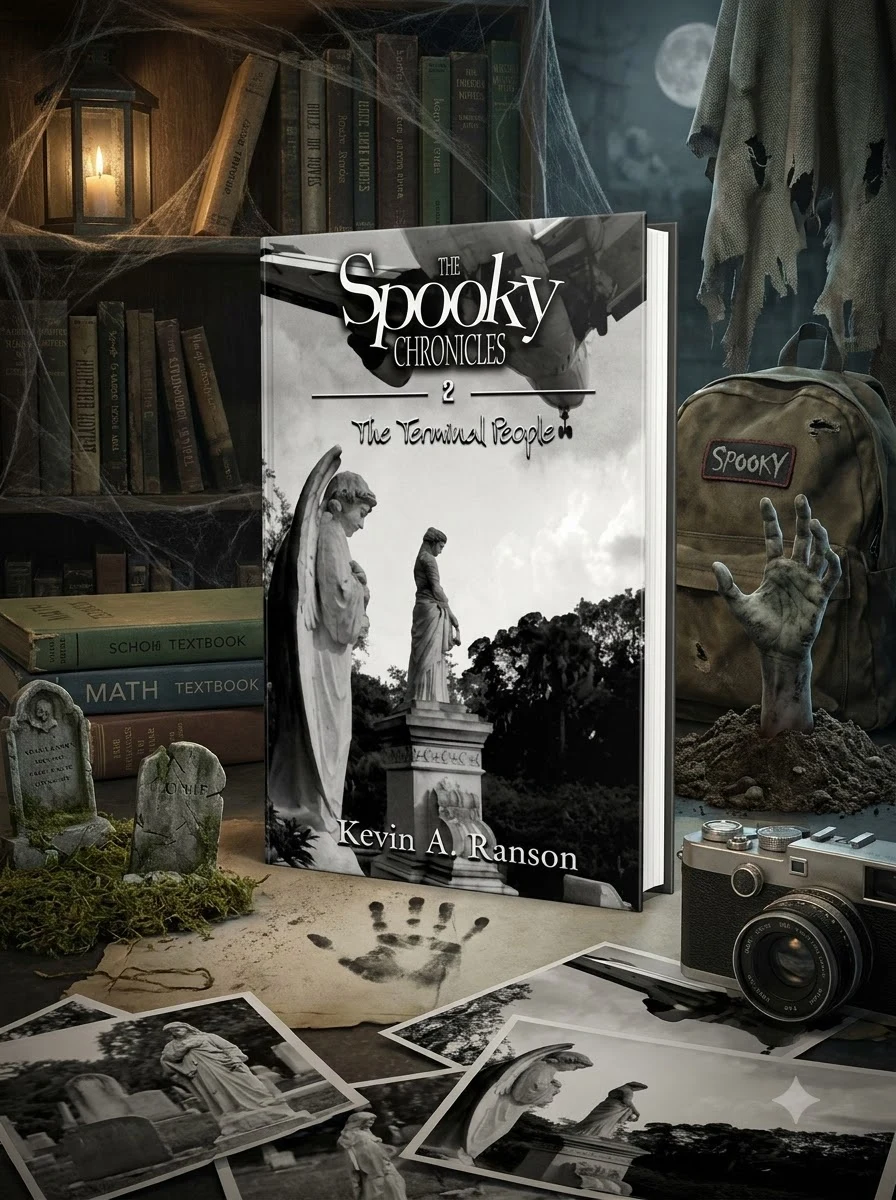

The Spooky Chronicles: The Terminal People
A dead boy ages while navigating a secret paranormal underworld in this second series installment.
Spencer Lawson deals with the consequences of his undead state as he grows older without aging physically. The text examines how he balances school life with the dangers of his condition, particularly after an incident involving a stranger in an alley. Ranson uses Spencer’s unique perspective to explore themes of isolation and unintended power. The narrative avoids standard horror tropes by focusing on the mundane aspects of being a zombie who still attends classes. This approach creates a distinct tone that blends everyday childhood struggles with supernatural elements. The story does not rely on gore but rather on the psychological weight of Spencer’s situation.
Published in 2012 by Lulu.com, this work sits within the contemporary American young adult horror genre. It reflects a trend of reimagining classic supernatural figures through modern, character-focused lenses rather than traditional folklore.


📝 Description: The Spooky Chronicles: The Terminal People
💎 Our verdict on The Spooky Chronicles: The Terminal People
📖 Why choose it
Why this book is worth reading
This title offers a refreshing departure from standard gore-driven narratives, appealing to readers who prefer psychological depth over visceral shock. It is ideal for those interested in the mundane struggles of growing up, even under supernatural circumstances. The book provides a unique perspective on isolation and unintended power, making it suitable for fans of character-driven drama within dark fantasy settings. Readers seeking unconventional takes on the zombie genre will find value in its exploration of everyday childhood challenges juxtaposed with a hidden paranormal underworld. It is particularly engaging for audiences who enjoy navigating complex emotional landscapes rather than simple monster hunts.
⭐ Reader reviews
Reader rating
Ranson successfully avoids clichés by focusing on Spencer’s internal conflict and physiological reality, such as his need to manage school life without breathing. This approach creates a distinct tone that blends the ordinary with the eerie, offering a thoughtful examination of undead existence. The narrative structure highlights Spencer's fear of causing harm while maintaining a semblance of normalcy, which grounds the supernatural elements in relatable human emotion. It suits readers who appreciate subtle horror and character development over explicit violence. The story’s strength lies in its ability to make the monstrous feel mundane, providing a compelling study of isolation and identity for those willing to engage with its slower, more introspective pace.