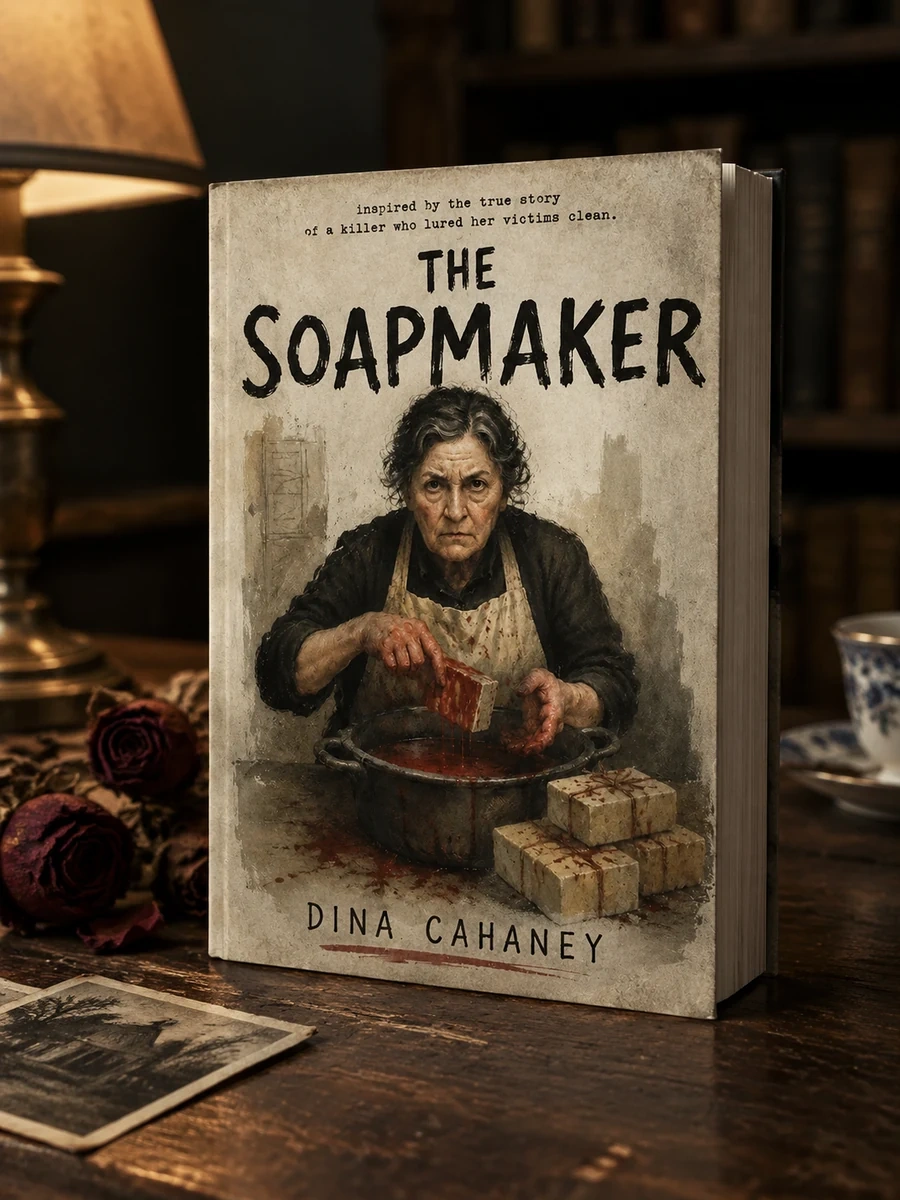
The Soapmaker
A 1940s Italian mother's dark secret hides behind her soapmaking business.
Cahaney focuses on the psychological unraveling of a woman whose devotion turns destructive. The narrative does not shy away from the grim reality of serial violence disguised as maternal care. By grounding the horror in the mundane details of cake baking and soap making, the author creates a sense of unease that lingers long after reading. The story examines the intersection of war anxiety and personal obsession. It shows how isolation can foster dangerous delusions. The text avoids sensationalism, instead offering a slow-burn exploration of guilt and concealment. This methodical approach appeals to readers who prefer atmospheric dread over explicit gore.
The story is set in a quiet Italian town during the 1940s, a period marked by looming war and social suspicion. It draws on the true history of Italy's most infamous female serial killer, grounding the supernatural elements in real-world historical context.


📝 Description: The Soapmaker
💎 Our verdict on The Soapmaker
📖 Why choose it
Why this book is worth reading
This book is ideal for readers who prefer atmospheric dread and psychological unraveling over explicit gore or sensationalism. It appeals to those interested in historical fiction with supernatural elements, particularly fans of gothic atmosphere and the slow-burn exploration of guilt. The narrative grounds its horror in mundane domestic details like soap making and cake baking, creating a lingering sense of unease. Readers seeking to understand how ordinary life can conceal extraordinary horror, or those who enjoy analyzing character dynamics under the weight of unspoken crimes, will find this work compelling. It offers a methodical approach to terror that emerges naturally from setting rather than relying on shock value.
⭐ Reader reviews
Reader rating
Cahaney delivers a chilling narrative where domestic tranquility masks dark secrets, centering on a mother whose devotion turns destructive. The prose remains grounded in the specific 1940s period, avoiding modern sensibilities to allow horror to emerge naturally from character dynamics. By weaving true crime inspiration with gothic atmosphere, the author creates a slow-burn exploration of guilt and concealment. This methodical approach suits readers who favor psychological dread over fast-paced action or lighthearted romance. The novel effectively captures community tension under the weight of unspoken crimes. It is a compelling choice for those interested in how war anxiety influences personal obsession, offering a unique blend of historical fiction and supernatural elements without sacrificing atmospheric depth.
📖 Read on the blog
✍️ More books by this author Dina Cahaney


🏛 Books from this publisher Horror

You might also like
See more →

Have a question about this item?
Ask about the edition, condition, delivery or anything else — we reply by email or phone, usually within a day.
