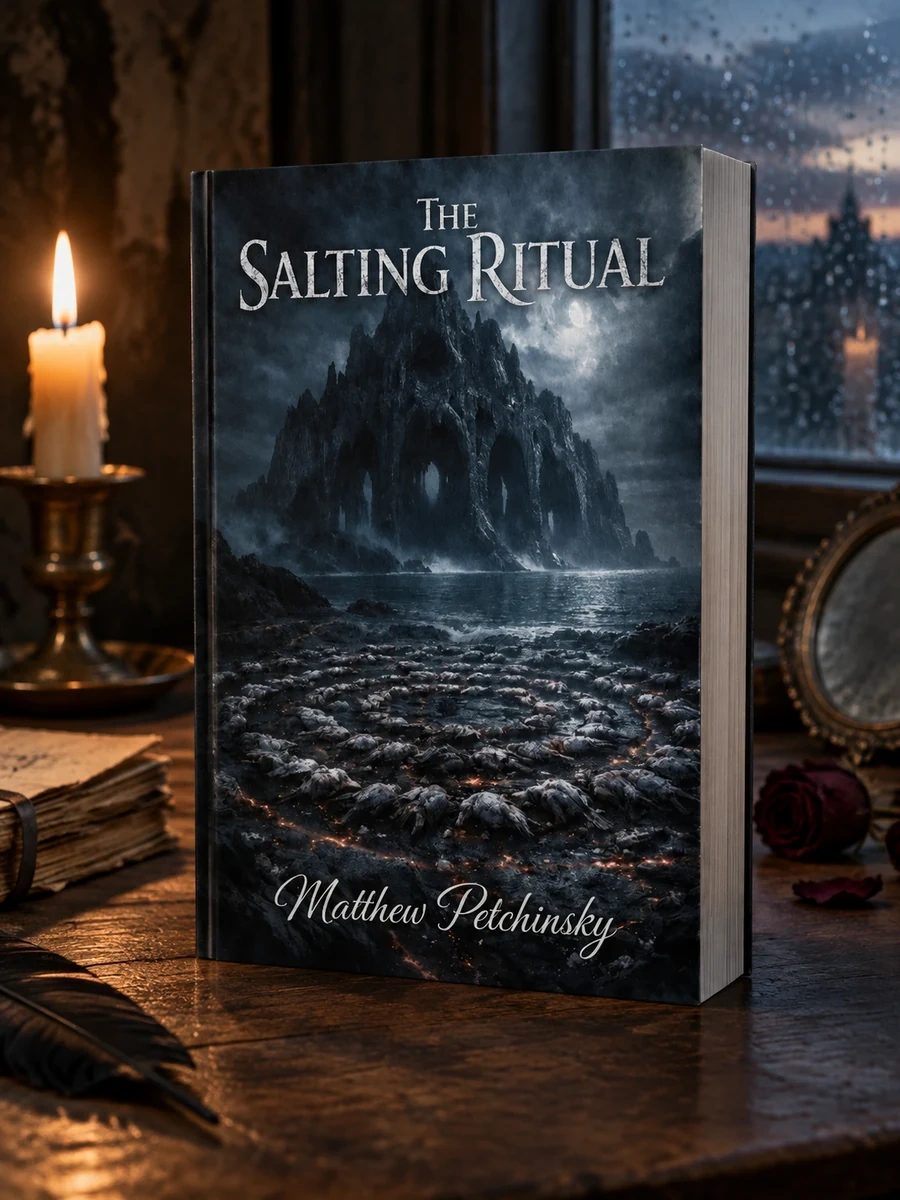

The Salting Ritual
A tale of survivors altered by the sea and a functional ritual beneath the waves.
Daya Sen investigates the consequences of the Ardent Gale tragedy. Survivors come back changed, carrying salt in their bodies and minds influenced by external signals. They describe visions of underwater structures that alter their perception. This personal trauma expands into a global event where people experience synchronized dreams. Children carve unknown glyphs, guided by an unseen presence. Daya follows the trail to a secluded beach. There she understands the ritual is active, not symbolic. The sea is recalling humanity rather than summoning it. The story focuses on Daya’s investigation and the physical mutations of the survivors.
The book sits within the tradition of cosmic horror, drawing on themes of ancient, indifferent entities and the fragility of human perception. It connects to gothic fiction through its focus on isolation and psychological unraveling. The narrative explores the boundary between invasion and return, suggesting a deep, biological connection between humanity and the ocean.


📝 Description: The Salting Ritual
💎 Our verdict on The Salting Ritual
📖 Why choose it
Why this book is worth reading
Readers who appreciate atmospheric, slow-burn horror will find this novel deeply rewarding for its intricate exploration of bodily transformation and psychological erosion. It offers a compelling study of how trauma can manifest physically and collectively, blurring the lines between individual sanity and shared delusion. The narrative invites those interested in the intersection of biology and metaphysics to witness a chilling portrayal of humanity being recalled by the ocean. It is ideal for audiences who enjoy detailed investigations into unexplained phenomena and are willing to engage with dense, unsettling imagery that prioritizes mood and thematic depth over rapid plot progression.
⭐ Reader reviews
Reader rating
Petchinsky delivers a masterful exercise in cosmic dread, focusing intently on the visceral reality of salt accumulation and physical mutation among survivors. The narrative effectively builds tension through Daya Sen’s methodical investigation, revealing a world where the subconscious bleeds into the physical realm via synchronized dreams and carved glyphs. The book excels in creating an atmosphere of inevitable decay, treating the sea not as a backdrop but as an active, reclaiming entity. While the pacing may frustrate those seeking immediate action, it perfectly suits fans of literary horror who value psychological complexity and biological terror. It is a significant contribution to the genre’s exploration of human insignificance.
📖 Read on the blog
✍️ More books by this author Matthew Petchinsky
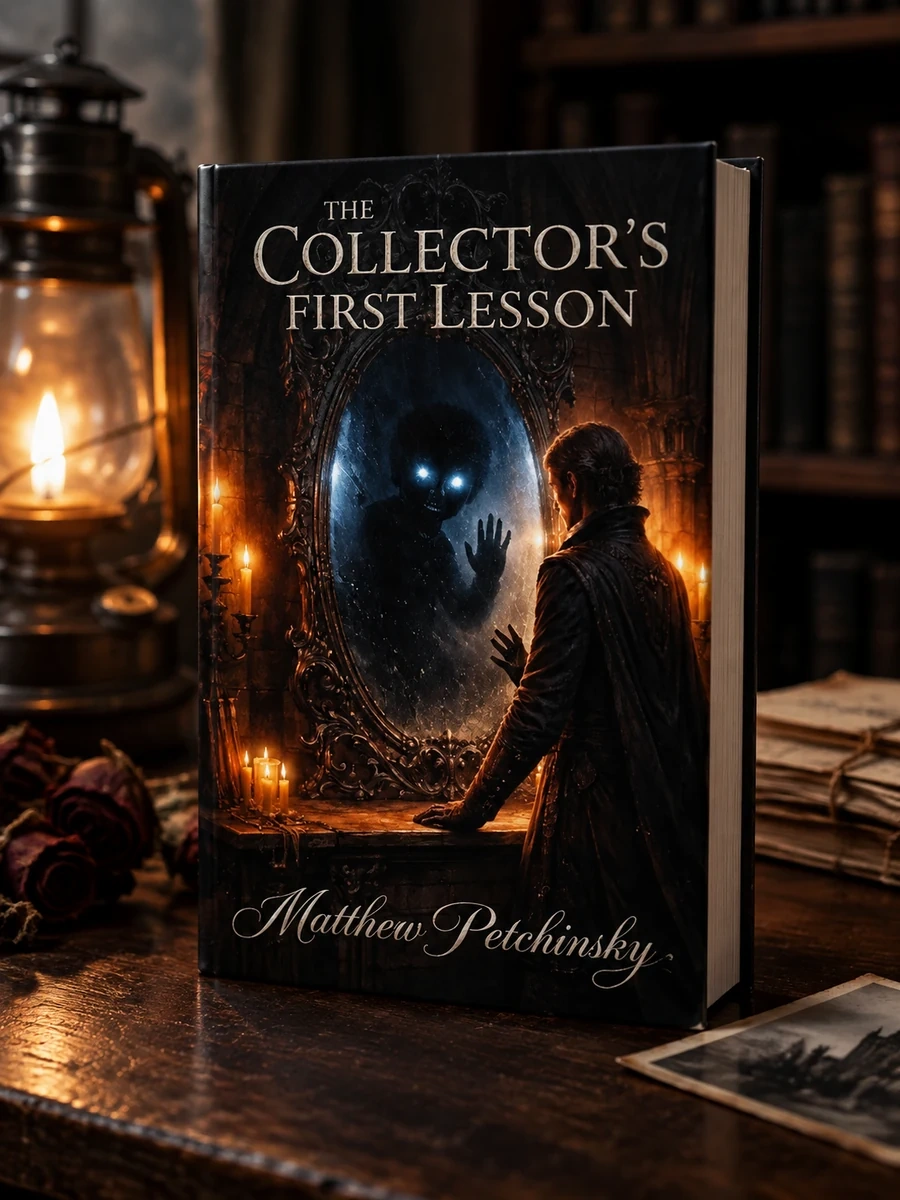



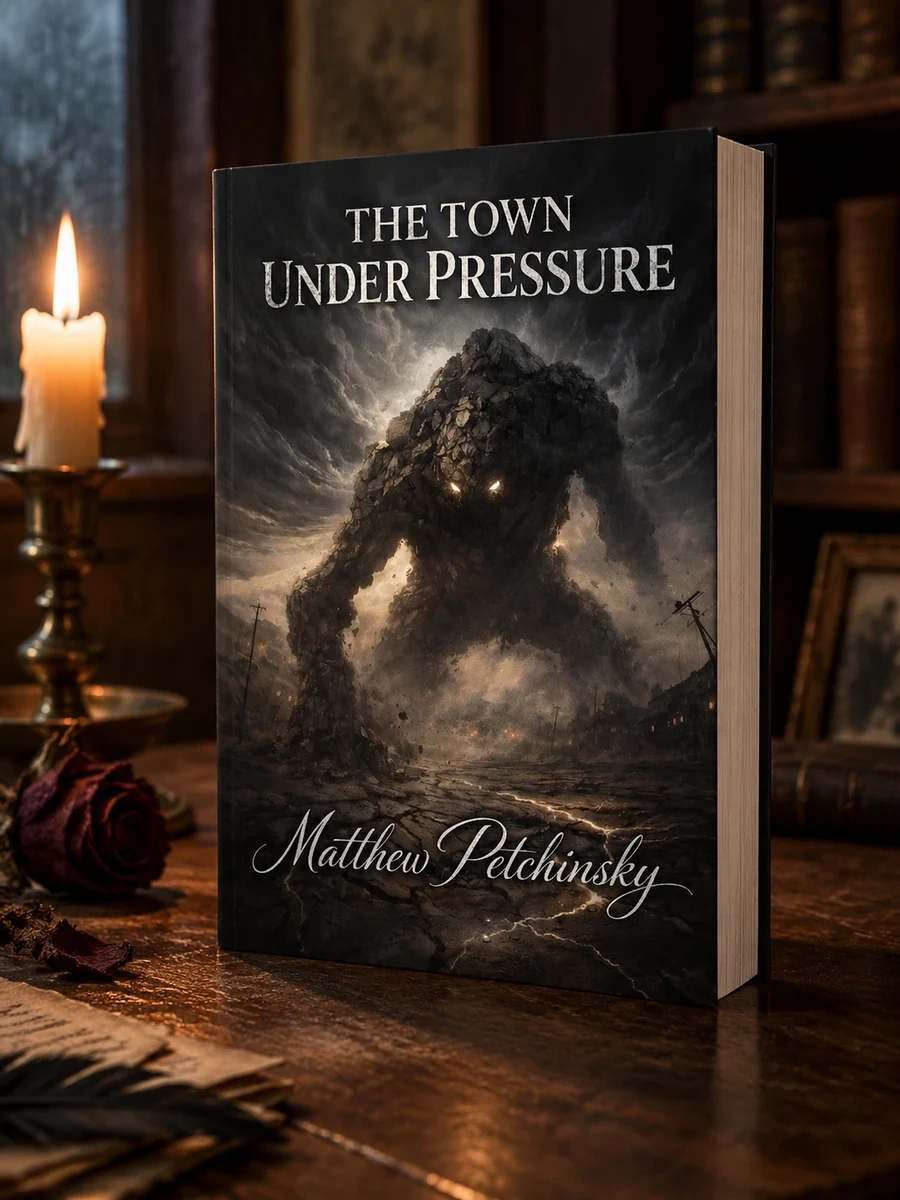



🏛 Books from this publisher Apophis Enterprises LLC
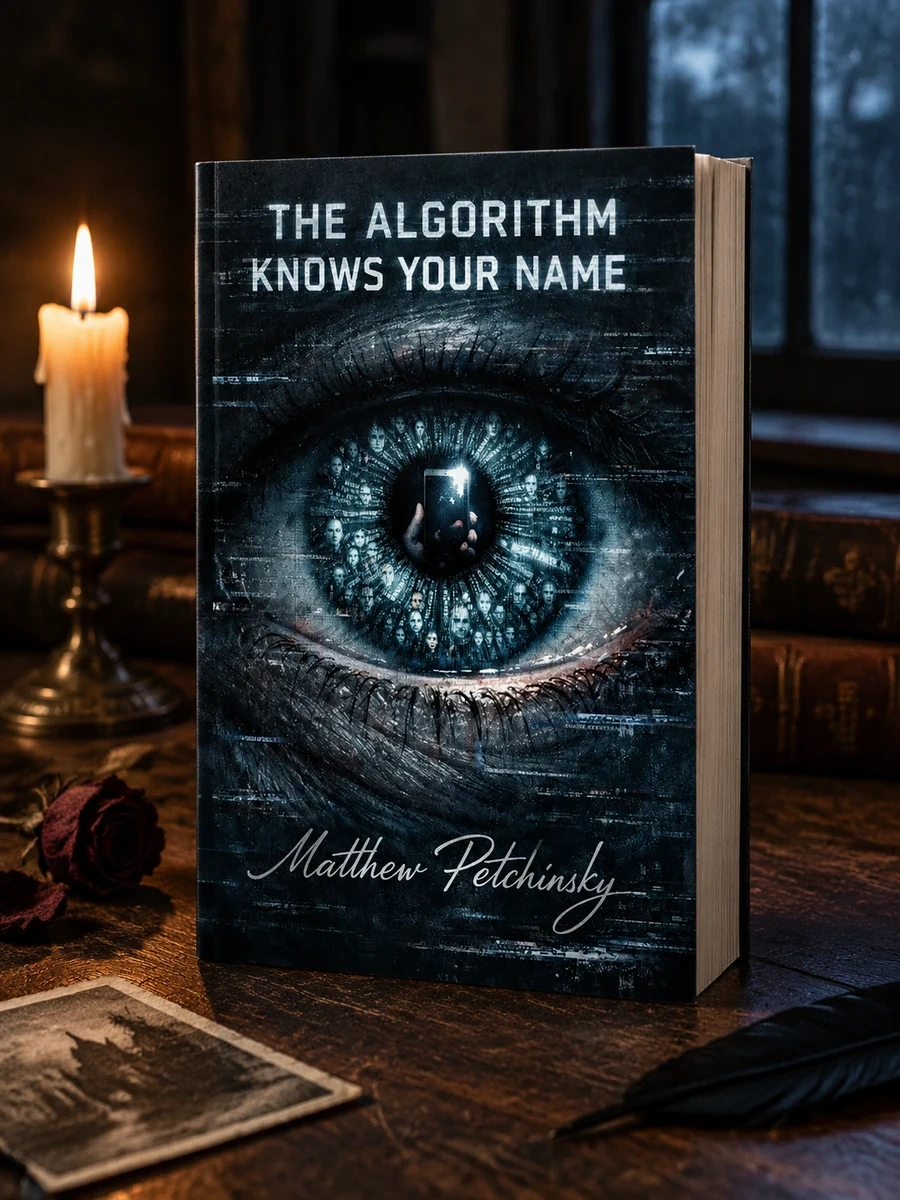





You might also like
See more →

Have a question about this item?
Ask about the edition, condition, delivery or anything else — we reply by email or phone, usually within a day.
