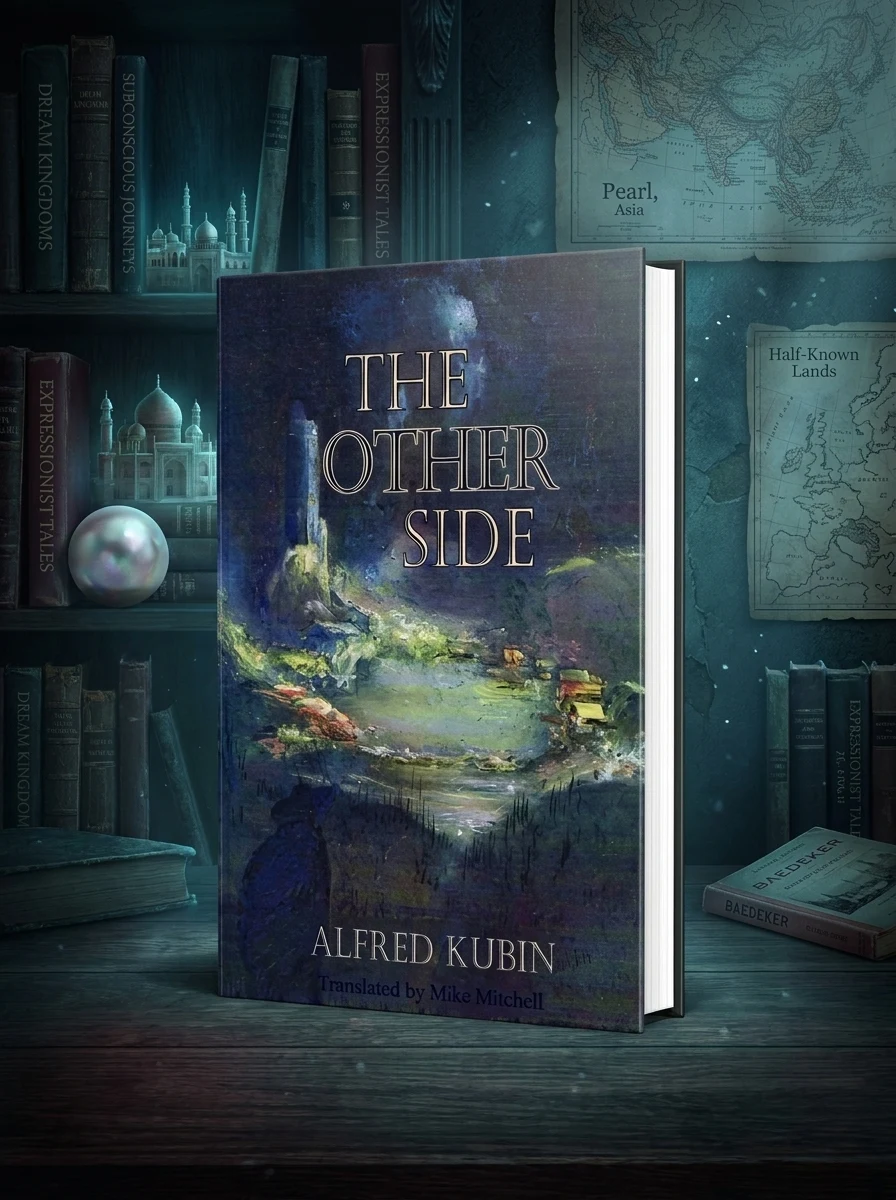
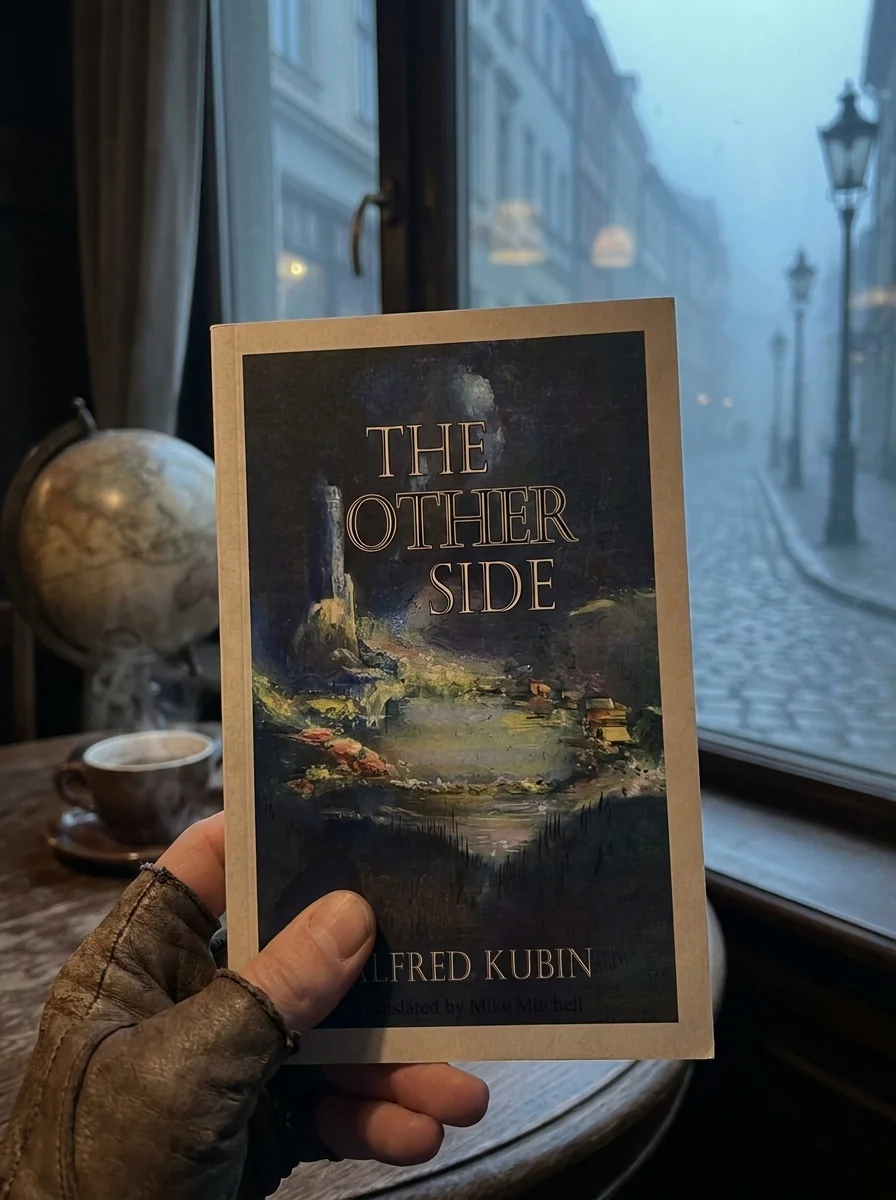
The Other Side
A 1908 novel mapping a nightmare journey to the subconscious city of Pearl.
Kubin crafted this work as a guide to half-known lands, blending travelogue with psychological horror. The story moves toward Pearl, an Asian city that embodies the depths of the mind. Published in 2014 by Dedalus, this edition makes Kubin’s vision accessible to modern readers. The text stands as a bridge between Meyrink and Kafka, capturing the spirit of Expressionism. It does not offer easy answers but rather a map into the uncanny.
Written in 1908, the book sits between Meyrink and Kafka. It garnered enthusiasm from the Expressionist generation of artists and writers. The work reflects early twentieth-century anxieties about the unknown self.


📝 Description: The Other Side
💎 Our verdict on The Other Side
📖 Why choose it
Why this book is worth reading
Readers who appreciate the intricate mapping of the subconscious and the uncanny will find profound value in this text. It serves as a guide to half-known lands, offering a journey into the depths of the mind rather than conventional storytelling. This book is ideal for those interested in gothic fiction, dark fantasy, and the psychological underpinnings of fear. It demands attention to its symbolic landscape, rewarding those willing to confront the unknown aspects of the human psyche. Those seeking straightforward plots may find it unsuitable, but enthusiasts of early twentieth-century literature will gain a unique perspective on mystery and disorientation.
⭐ Reader reviews
Reader rating
Alfred Kubin’s work presents a dream kingdom that shifts into a nightmare, utilizing his artistic background to create a visually rich prose style. The narrative structure mirrors the disorientation of a dream state, guiding readers through strange territories toward Pearl, a city embodying mental depths. While it eschews traditional horror tropes for symbolic exploration, it successfully captures the spirit of Expressionism. This edition makes Kubin’s vision accessible to modern audiences seeking complex psychological horror. It is best suited for readers comfortable with ambiguous narratives and those interested in the intersection of art, literature, and the uncanny.
📖 Read on the blog
📖 From the series “Dedalus European Classics”



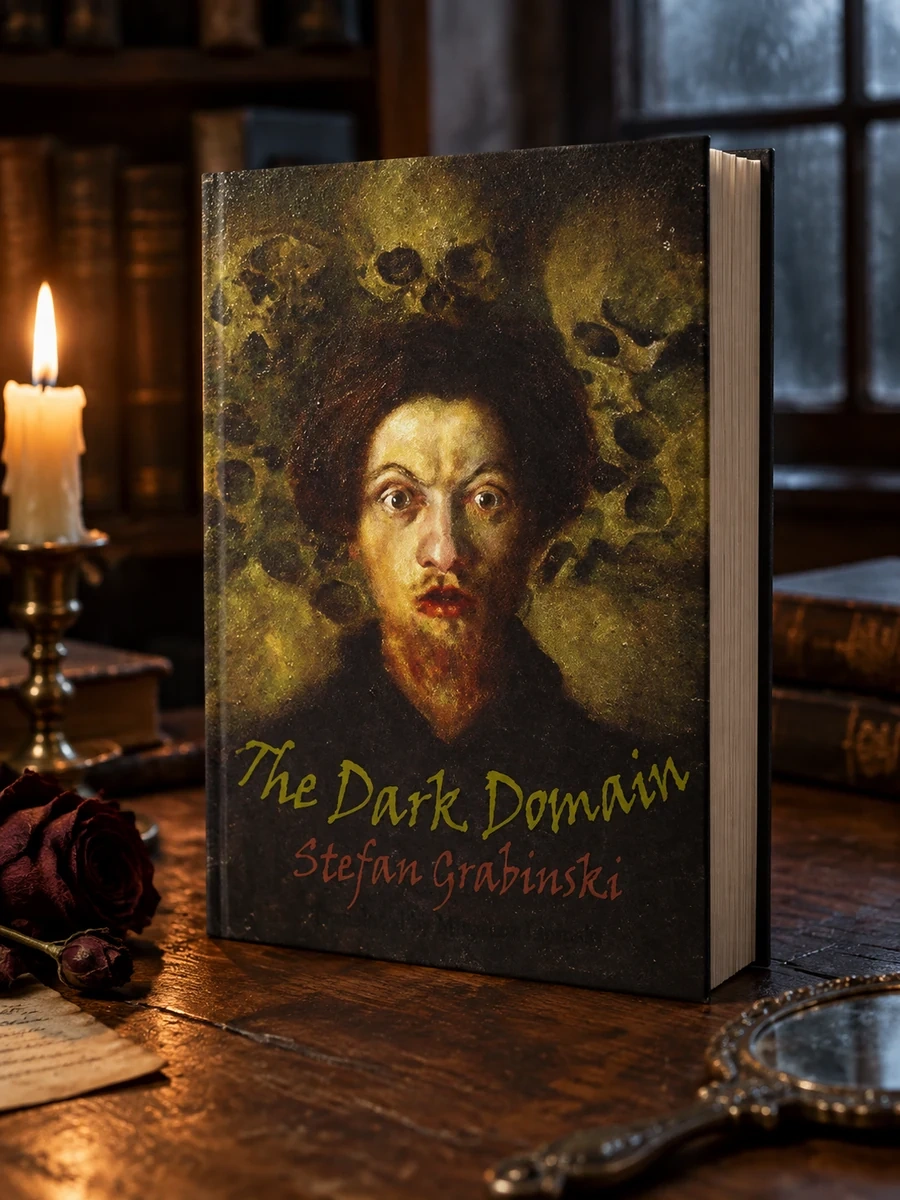
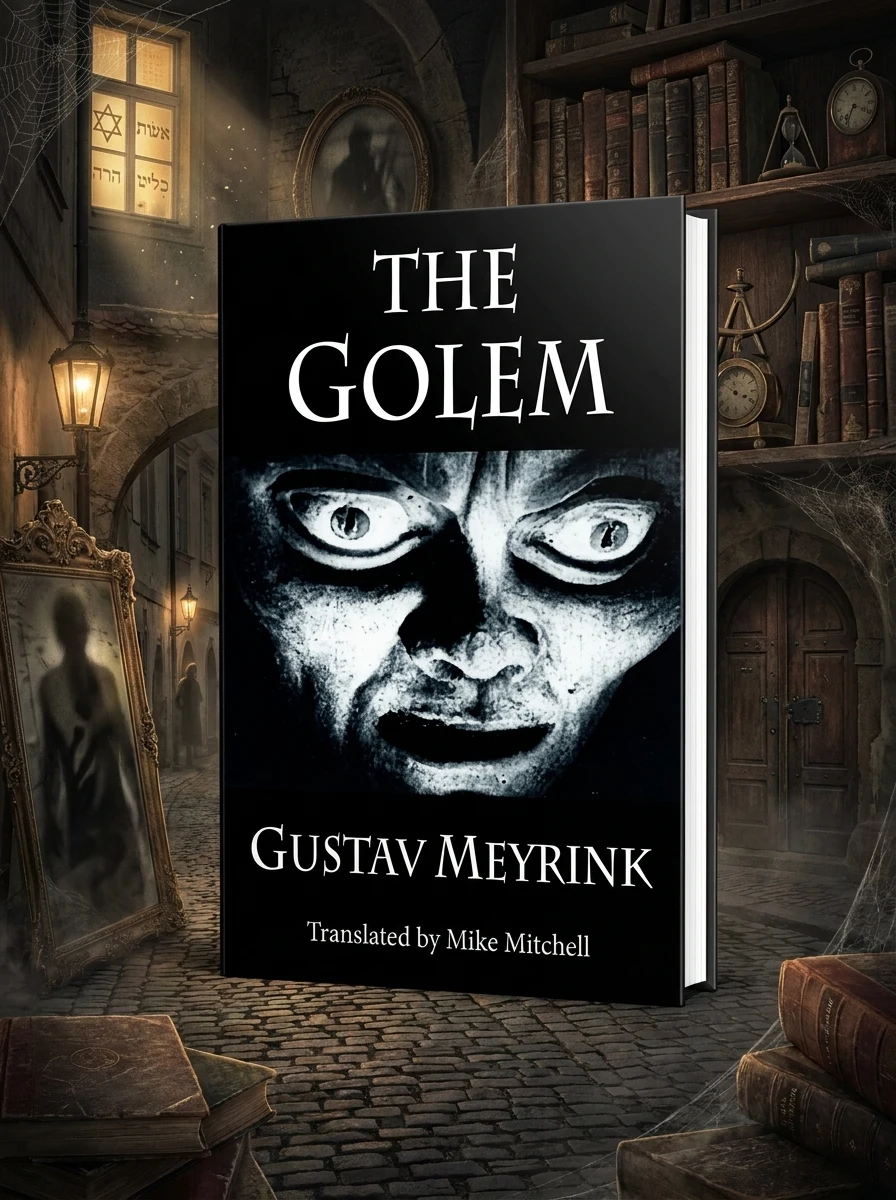
🏛 Books from this publisher Dedalus

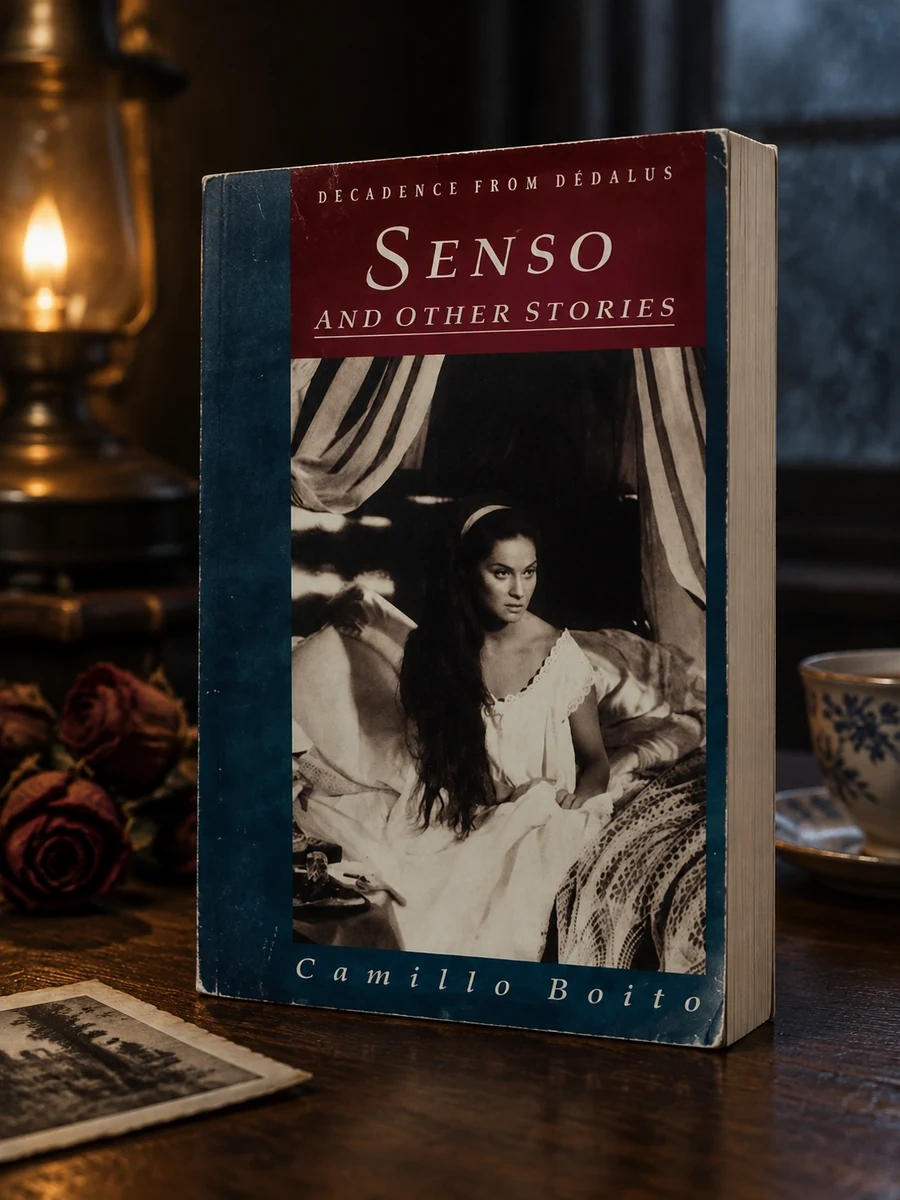
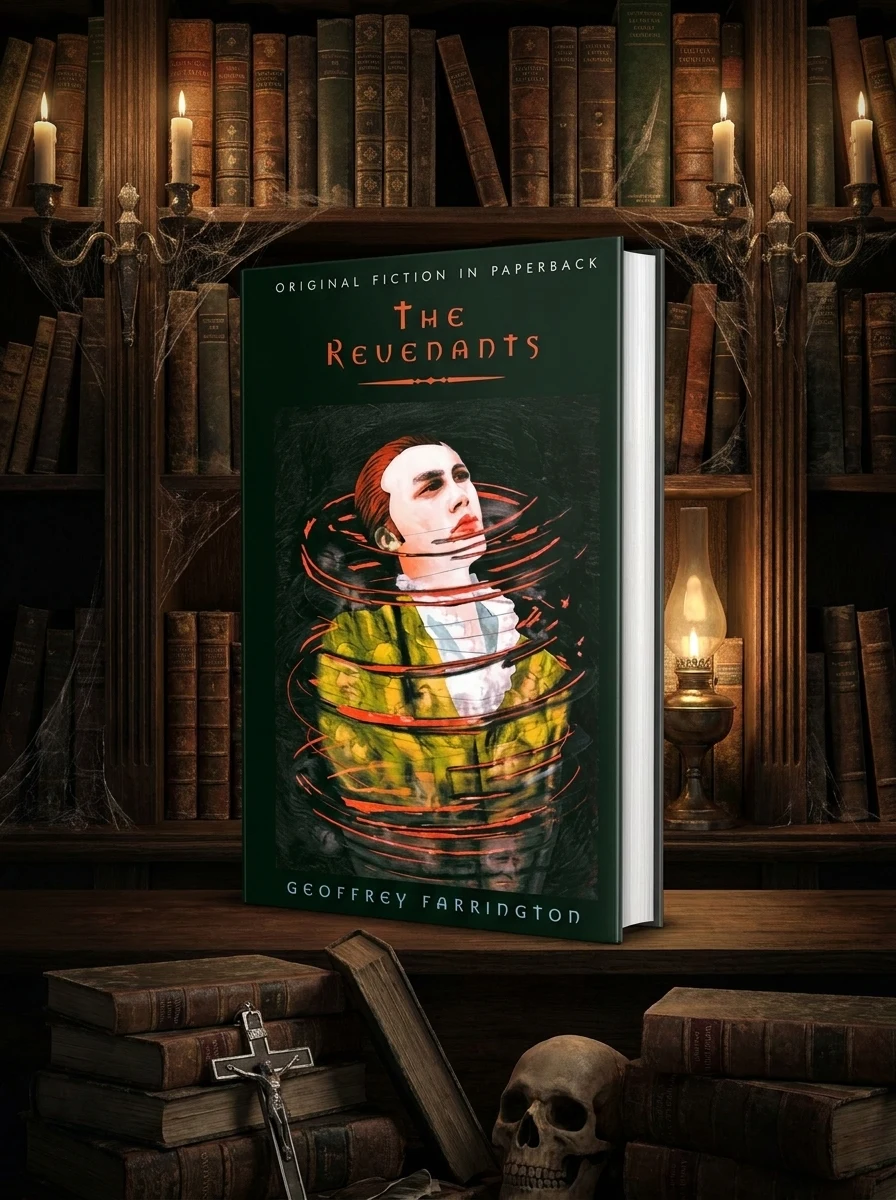
You might also like
See more →


Have a question about this item?
Ask about the edition, condition, delivery or anything else — we reply by email or phone, usually within a day.
