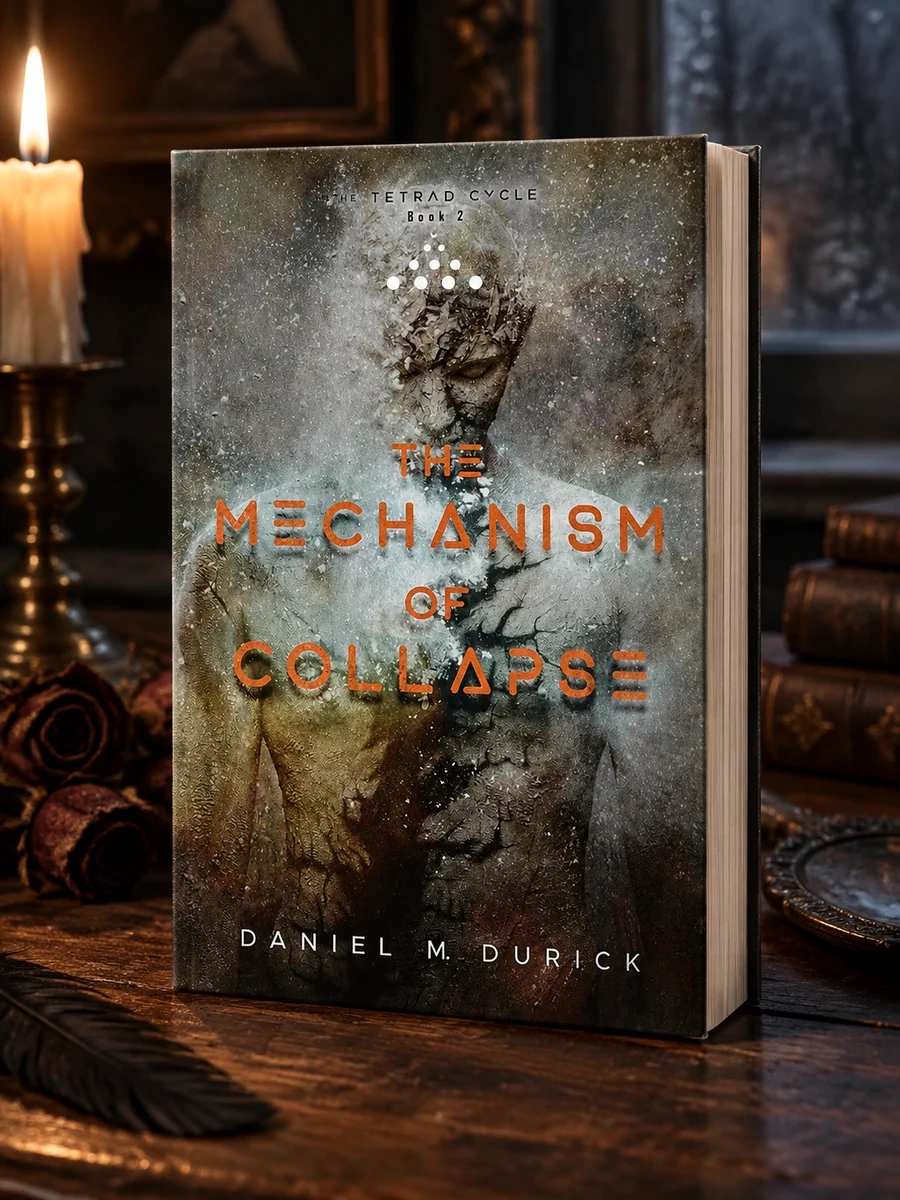
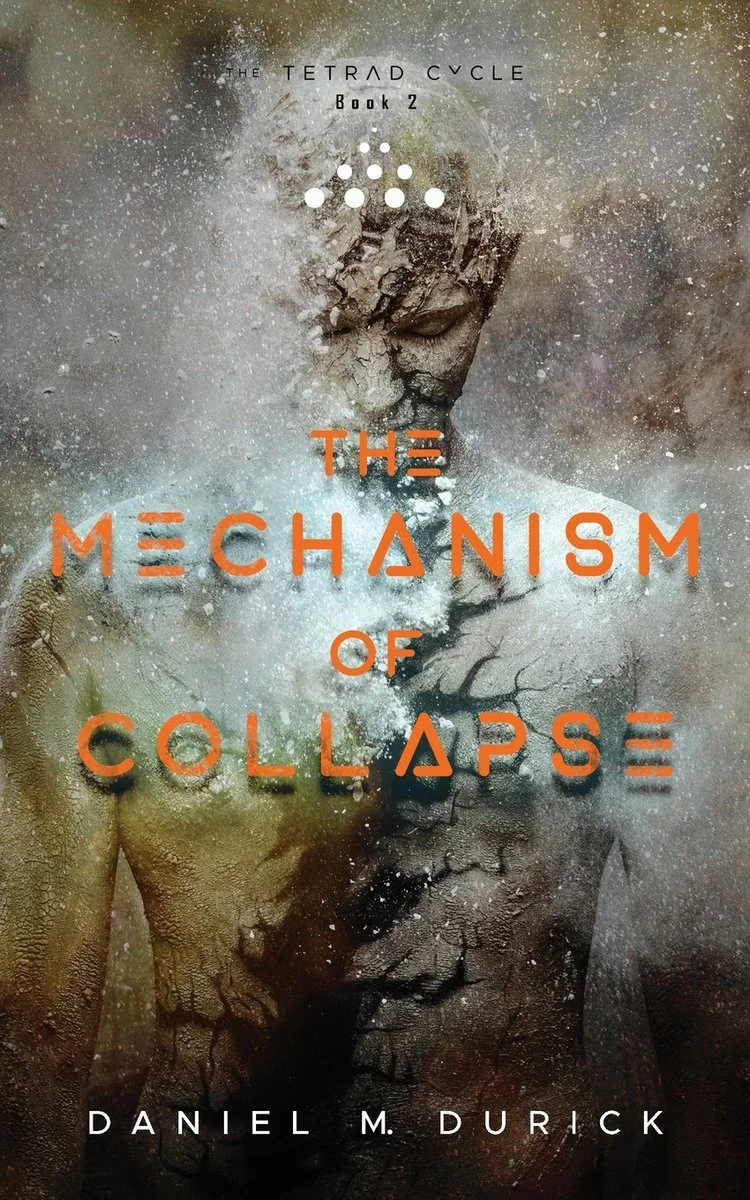
The Mechanism of Collapse
A scientist and a psychic confront an extraterrestrial threat via quantum physics.
The narrative centers on Allen Hemsey’s identification of a soul-like particle in the pineal gland. He believes this discovery protects humanity from an unseen alien danger. Simultaneously, Clausen Carey battles his psychic visions of Bridgewater’s ruin while drowning in vodka. The plot thickens with the disappearance of children and the appearance of faceless predators. As Allen’s findings spread, friendships and marriages dissolve under the weight of new truths. The story moves toward a climax where a black pyramid looms over the city and the Elm River floods. Durick connects quantum mechanics with gothic horror tropes. The work examines the fragility of human identity when faced with cosmic indifference.
This novel sits within contemporary science fiction and supernatural horror traditions. It blends hard scientific concepts with gothic imagery. The story reflects modern anxieties about quantum physics and extraterrestrial contact. Durick draws on the legacy of cosmic horror to explore human vulnerability.


📝 Description: The Mechanism of Collapse
💎 Our verdict on The Mechanism of Collapse
📖 Why choose it
Why this book is worth reading
Readers drawn to the intersection of hard science and metaphysical horror will find this novel compelling. Those who enjoy psychological thrillers that deconstruct identity under pressure will appreciate the focus on Allen Hemsey’s research and Clausen Carey’s deteriorating mind. The book appeals to audiences interested in how empirical truths can fracture personal relationships and challenge the definition of existence. It is ideal for those seeking a dense, atmospheric experience that prioritizes intellectual tension over conventional plot progression, offering a unique perspective on cosmic indifference through the lens of quantum physics.
⭐ Reader reviews
Reader rating
Durick successfully merges technical scientific inquiry with supernatural horror, creating a narrative that feels both grounded and terrifying. The dual structure, alternating between Hemsey’s laboratory findings and Carey’s psychic visions, effectively grounds the cosmic elements in tangible reality. While the tone is undeniably dense, it offers a fresh take on the genre by using quantum mechanics to explain gothic fears. This approach suits readers who prefer intellectual engagement alongside their fright. The depiction of faceless predators and looming pyramids provides strong visual horror, while the erosion of friendships adds necessary emotional weight. It is a solid entry for fans of complex, idea-driven horror narratives.