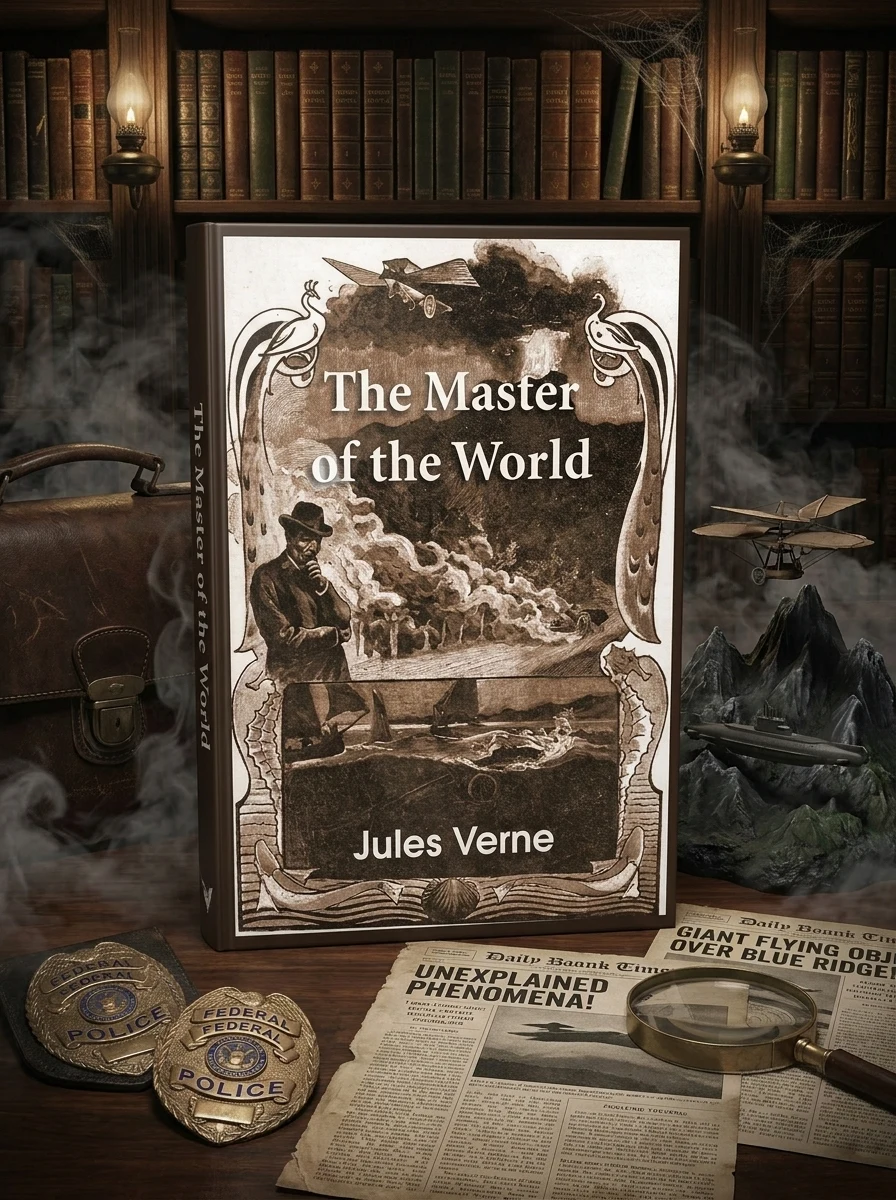
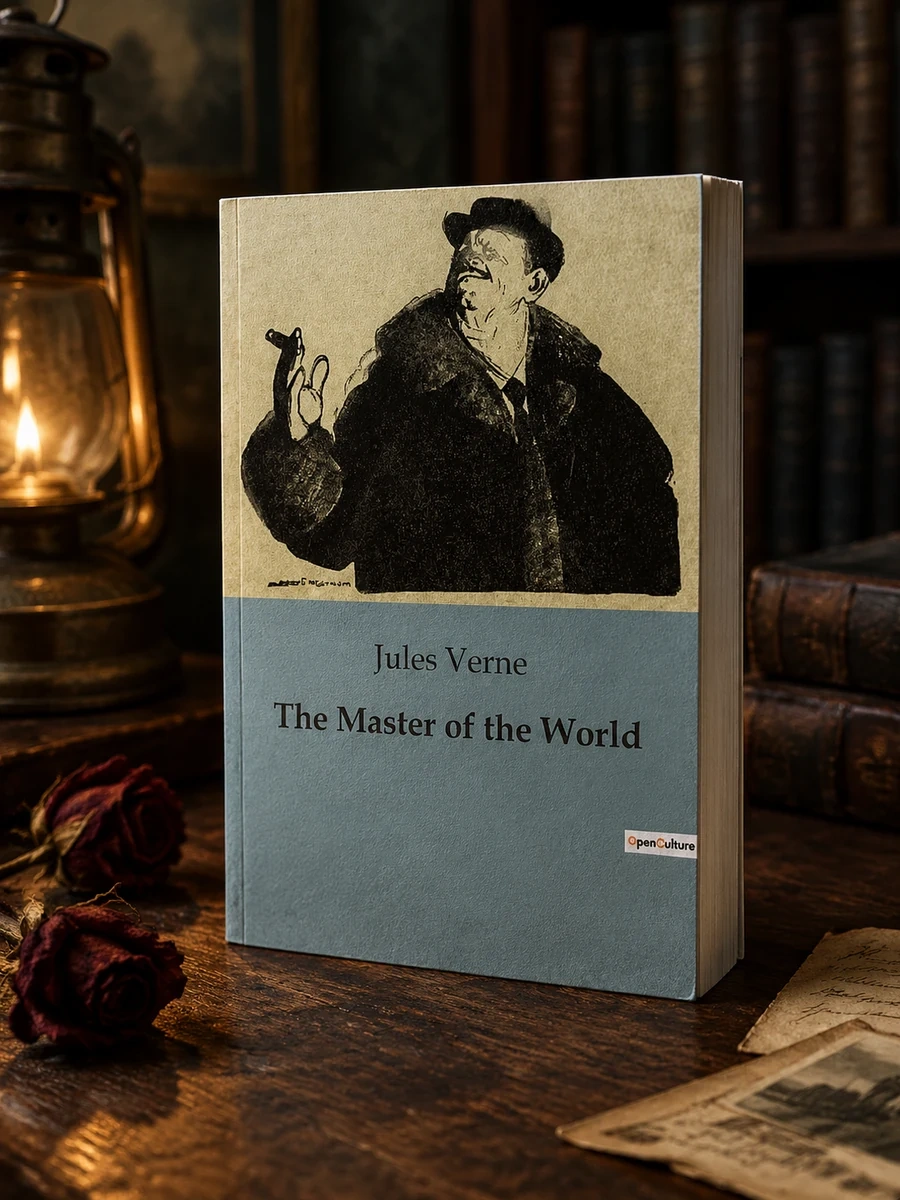
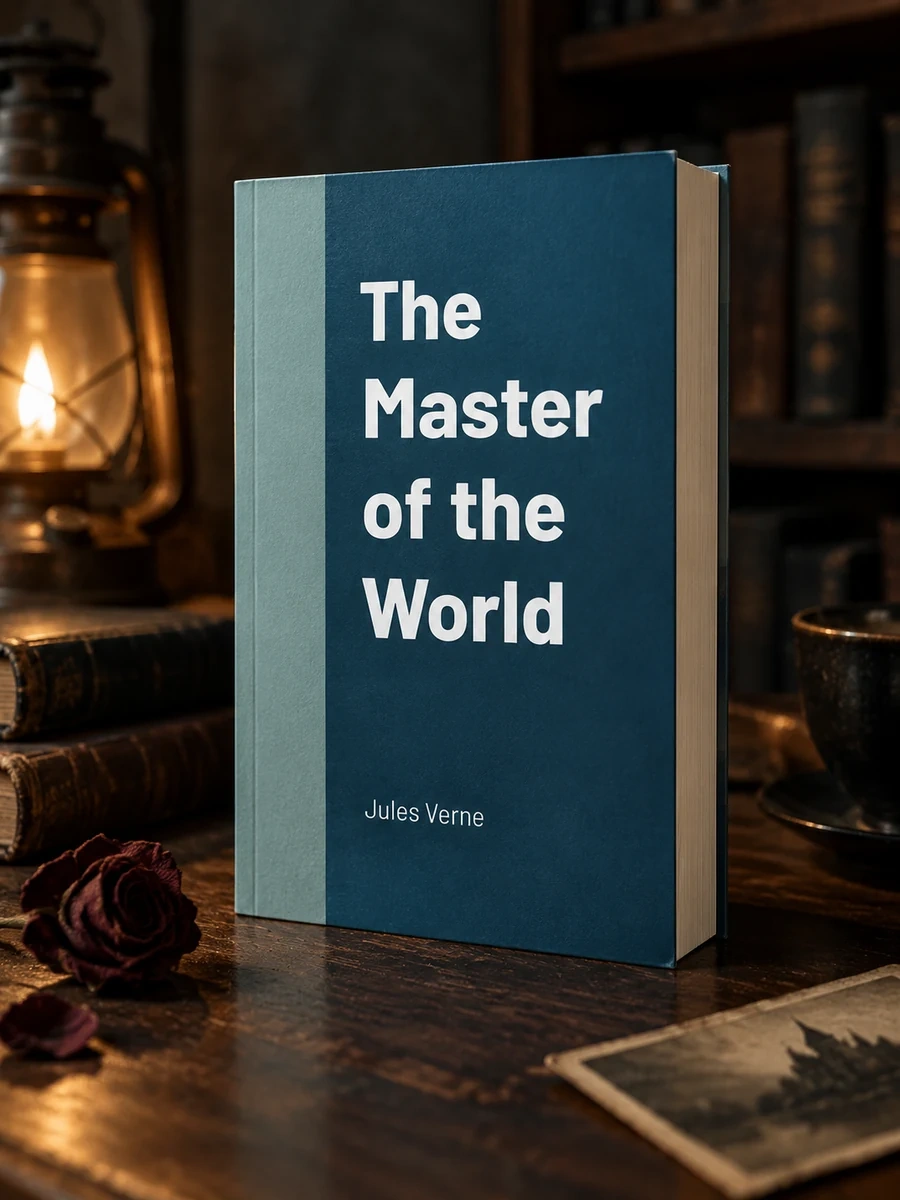
The Master of the World
A sequel to Robur the Conqueror featuring federal inspector John Strock.
The narrative centers on unexplained happenings in the eastern United States caused by near-invisible high-speed objects. Federal police head inspector John Strock leads the investigation from Washington, DC, moving toward the Blue Ridge Mountains. His pursuit reveals that Robur, a brilliant inventor, orchestrates these events. This plot structure reflects Verne’s background in law and his shift to literary creation. The story connects directly to the author’s earlier success with Pierre-Jules Hetzel. It maintains the rigorous detail found in Around the World in Eighty Days while introducing elements of mystery and pursuit.
Jules Verne was a French novelist, poet, and playwright known for adventure novels that influenced science fiction. His collaboration with publisher Pierre-Jules Hetzel created the Voyages Extraordinaires series. This 2014 edition by Bottom of the Hill Publishing presents his final novel as part of that enduring legacy.


📝 Description: The Master of the World
💎 Our verdict on The Master of the World
📖 Why choose it
Why this book is worth reading
Readers interested in the intersection of classic science fiction and early horror elements will find value in this narrative. It appeals to those who appreciate rigorous detail and logical deduction within speculative settings. The book offers a unique perspective on near-invisible high-speed phenomena, grounded in a pursuit plot rather than supernatural explanation. It is ideal for audiences who enjoy law enforcement figures navigating mysterious events across the eastern United States. Those seeking modern horror tropes may find it lacking, but fans of Verne’s tradition will appreciate the continuation of his adventurous spirit.
⭐ Reader reviews
Reader rating
Verne crafts a compelling mystery centered on federal inspector John Strock’s pursuit of Robur in the Blue Ridge Mountains. The text maintains scrupulous research while introducing mysterious happenings that blur the line between science and horror. It suits readers who enjoy logical deductions within speculative frameworks rather than fast-paced action without scientific grounding. The narrative effectively connects to Verne’s earlier successes, offering a distinct entry in his canon. While not satisfying for those seeking modern horror conventions, it remains a strong work for enthusiasts of classic adventure and gothic themes.
📖 Read on the blog
✍️ More books by this author Jules Verne


🏛 Books from this publisher Bottom of the Hill Publishing
You might also like
See more →

Have a question about this item?
Ask about the edition, condition, delivery or anything else — we reply by email or phone, usually within a day.
