The Light at the End of the Tunnel: One Theory of Reincarnation
A narrative exploring reincarnation through a condemned man's life and death.
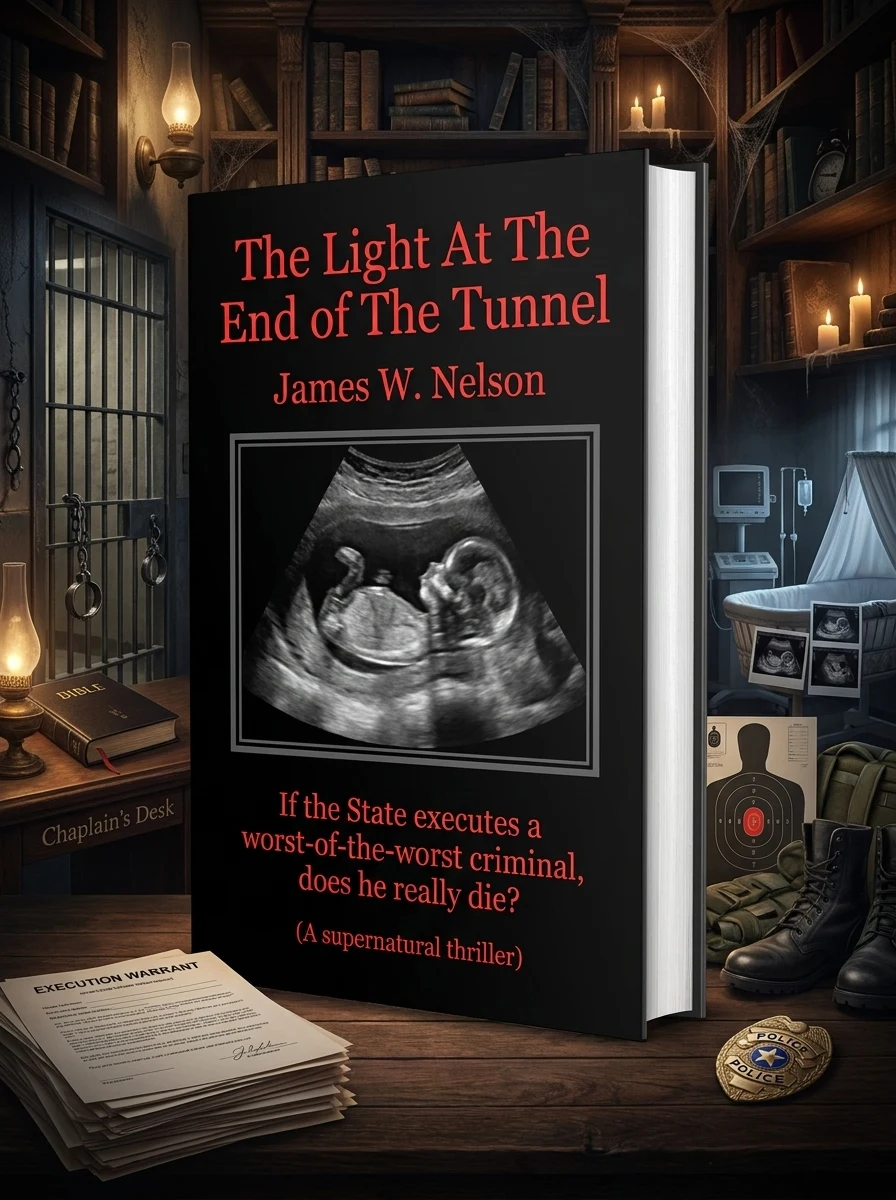
The narrative centers on Les Paul, a worst-of-the-worst criminal on death row. His impending execution triggers a chain of events involving Mrs. Leslie Markum, who bears his reincarnation. Nicole Waters works at the hospital where the baby is left, while Riley Stokes helps the chaplain and her become investigators. Cassandra, the reincarnated child, endures a lonely existence in foster care after her parents' fates diverge. The story questions whether death truly ends a criminal's influence. Nelson uses these character arcs to illustrate his theory. The plot moves from the prison cell to the hospital and into the foster system. It connects military service, law enforcement, and spiritual belief. The text suggests that evil persists across lifetimes regardless of legal punishment.
Published in 2012 by Createspace Independent Publishing Platform, this work sits within the genre of supernatural fiction. It addresses American concerns regarding capital punishment and the legal system's finality. The narrative reflects contemporary views on whether justice can truly end evil or merely pause it.


📝 Description: The Light at the End of the Tunnel: One Theory of Reincarnation
💎 Our verdict on The Light at the End of the Tunnel: One Theory of Reincarnation
📖 Why choose it
Why this book is worth reading
Readers interested in supernatural fiction and philosophical inquiries into the soul's continuity after execution will find this narrative compelling. It appeals to those who prefer psychological tension over traditional gore, offering a structured exploration of how a condemned man's influence persists through reincarnation. The story is ideal for audiences who enjoy tracing intersecting character arcs across different social spheres, from death row to foster care. It provides a unique lens on the cycle of violence and spiritual endurance, catering to minds that appreciate complex thematic connections between military service, law enforcement, and esoteric beliefs about life after death.
⭐ Reader reviews
Reader rating
Nelson constructs a tightly woven narrative that bridges the gap between criminal justice and metaphysical horror. By following Les Paul’s transition into a new life through Cassandra, the text effectively illustrates the persistence of evil regardless of legal punishment. The structure interlaces multiple perspectives, from the chaplain’s desperate intervention to Riley Stokes’ investigative guidance, creating a cohesive philosophical argument. While it lacks traditional horror gore, its strength lies in its atmospheric tension and exploration of the soul's continuity. This book suits readers who value intellectual engagement with supernatural themes and are intrigued by the psychological impact of reincarnation on identity and fate within a dark fantasy framework.
📖 Read on the blog
🏛 Books from this publisher Createspace Independent Publishing Platform








You might also like
See more →





Have a question about this item?
Ask about the edition, condition, delivery or anything else — we reply by email or phone, usually within a day.
