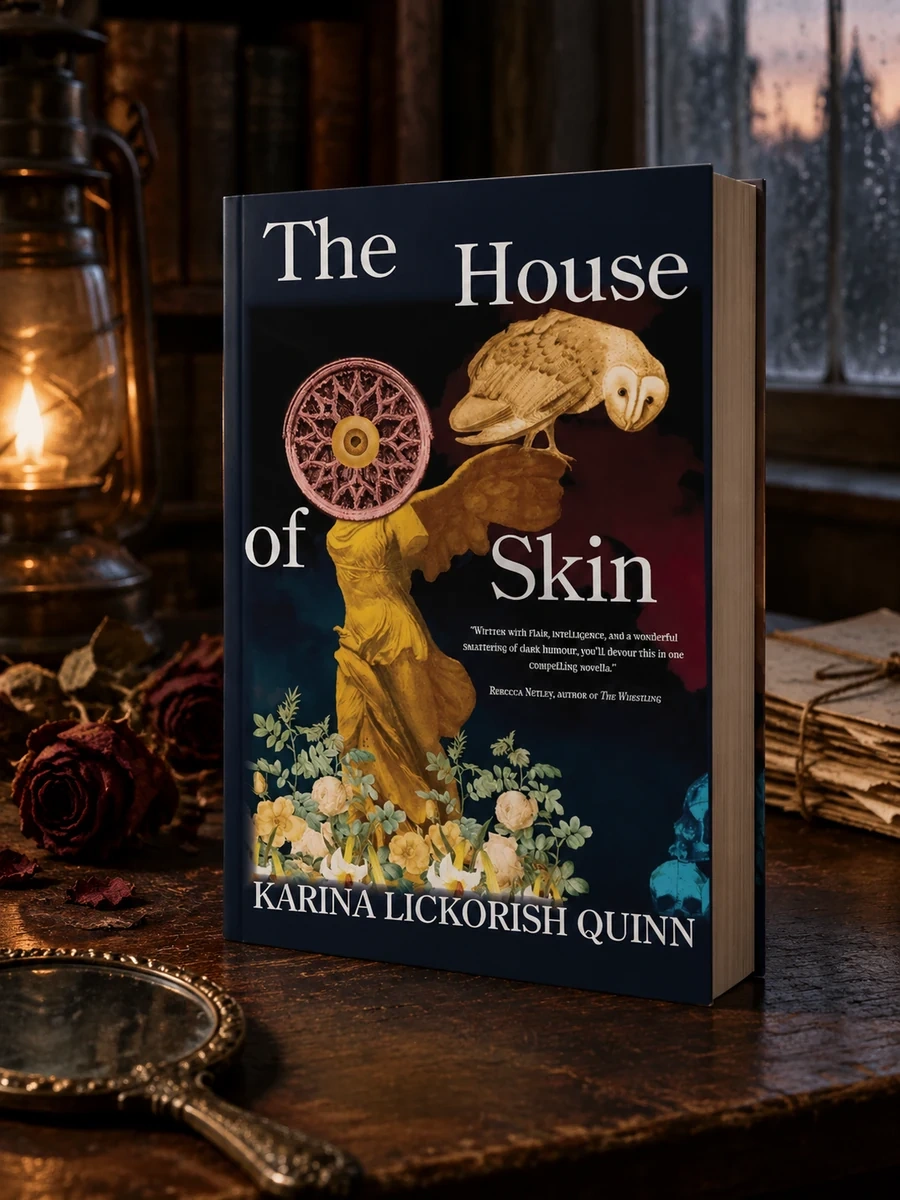
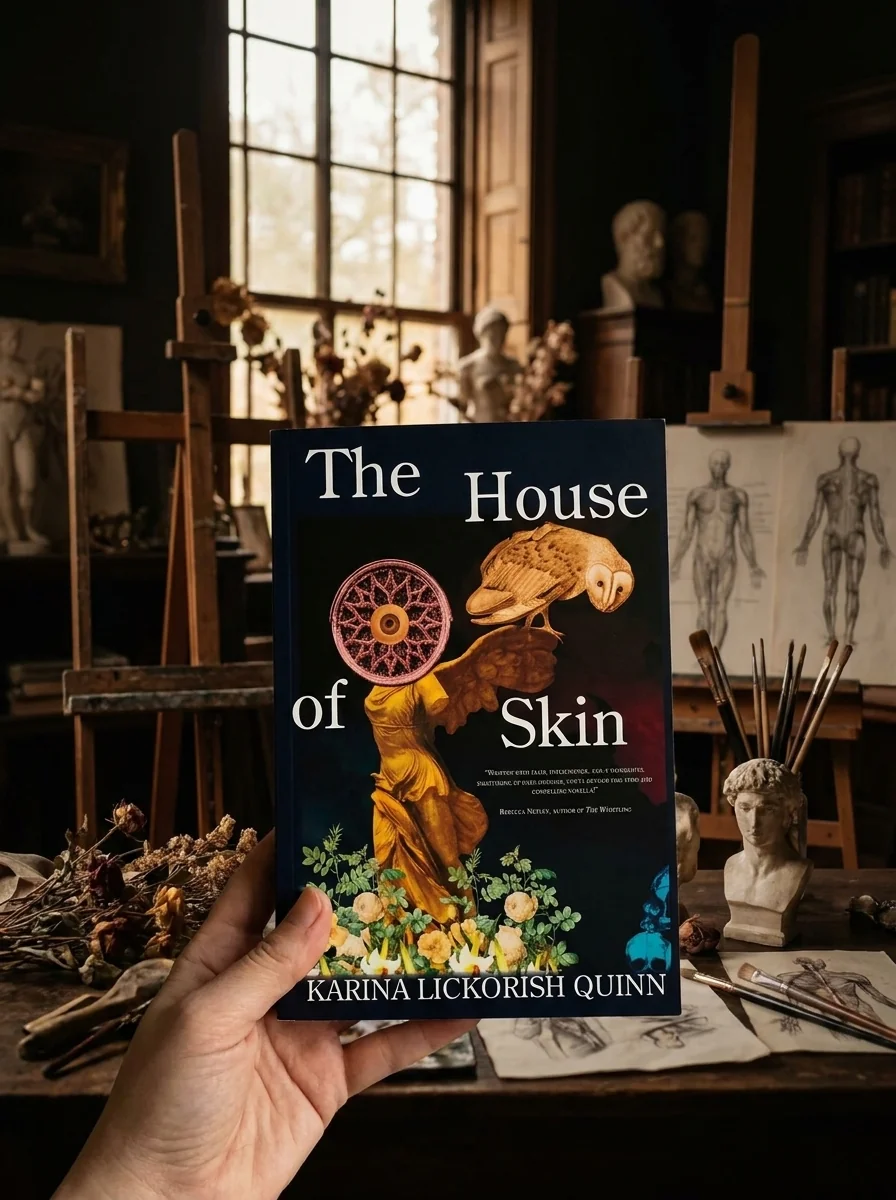
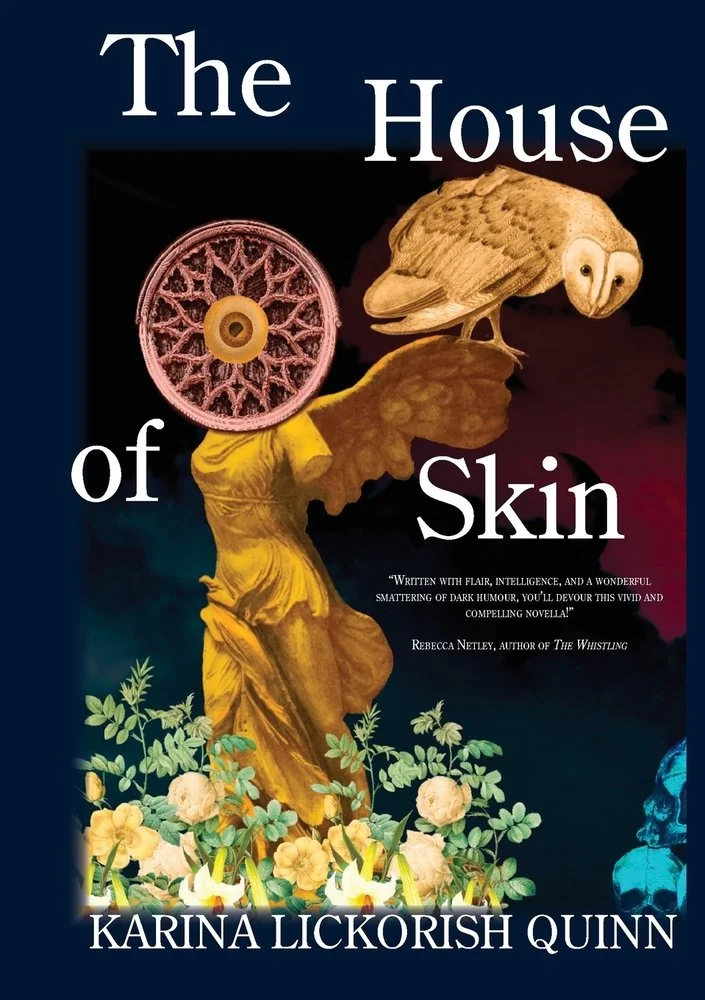
The House of Skin
A surreal gothic novelette about an artist's unsettling commission in a country home.
Quinn presents a story where art and identity blur through a supernatural lens. The protagonist’s journey into the house reveals hidden truths about creation. This approach mirrors the styles of Machado and Lispector. The narrative structure supports this intimate focus on the self. Readers interested in the intersection of body and creativity will find resonance here. The text avoids simple resolutions, leaving room for interpretation. It is a compact work that demands attention to detail.
This novelette sits within the tradition of literary surrealism and gothic fiction. It connects to contemporary works by authors like Carmen Maria Machado and Clarice Lispector. The setting in the English countryside grounds the supernatural elements in a specific geographical and cultural context.


📝 Description: The House of Skin
💎 Our verdict on The House of Skin
📖 Why choose it
Why this book is worth reading
Readers who appreciate the intersection of body and creativity will find resonance in this compact work. It offers an intimate focus on the self, inviting consideration of where a woman’s existence ends and her art begins. Fans of psychological tension and artistic introspection will engage deeply with the text. The narrative avoids simple resolutions, leaving ample room for interpretation. Those comfortable with ambiguous endings and complex character dynamics will discover a rich exploration of identity. The book demands attention to detail rather than relying on straightforward plots or jump scares. It is ideal for those seeking a concentrated thematic experience without the sprawl of a full novel.
⭐ Reader reviews
Reader rating
Quinn crafts a visceral tale informed by her sculptural background, using the house as a backdrop for exploring identity. The narrative builds slow dread through surreal elements rather than traditional horror tropes. This approach may disorient readers seeking conventional plots but rewards those interested in psychological tension. The novelette format allows for a concentrated exploration of themes regarding creation and existence. It stands as a literary work that mirrors the styles of Machado and Lispector. Readers valuing artistic introspection will find the text compelling. The ambiguous nature of the ending ensures lasting impact. It is a sophisticated entry in the gothic genre that prioritizes atmosphere and internal conflict over external action.
📖 Read on the blog
🏛 Books from this publisher Stanchion LLC


You might also like
See more →



Have a question about this item?
Ask about the edition, condition, delivery or anything else — we reply by email or phone, usually within a day.
