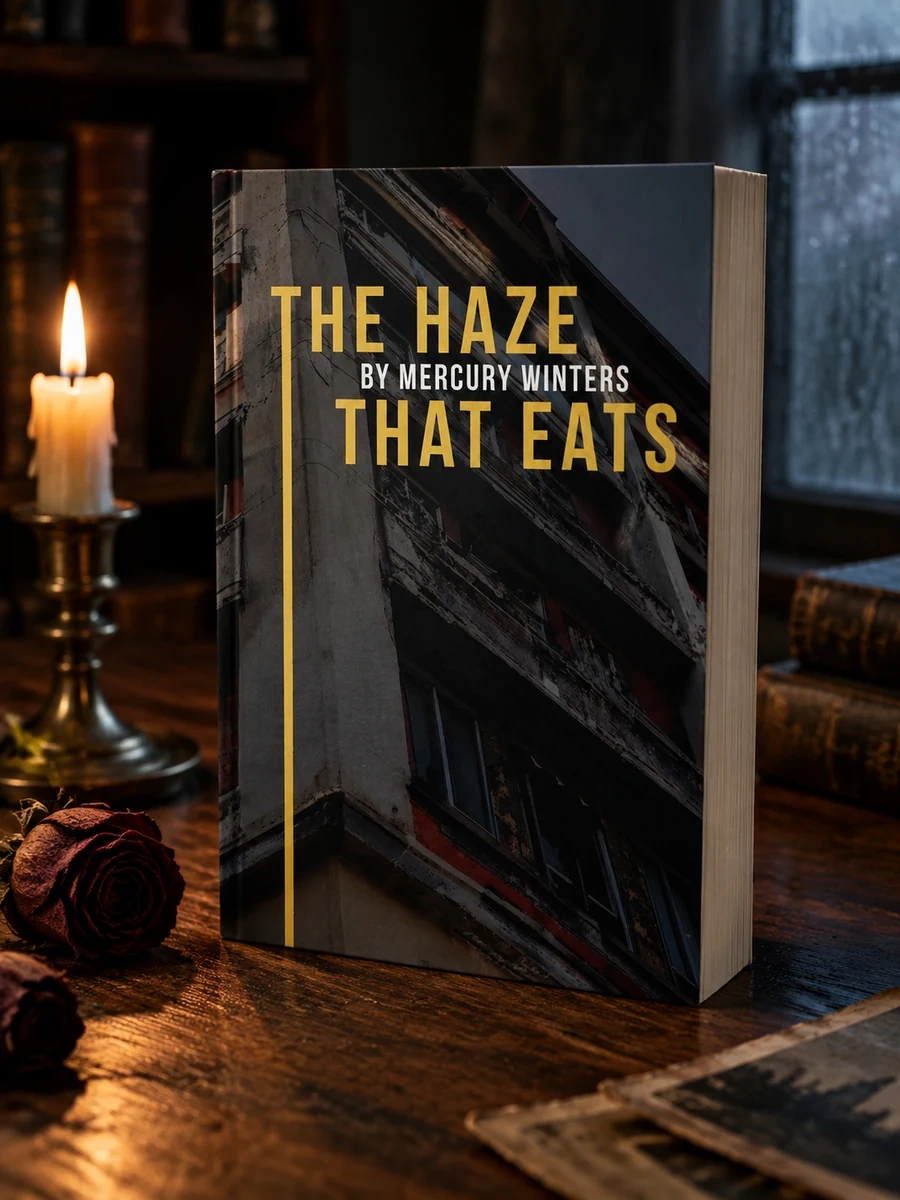
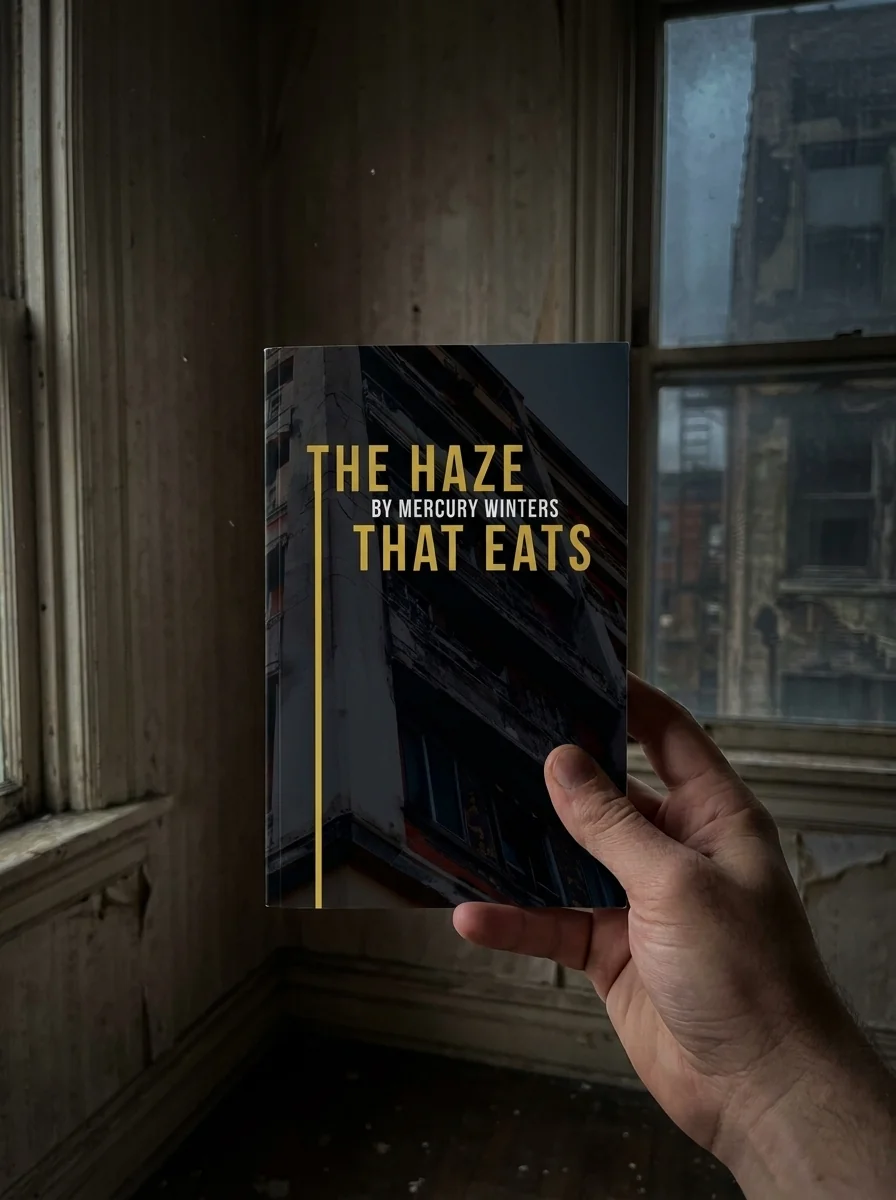

The Haze That Eats
A woman finds her inherited apartment building actively preventing her escape.
This novel follows Marisol as she attempts to manage an aging apartment complex that has become her sole responsibility. The structure itself seems determined to keep her there, creating a scenario where leaving is impossible. Winters focuses on the psychological impact of this confinement rather than supernatural spectacle. The narrative examines how isolation can warp one's perception of reality and safety. Marisol’s efforts to maintain control over her new life are systematically undermined by the building’s oppressive nature. The story highlights the horror of being trapped in a familiar yet hostile environment. It offers a close look at the mental toll of living in a place that refuses to let go.
Published in 2024 by Mercury Winters, this work fits within contemporary horror fiction. It draws on the American tradition of domestic gothic narratives. The story reflects modern anxieties about housing and loss of autonomy. The setting is a generic but imposing apartment building, reflecting urban decay themes common in recent speculative fiction.


📝 Description: The Haze That Eats
💎 Our verdict on The Haze That Eats
📖 Why choose it
Why this book is worth reading
Readers who appreciate slow-burn psychological horror and nuanced explorations of the human mind will find this book deeply rewarding. It offers a compelling study of how isolation warps perception, making it ideal for those who enjoy narratives where the environment itself serves as the primary antagonist. Fans of gothic fiction that focuses on the erosion of agency and the claustrophobic nature of inherited burdens will connect with Marisol’s struggle. The book is particularly suited for individuals who prefer atmospheric tension and internal conflict over fast-paced action or traditional jump scares, providing a steady build of dread.
⭐ Reader reviews
Reader rating
Mercury Winters delivers a masterful examination of entrapment, using the physical decay of an apartment building to mirror the protagonist’s deteriorating mental state. The narrative excels in creating a suffocating atmosphere where the architecture feels alive and hostile, effectively blurring the line between psychological breakdown and supernatural oppression. By focusing on the internal struggle against an immovable force, Winters generates a persistent sense of dread without relying on external monsters or cheap scares. This approach resonates strongly with lovers of gothic fiction who value character-driven tension. The book is best suited for readers seeking a contained horror story that prioritizes the mental toll of confinement and the loss of control over conventional plot resolutions.
You might also like
See more →






Have a question about this item?
Ask about the edition, condition, delivery or anything else — we reply by email or phone, usually within a day.
