The Glass Abattoir
A neo-gothic novella following three sisters and a maid in a haunted mansion.
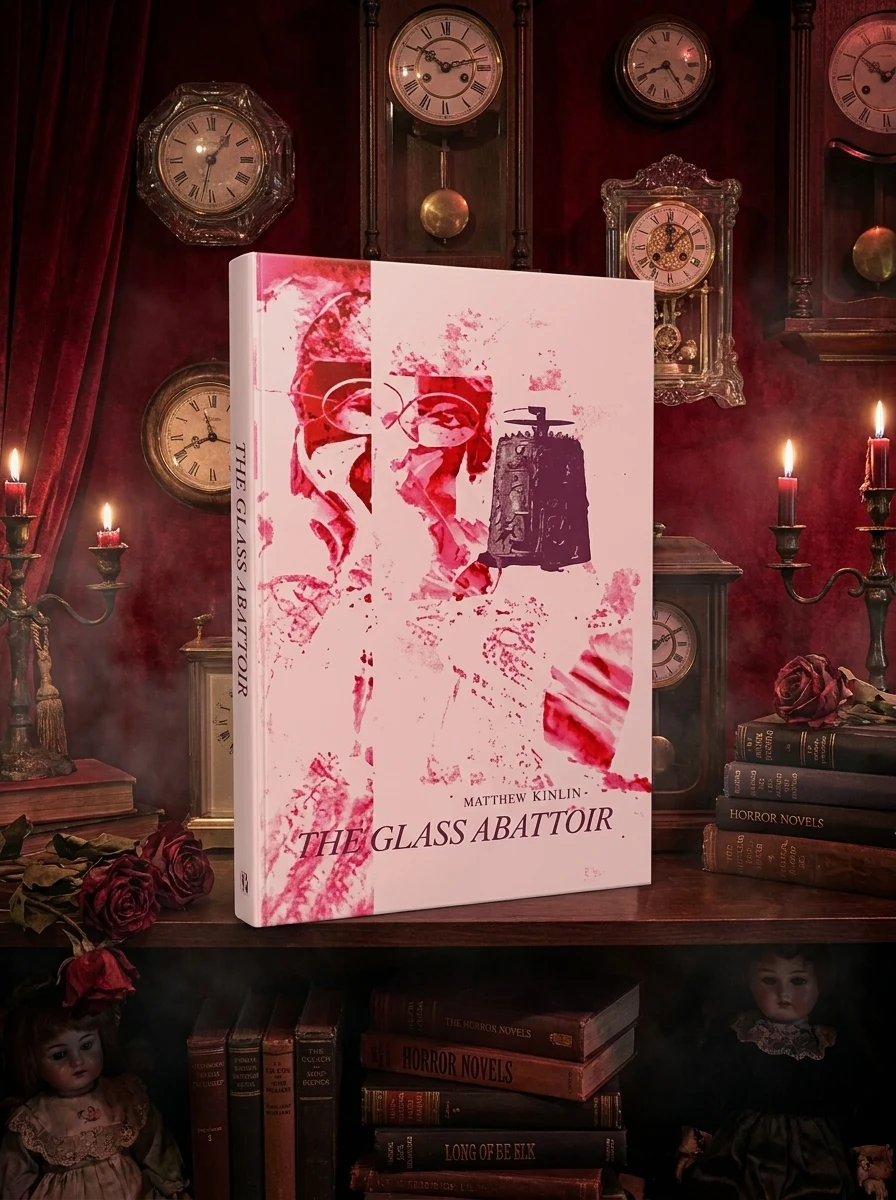
Kinlin explores the psychological weight of grief through four characters trapped in a symbolic house. The narrative focuses on their interactions within crimson rooms, using the ticking glass clocks to emphasize the relentless nature of time and memory. This approach creates a hallucinatory atmosphere that feels both ethereal and real. The story does not rely on external monsters but rather on the internal horrors faced by the sisters and their servant. It is a quiet, intense examination of how trauma manifests in domestic spaces.
The novella sits within the neo-gothic tradition, explicitly inspired by Ingmar Bergman’s 1972 film Cries and Whispers. It adapts cinematic techniques into prose to explore the human soul. Published in 2023 by Dfl Lit, it connects modern horror fiction with earlier European art house cinema.


📝 Description: The Glass Abattoir
💎 Our verdict on The Glass Abattoir
📖 Why choose it
Why this book is worth reading
Readers seeking a quiet, intense examination of trauma will find value in Kinlin’s atmospheric storytelling. This book suits those who appreciate gothic fiction and supernatural themes rooted in cinematic history rather than external monsters. It is ideal for audiences willing to endure a slow, psychological focus that prioritizes the internal horrors faced by characters over traditional horror tropes or fast-paced action. The novella offers a hallucinatory experience where grief manifests within domestic spaces, making it a compelling study of isolation and memory for those who enjoy ethereal imagery balanced with macabre realism.
⭐ Reader reviews
Reader rating
Kinlin masterfully constructs a neo-gothic narrative that prioritizes psychological depth over visceral scares. By utilizing crimson rooms and ticking glass clocks, he creates a relentless sense of time and memory that traps the reader in the characters' shared trauma. The work succeeds as a study of grief, offering a hallucinatory yet grounded experience inspired by Bergman’s cinematic style. It best suits readers who value atmospheric storytelling and are interested in how internal turmoil manifests within architectural spaces. Those seeking traditional horror or rapid pacing may find the slow burn less appealing, but fans of literary gothic fiction will appreciate its visual motifs and emotional weight.
You might also like
See more →





Have a question about this item?
Ask about the edition, condition, delivery or anything else — we reply by email or phone, usually within a day.
