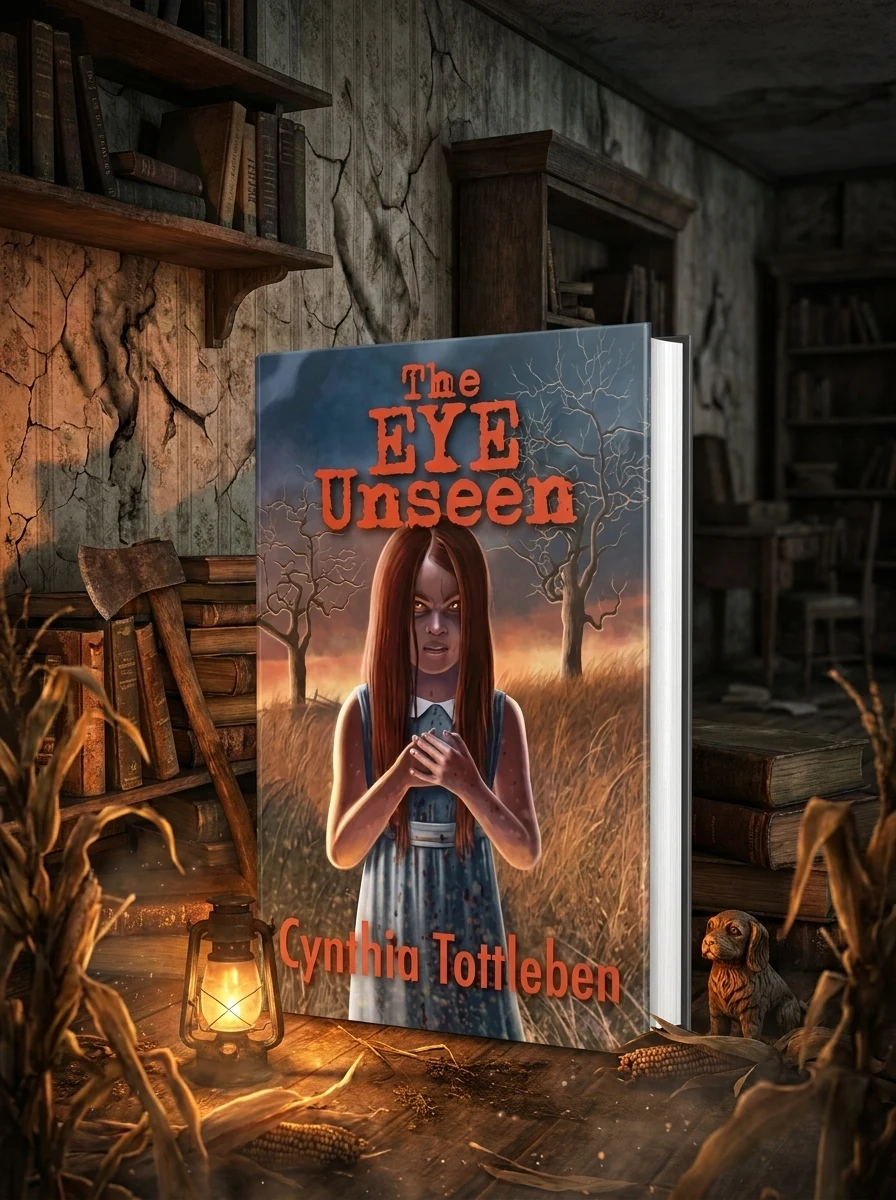
The Eye Unseen
A gothic tale of confinement and supernatural dread in a decaying home.
The narrative follows Lucy Tew as she suffers from starvation and maternal abuse while locked away. Her only companion is her dog, Tippy. The environment around her becomes hostile, with the house itself seeming to react to her deteriorating sanity. A stranger enters her life, offering guidance but hiding a dark past linked to her mother. His name is considered too obscene for normal speech, except by Father. The plot focuses on the psychological impact of isolation and the encroachment of supernatural elements into domestic space. Tottleben uses this setup to explore themes of powerlessness and hidden evils within family structures. The story avoids traditional resolution, instead emphasizing the lingering presence of the unseen forces that govern Lucy's trapped existence.
Published by JournalStone in 2014, this work fits within the contemporary independent horror fiction market. It draws on gothic traditions of haunted houses and familial curses. The narrative style reflects modern supernatural fiction trends that blend psychological distress with eerie, unexplained phenomena.


📝 Description: The Eye Unseen
💎 Our verdict on The Eye Unseen
📖 Why choose it
Why this book is worth reading
Readers seeking a claustrophobic atmosphere will find value in this narrative of Lucy Tew, who endures starvation and maternal abuse while confined to her room. The book appeals to those interested in the intersection of psychological deterioration and supernatural intrusion within domestic spaces. It is ideal for audiences who appreciate gothic tropes involving unseen entities and the powerlessness of the protagonist against hidden evils. Those fascinated by how a hostile house reacts to a fracturing mind will find this work engaging. It does not offer historical documentation or practical advice, but rather focuses on atmospheric tension. Fans of dark fantasy and true crime adjacent themes regarding family structures may also discover resonance in its exploration of abuse and isolation without offering traditional resolutions.
⭐ Reader reviews
Reader rating
Tottleben crafts a suffocating tale where the house itself becomes a sentient antagonist alongside Lucy’s deteriorating sanity. The narrative effectively utilizes gothic tropes to explore themes of powerlessness and familial abuse, creating a sense of lingering dread through the encroachment of supernatural elements into domestic life. The mysterious stranger with an obscene name adds a layer of occult intrigue, though the story avoids factual reporting in favor of emotional impact. This work suits readers interested in psychological horror and atmospheric tension rather than plot-driven resolutions. It is a strong choice for those who enjoy exploring the darker aspects of human endurance and the unseen forces that govern trapped existences within decaying environments.
📖 Read on the blog
🏛 Books from this publisher JournalStone




You might also like
See more →



Have a question about this item?
Ask about the edition, condition, delivery or anything else — we reply by email or phone, usually within a day.
