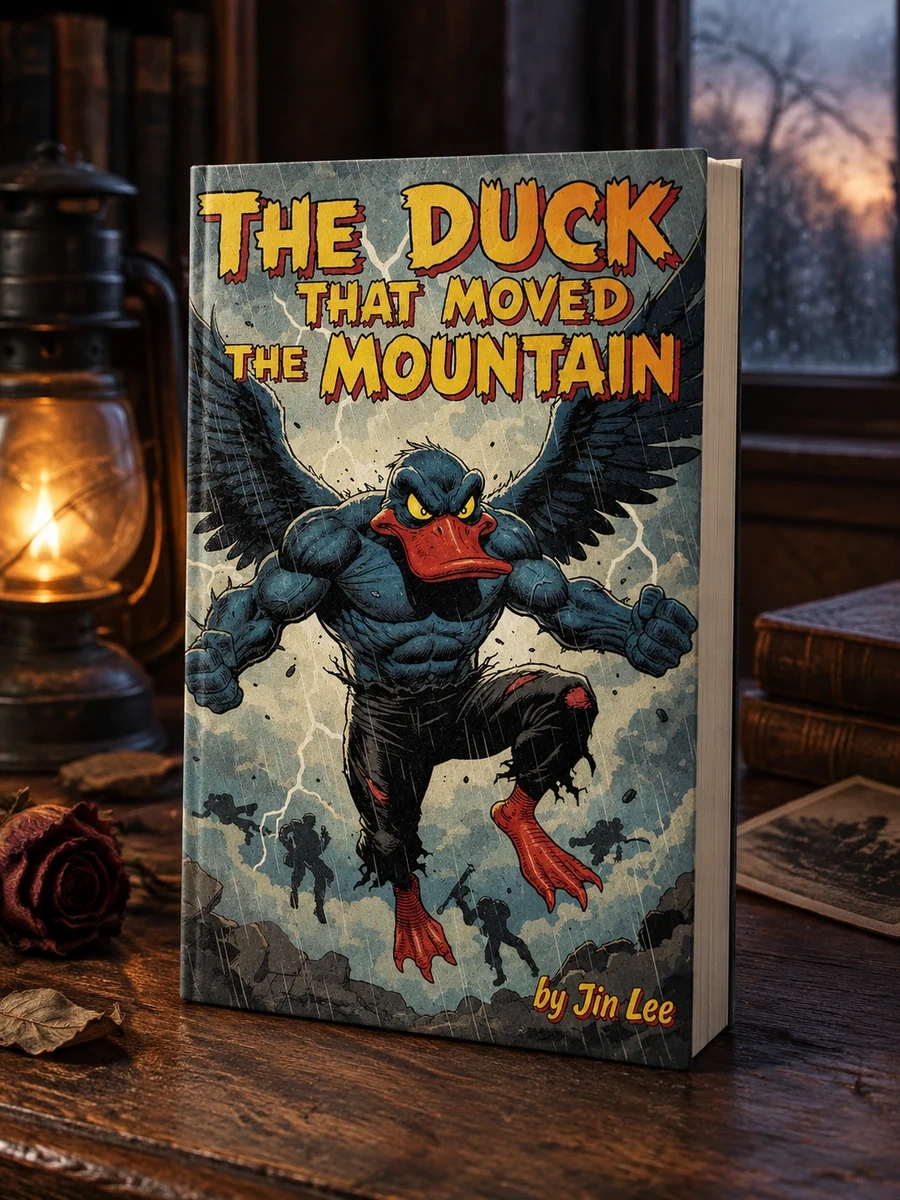
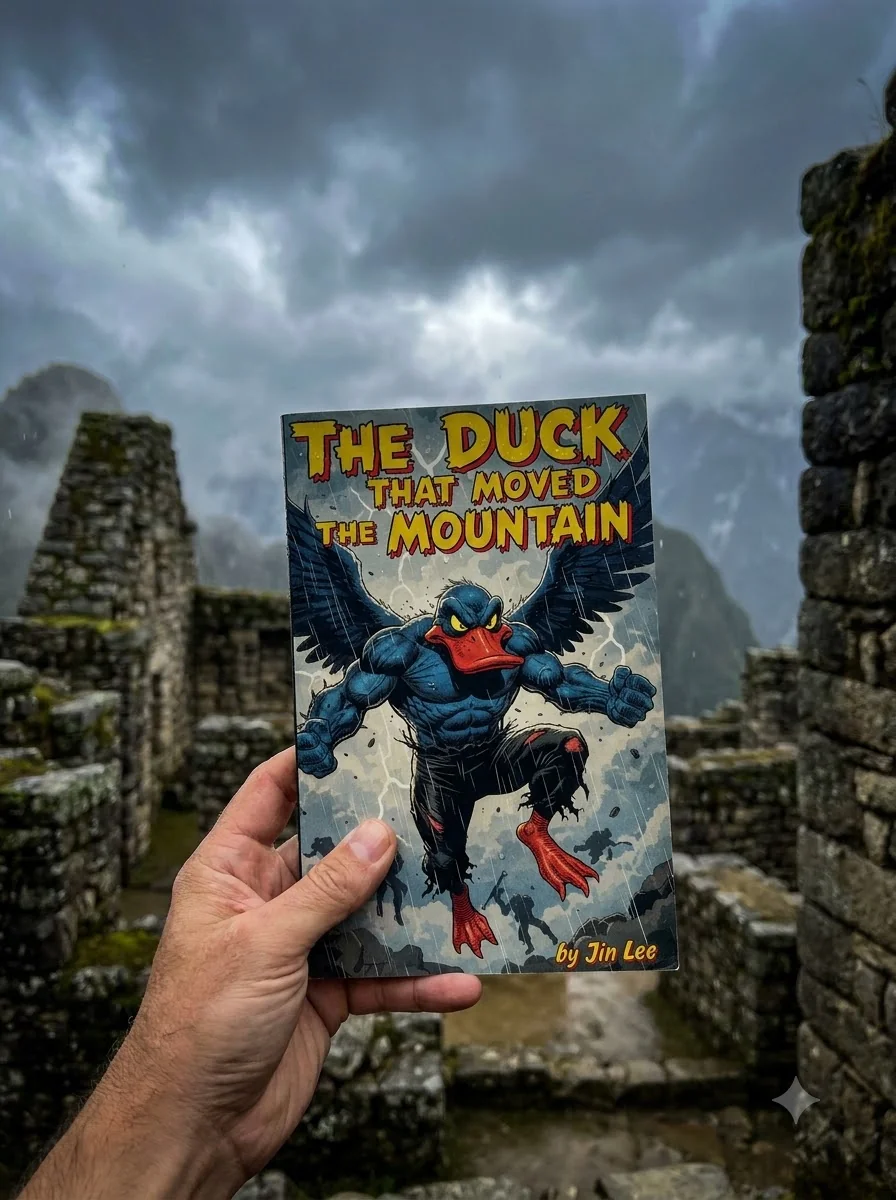
The Duck that Moved the Mountain
A dystopian novel about identity theft in a corporate-controlled future.
Lee Chungho navigates a world where belief is harvested and people are manufactured into idols. Accompanied by Yuna and Ji-Eun, he uncovers the Autarchy's method of preserving dissenters as worship objects. The climax at the Tower challenges his understanding of family and freedom when his parents appear as divine figures.
The narrative is set in a near-future dystopia where corporate entities have replaced traditional religious structures. The Autarchy controls society by converting faith into energy and treating human bodies as assets. This setting reflects anxieties about the commodification of spirituality and the loss of personal agency in a hyper-capitalist environment.


📝 Description: The Duck that Moved the Mountain
💎 Our verdict on The Duck that Moved the Mountain
📖 Why choose it
Why this book is worth reading
Readers who appreciate stories about bodily autonomy and the corruption of religious institutions will find this work resonant, as it delves deep into the psychological toll of being remade by authoritarian forces. The book offers a compelling examination of how faith functions as fuel for power structures and how individuals maintain their identity when their bodies are treated as property. It is ideal for those interested in the erosion of selfhood within a mechanized society, where the soul remains the final site of conflict. Those seeking lighthearted adventure or traditional fantasy tropes may find the tone too bleak, but enthusiasts of dark fantasy and psychological horror will gain from its exploration of memory as a commodity controlled by the state.
⭐ Reader reviews
Reader rating
Jin Lee constructs a chilling world where belief is harvested and people are manufactured into idols, creating a profound sense of unease throughout. The narrative effectively challenges the reader's understanding of family and freedom when confronted with divine figures that are actually corporate saints. By focusing on the internal struggle against the weaponization of humanity, Lee avoids relying solely on external battles, offering instead a nuanced look at resistance. The tone is appropriately bleak, demanding attention from readers willing to engage with complex themes of identity theft and spiritual erosion. It succeeds in making the abstract threat of authoritarianism feel visceral and personal.
📖 Read on the blog
✍️ More books by this author Jin Lee
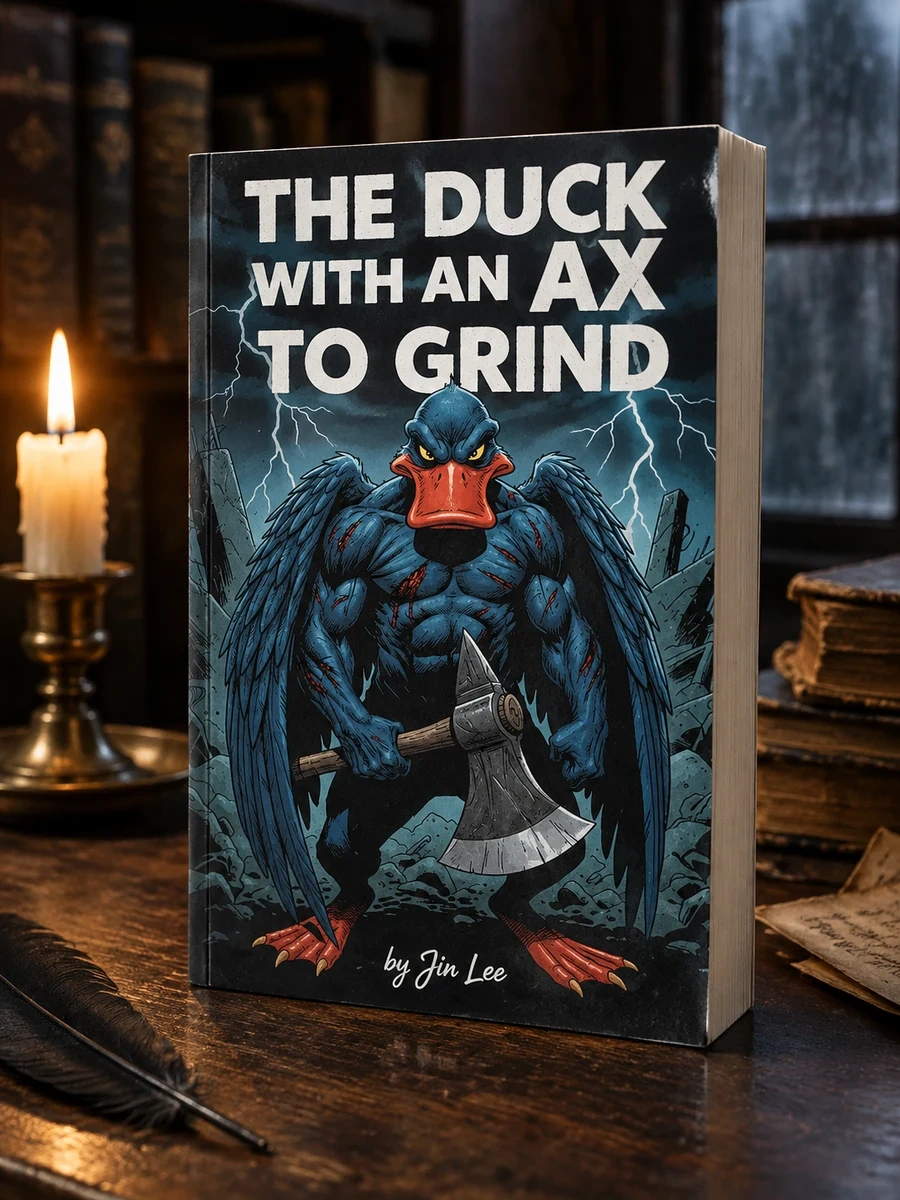


🏛 Books from this publisher Blurb





You might also like
See more →


Have a question about this item?
Ask about the edition, condition, delivery or anything else — we reply by email or phone, usually within a day.
