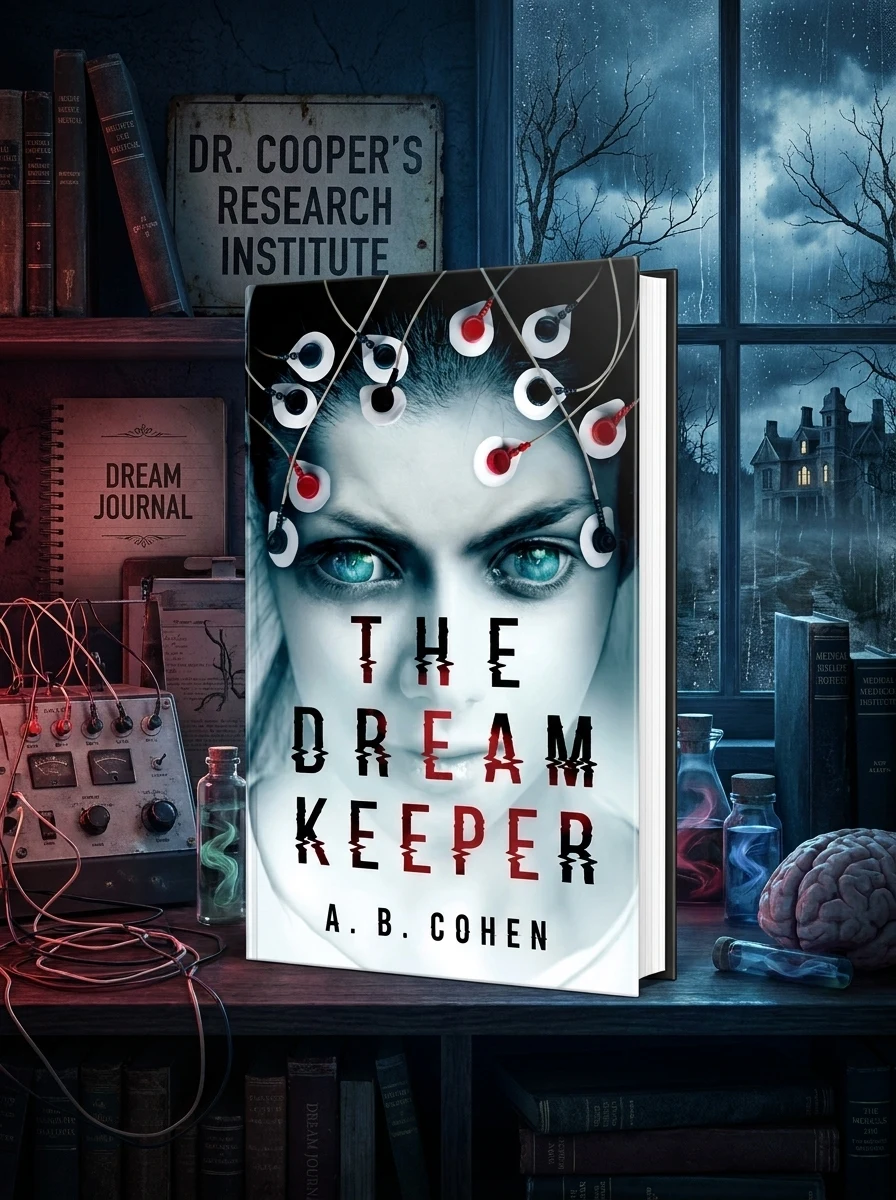
The Dream Keeper
A psychological thriller about memory, dreams, and hidden darkness.
Daniel seeks healing through science after a painful past event. He joins Dr. Darwiche’s isolated research institute near Boston. The doctor is racing against time for a major discovery. Daniel brings new perspectives on cognition to the team. Their work investigates the realm of lucid dreams. This setting becomes crucial as they explore the nature of memory. The story suggests that dreams can be gateways to sinister forces. It challenges the boundary between scientific understanding and supernatural fear. The narrative does not offer easy resolutions for emotional pain. Instead, it presents a complex exploration of how the mind processes trauma. The tension arises from the unknown dangers lurking within these dream states.
The story is set in a secluded town outside Boston. It features an independent publishing context with no major press affiliation. The narrative draws on themes of modern psychological inquiry and the supernatural. It reflects contemporary interest in the science of memory and dreaming.


📝 Description: The Dream Keeper
💎 Our verdict on The Dream Keeper
📖 Why choose it
Why this book is worth reading
Readers drawn to the intersection of neuroscience and supernatural terror will find this narrative deeply compelling. It appeals to those who prefer internal, psychological threats over external gore or jump scares. The book offers a rigorous exploration of how trauma manifests within the subconscious mind, making it ideal for audiences interested in cognitive science themes blended with horror. Fans of isolated settings and intellectual protagonists navigating dangerous dreamscapes will appreciate the tension between scientific rationality and inexplicable evil. It serves those seeking a mind-bending experience that challenges the boundary between memory and reality without offering easy emotional resolutions.
⭐ Reader reviews
Reader rating
This title excels in constructing an atmosphere of creeping dread through its focus on lucid dreaming and cognitive research. The narrative effectively utilizes the secluded institute setting to amplify feelings of isolation and vulnerability. By framing monsters as rooted in personal history rather than external entities, it offers a fresh take on psychological horror. The prose likely supports complex themes regarding guilt and scientific inquiry, appealing to readers who enjoy cerebral plots. It is best suited for enthusiasts of cosmic horror and gothic fiction who appreciate slow-burn tension and philosophical questions about the nature of memory and the subconscious mind.
📖 Read on the blog
🏛 Books from this publisher Independently Published








You might also like
See more →



Have a question about this item?
Ask about the edition, condition, delivery or anything else — we reply by email or phone, usually within a day.
