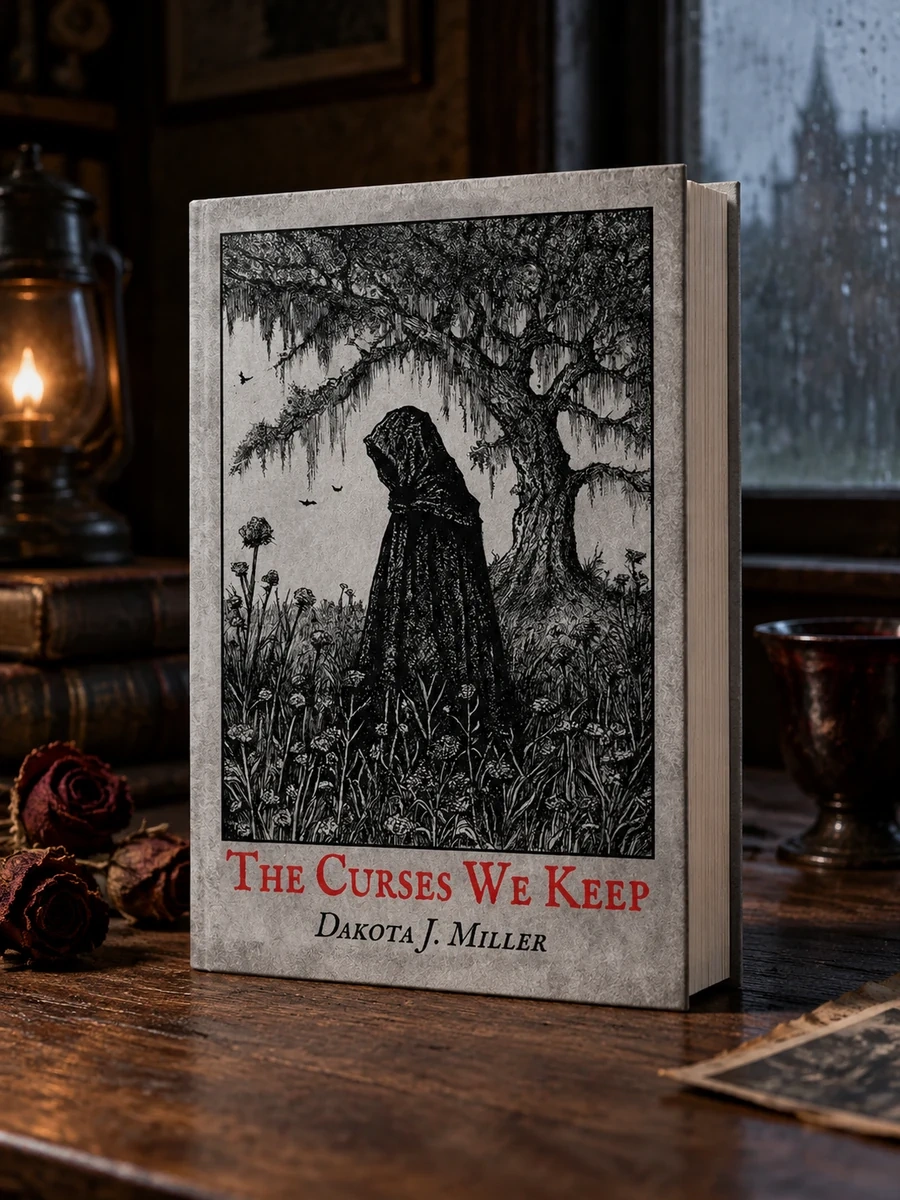
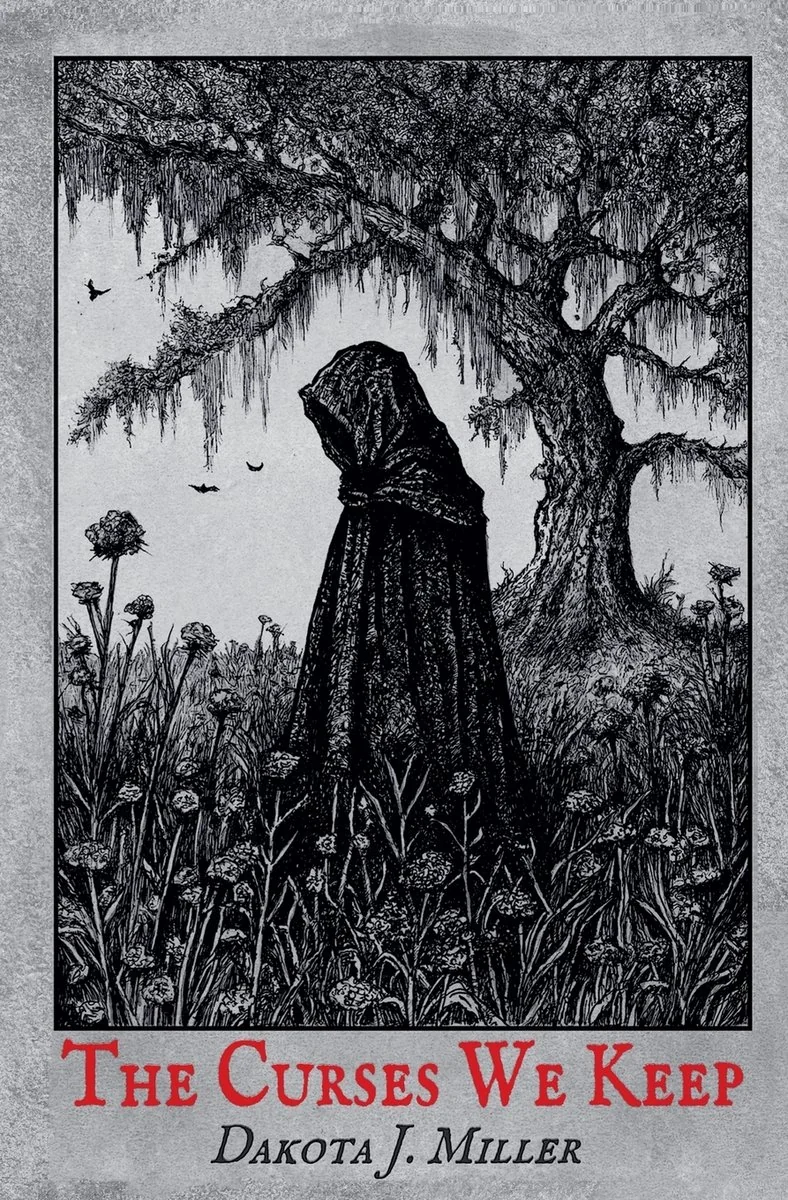
The Curses We Keep
A Southern Gothic tale of a family haunted by their escape from Salem.
The York family fled the pyres of Salem in 1692, believing distance would save them. They sought refuge in Carolina's sultry lowcountry, hoping to escape the witch trial hysteria that consumed their neighbors. However, nightmares began anew in their Charleston homestead. Cassandra York sees what others ignore, uncovering a horrifying truth about her ancestry. A witch’s vengeance has bound the York bloodline to an eternal cycle of torment. This reckoning arrives in this remote colonial outpost, forcing Cassandra to face the consequences of her family's past actions and the spectral figures that drift through their moonlit rooms.
The narrative is set in 1692 during the Salem witch trials, with the York family fleeing to a Charleston homestead in Carolina's sultry lowcountry. This setting establishes the historical context of colonial America and the specific regional atmosphere that defines the story's tone.


📝 Description: The Curses We Keep
💎 Our verdict on The Curses We Keep
📖 Why choose it
Why this book is worth reading
Readers who appreciate the slow-burn dread of inherited trauma and atmospheric Southern Gothic will find significant reward in this narrative. The book offers a chilling exploration of how past atrocities manifest as supernatural retribution across generations. It appeals to those interested in the specific historical weight of the Salem witch trials and their fictional aftermath. The story provides a deep dive into familial guilt, making it suitable for audiences who prefer horror grounded in historical context rather than modern settings. Those seeking lighthearted entertainment will find little appeal here, but fans of spectral figures and eternal cycles of torment will engage with the protagonist’s necessary confrontation with her lineage.
⭐ Reader reviews
Reader rating
Miller crafts a chilling experience by grounding supernatural terror in the specific familial guilt of the York family. The narrative effectively utilizes the sultry atmosphere of the Carolina lowcountry to heighten the sense of inescapable dread. By tracing the flight from Salem, the author creates a compelling link between historical hysteria and ongoing spectral torment. The work succeeds as a forgotten masterwork of Southern Gothic terror, focusing intensely on haunting legacy rather than plot twists. It suits readers who enjoy gothic fiction and stories of inherited sin. The tone remains consistently dark, ensuring that the consequences of past actions feel both inevitable and horrifying. This is a precise entry for enthusiasts of colonial-era horror.
You might also like
See more →






Have a question about this item?
Ask about the edition, condition, delivery or anything else — we reply by email or phone, usually within a day.
