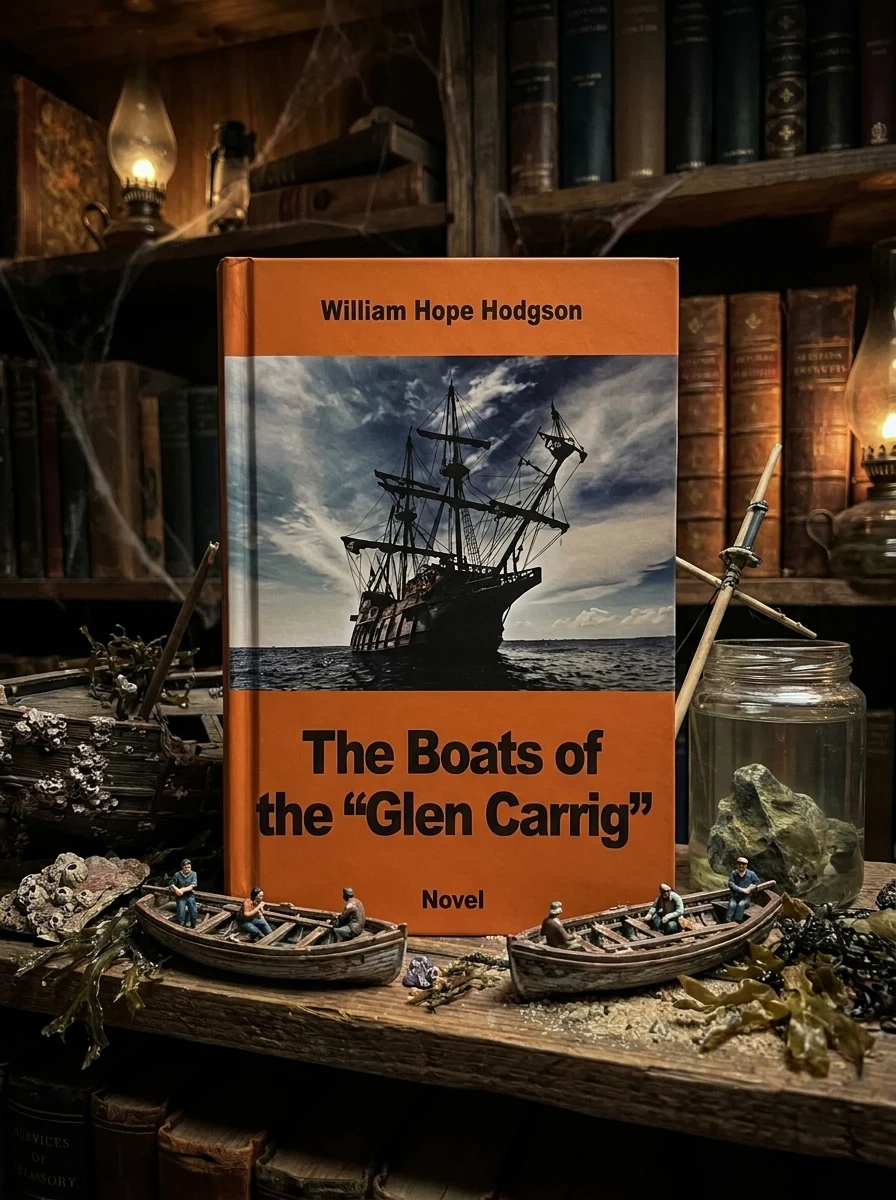

The Boats of the "Glen Carrig"
A 1907 novel framed as an 18th-century survivor's account of a shipwreck.
This work operates as a frame narrative where Hodgson adopts the persona of a survivor writing decades after the event. The story begins with the Glen Carrig striking a hidden rock, forcing passengers into two lifeboats. The plot follows their struggle against the elements and unseen threats in these small vessels. Hodgson uses this structure to build tension through the limited perspective of the narrator. The text relies on the realism of a diary entry style to ground the supernatural or horrific elements that arise during their ordeal. This approach distinguishes it from standard adventure tales by maintaining a consistent tone of dread throughout the survival sequence.
First published in 1907, this novel reflects early twentieth-century interest in maritime horror. It draws on gothic traditions by presenting a modern retelling of an older event. The framing device places the narrative in 1757, creating distance between the author and the events described.


📝 Description: The Boats of the "Glen Carrig"
💎 Our verdict on The Boats of the "Glen Carrig"
📖 Why choose it
Why this book is worth reading
Readers who appreciate the atmospheric tension of classic maritime disasters will find this work compelling. It appeals specifically to fans of William Hope Hodgson and those interested in early twentieth-century speculative fiction. The book offers a unique perspective through its frame narrative, grounding supernatural or horrific elements in the realism of a diary entry style. This approach maintains a consistent tone of dread throughout the survival sequence, distinguishing it from standard adventure tales. Those who enjoy historical accounts of shipwrecks and gothic traditions emphasizing isolation will find value here. However, it is not suitable for readers seeking modern fast-paced thrillers or non-fiction survival manuals.
⭐ Reader reviews
Reader rating
Hodgson crafts a compelling survival narrative framed as an eighteenth-century survivor's account, creating an immersive sense of historical authenticity. The text effectively utilizes the limited perspective of the narrator to build tension, relying on the realism of diary entries to ground the escalating horror. This structure allows for a deliberate pacing that emphasizes isolation and unknown dangers lurking beneath the waves. The work succeeds in maintaining a consistent tone of dread, appealing to those who enjoy gothic traditions and early speculative fiction. While the slow pace may deter readers looking for contemporary action, it perfectly suits enthusiasts of classic horror and historical maritime tales.
📖 Read on the blog
✍️ More books by this author William Hope Hodgson






🏛 Books from this publisher Createspace Independent Publishing Platform






You might also like
See more →
Have a question about this item?
Ask about the edition, condition, delivery or anything else — we reply by email or phone, usually within a day.
