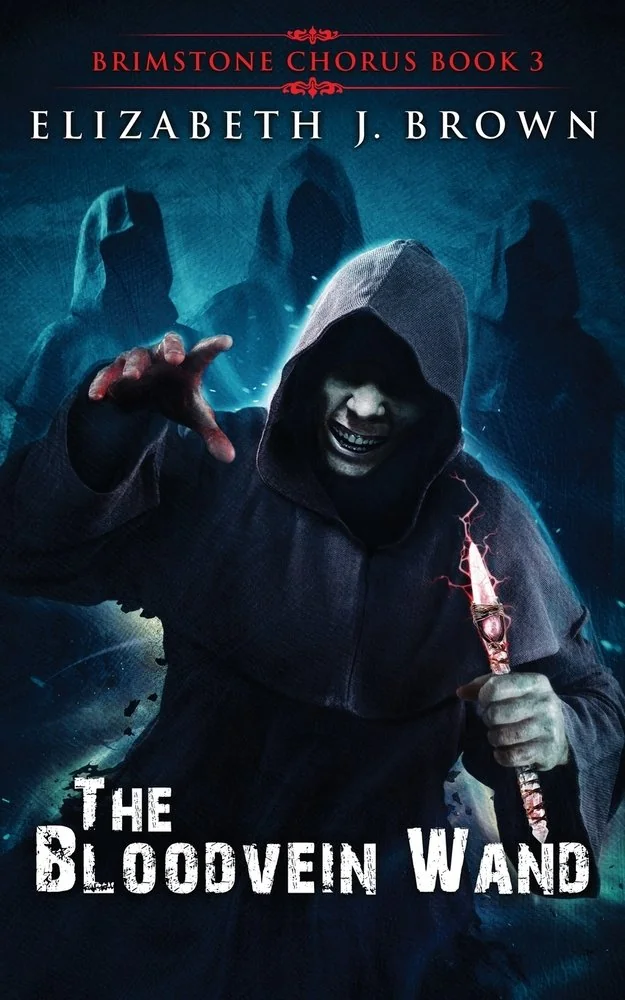
The Bloodvein Wand
A man trapped underground races a cult to find a demon-opening Gatekeeper.
Charlie Haynes loses his job and family stability while his bond with the demon realm grows stronger. An explosion at O.O.T.I.S headquarters leaves him stranded in the tunnels beneath the building. His goal is simple: find the Gatekeeper before the cult does. The cult desires the power associated with this entity. Charlie hears a voice in his head offering sweet temptations. He must decide if he can resist setting the darkness free. The story focuses on his desperate attempt to survive while holding onto his humanity. Brown portrays a race against time where failure means losing control completely. The narrative highlights the cost of supernatural power and the fragility of human sanity when faced with ancient evils.
This work sits within contemporary horror fiction, drawing on traditions of urban fantasy and supernatural dread. It explores modern anxieties about loss of control and institutional failure through the lens of a demon realm. The setting is a fictionalized O.O.T.I.S headquarters, blending bureaucratic elements with occult threats.


📝 Description: The Bloodvein Wand
💎 Our verdict on The Bloodvein Wand
📖 Why choose it
Why this book is worth reading
Readers who crave intense, claustrophobic narratives will find value in this exploration of a protagonist fighting for his humanity against demonic influence. The book appeals to those interested in psychological horror where the external threat mirrors internal decay. It is ideal for fans of dark fantasy who enjoy stories focused on moral ambiguity and the high cost of supernatural power. Those who prefer grounded peril over expansive world-building will appreciate the tight focus on survival within the tunnels. The narrative offers a gripping race against time, making it suitable for readers seeking tension and emotional depth rather than lighthearted adventure.
⭐ Reader reviews
Reader rating
Brown delivers a tense, atmospheric tale centered on Charlie Haynes’s desperate struggle in underground tunnels. The strength of this book lies in its psychological depth, effectively portraying the erosion of sanity as demonic whispers tempt the protagonist. It succeeds in creating a palpable sense of dread through the confined setting and the cult’s menacing pursuit. This narrative suits readers who enjoy urban fantasy with dark undertones and themes of corruption. It is less appropriate for those seeking traditional high fantasy or comedic relief. The focus remains tightly on immediate peril and internal conflict, offering a compelling study of fragility when facing ancient evils.