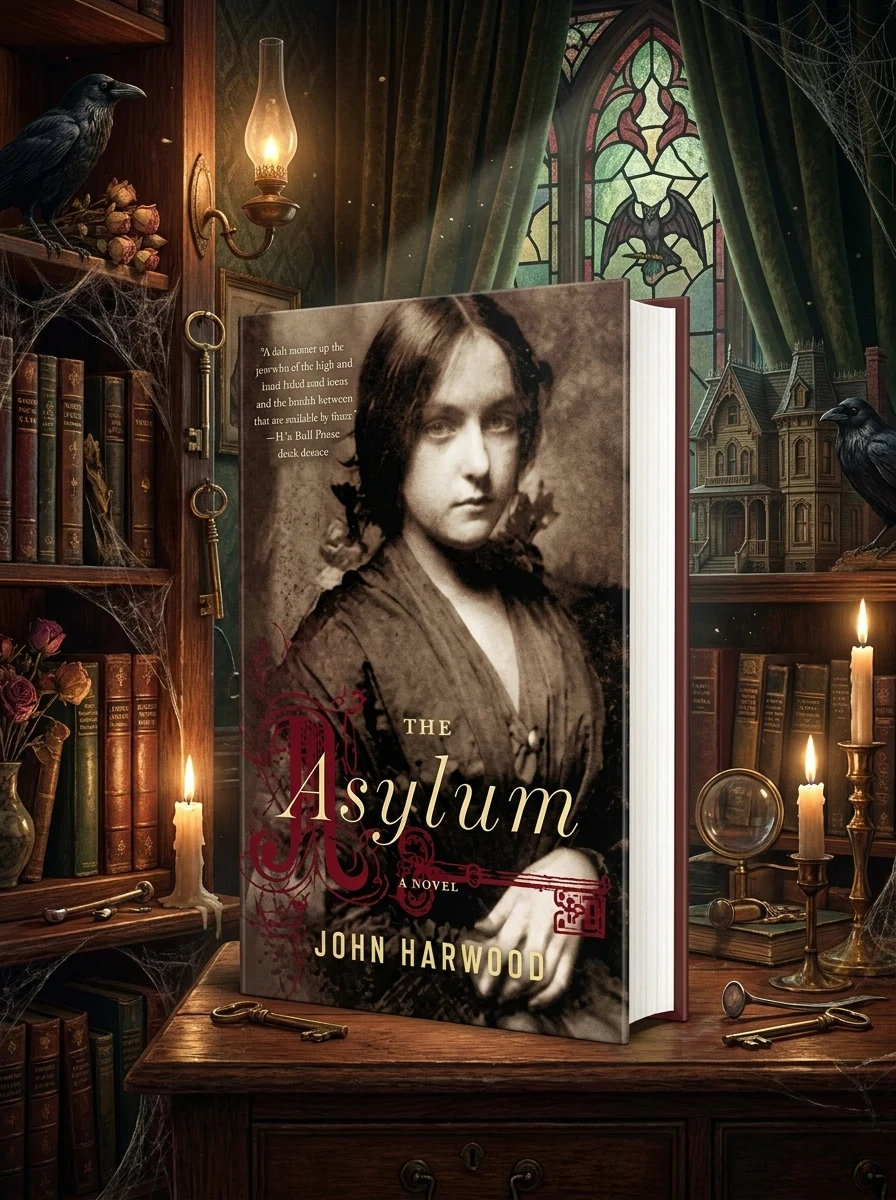
The Asylum
A woman in an asylum discovers her family denies her existence.
This novel examines the fragility of identity through Georgina’s disorientation and isolation. It explores how medical authority can be weaponized against women in the late nineteenth century. The text utilizes the setting of a remote English asylum to create claustrophobia and suspense. Harwood uses the mystery of the imposter to question reality and memory. The story does not rely on ghosts but on human deception and familial secrets. It offers a detailed look at Victorian social structures and their impact on individual agency.
The book is set in Victorian England, drawing on high and low Gothic traditions. It reflects the era’s medical practices and social hierarchies. The narrative captures the atmosphere of foreboding typical of nineteenth-century literature. It appeals to readers interested in historical fiction with psychological depth.


📝 Description: The Asylum
💎 Our verdict on The Asylum
📖 Why choose it
Why this book is worth reading
Readers who appreciate atmospheric mysteries driven by psychological dread and unreliable narrators will find this narrative compelling. It offers a detailed examination of how medical authority was weaponized against women in the late nineteenth century, making it ideal for those interested in the fragility of identity and the mechanics of human deception rather than supernatural spectacle. The slow-burn tension appeals to audiences who value deep dives into Victorian social structures and their constraints on individual agency. However, those seeking fast-paced action or contemporary horror settings may find the pacing less engaging. This book serves best for readers willing to engage with claustrophobic suspense and complex questions regarding memory, reality, and familial secrets within a historical context.
⭐ Reader reviews
Reader rating
Harwood masterfully weaves high and low Gothic traditions into this tale of identity and survival. The narrative effectively utilizes the remote Tregannon House setting to generate intense claustrophobia and suspense without relying on ghosts. By focusing on human deception and familial secrets, the text creates a chilling exploration of how medical authority can be manipulated against women. The story’s strength lies in its psychological depth and historical insight into Victorian social constraints. It suits readers who enjoy atmospheric mysteries where the horror stems from psychological dread rather than external threats. While the slow-burn approach may deter those preferring immediate action, it rewards patience with a nuanced look at agency and memory.
📖 Read on the blog
✍️ More books by this author John Harwood


🏛 Books from this publisher Mariner Books


You might also like
See more →


Have a question about this item?
Ask about the edition, condition, delivery or anything else — we reply by email or phone, usually within a day.
