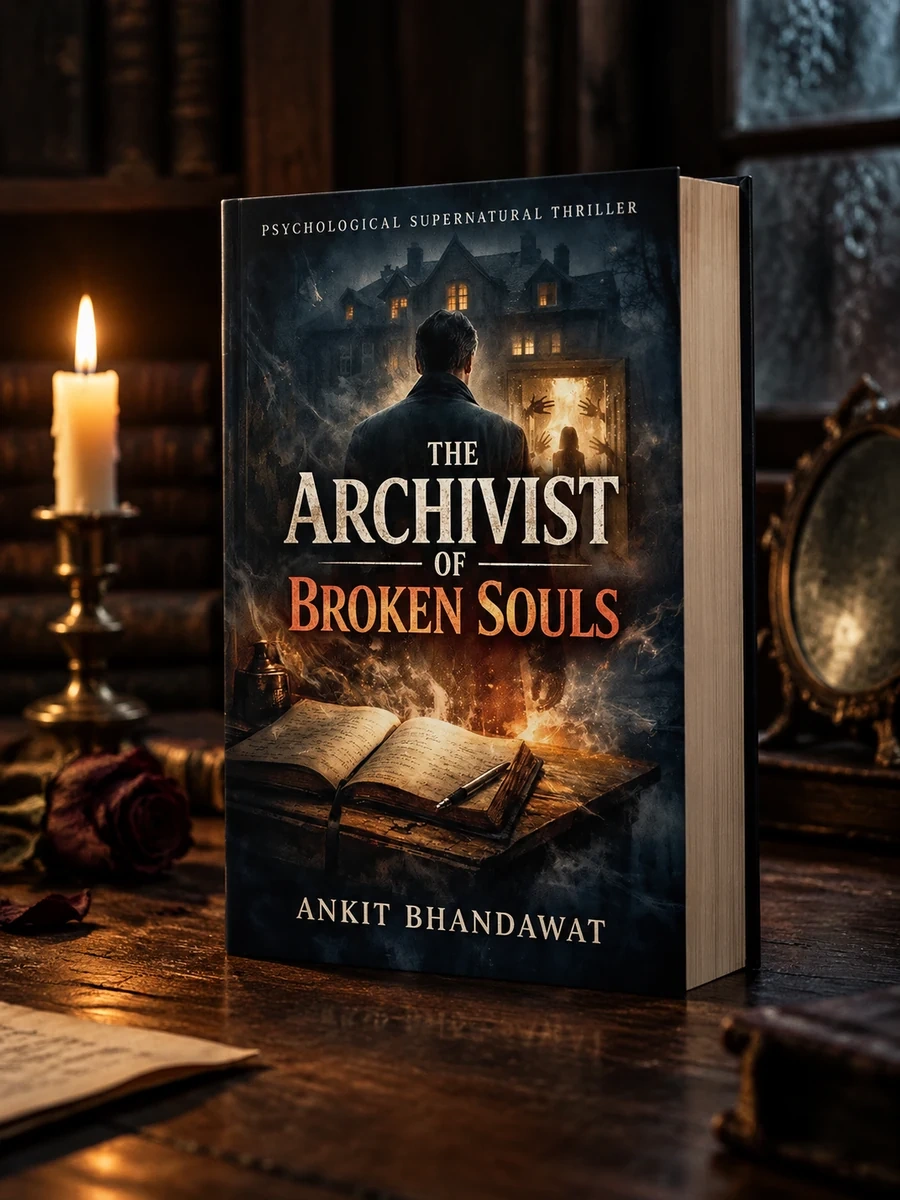
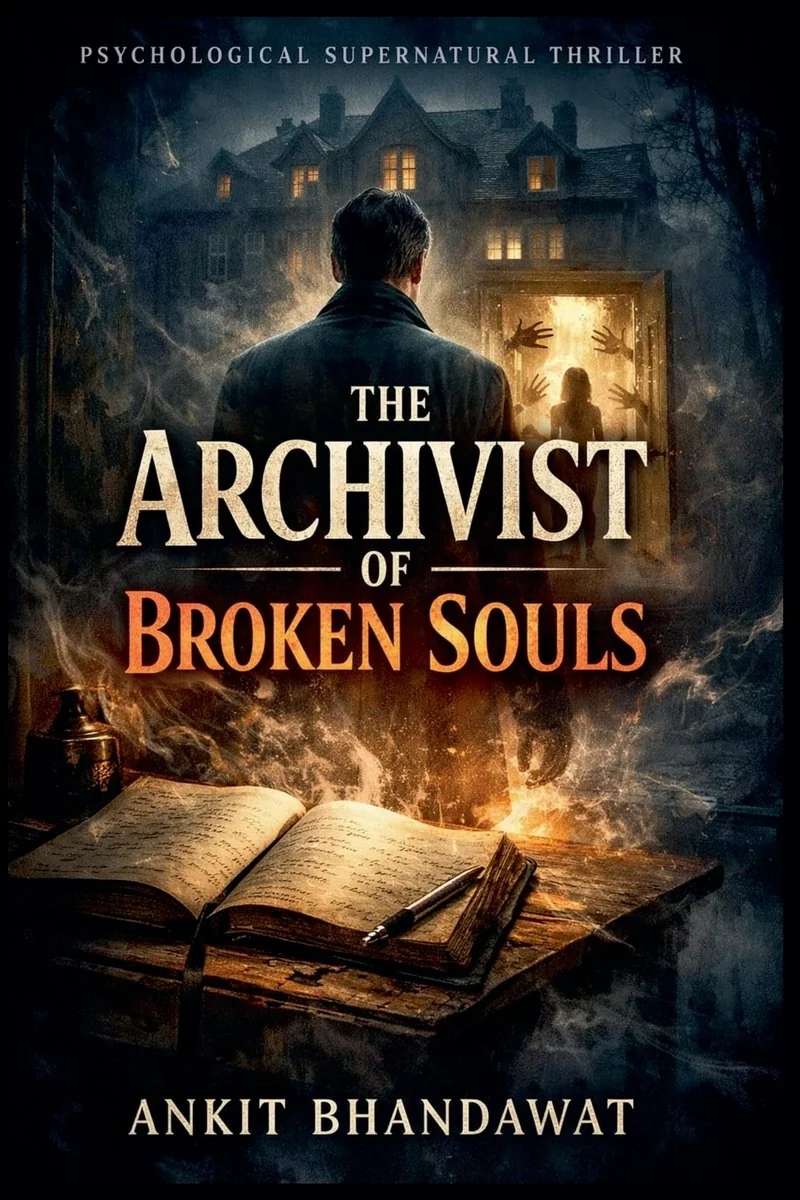
The Archivist of Broken Souls
A historian documents trauma while becoming part of the haunted archive he studies.
The narrative follows Julian Welby as his professional detachment crumbles within Blackwood Manor. He faces a mysterious figure who confirms that past tragedies are returning. This forces Julian to confront his role in the Archive. The story examines the boundary between recording history and living it. It asks how much humanity one must sacrifice to silence echoes. The tension arises from the physical manifestation of psychological burden. Julian’s journey is not about solving a mystery but surviving its weight. The conclusion hinges on his choice between preservation and self-preservation.
The story sits within the American gothic tradition, utilizing the isolated bay setting to amplify feelings of entrapment. It draws on the period of post-war archival culture, where documenting trauma became a clinical profession. The narrative reflects contemporary anxieties about memory and the inability to forget historical horrors.


📝 Description: The Archivist of Broken Souls
💎 Our verdict on The Archivist of Broken Souls
📖 Why choose it
Why this book is worth reading
Readers seeking atmospheric tales of psychological decay and supernatural entrapment will find significant value in this narrative. The book appeals to those who enjoy character-driven studies where the tension arises from the physical manifestation of psychological burden rather than external action. It is ideal for audiences interested in the boundary between recording history and living it, offering a meditation on how much humanity one must sacrifice to silence echoes. Those who appreciate prose that focuses on the erosion of humanity under the weight of recorded history will engage deeply with Julian’s journey as he confronts his role in the Archive.
⭐ Reader reviews
Reader rating
Bhandawat constructs a confined world where secrets breathe and trauma is tangible, effectively merging gothic horror with supernatural fiction. The narrative excels in examining the cost of witnessing suffering without intervention, shifting the protagonist from observer to participant in a cold collection. This approach suits readers who prefer atmospheric tension over fast-paced action or clear resolutions. By focusing on the erosion of humanity under the weight of recorded history, the book offers a compelling exploration of preservation versus self-preservation. It is a strong choice for fans of psychological horror who appreciate isolation and the haunting presence of the past within physical spaces.
You might also like
See more →





Have a question about this item?
Ask about the edition, condition, delivery or anything else — we reply by email or phone, usually within a day.
