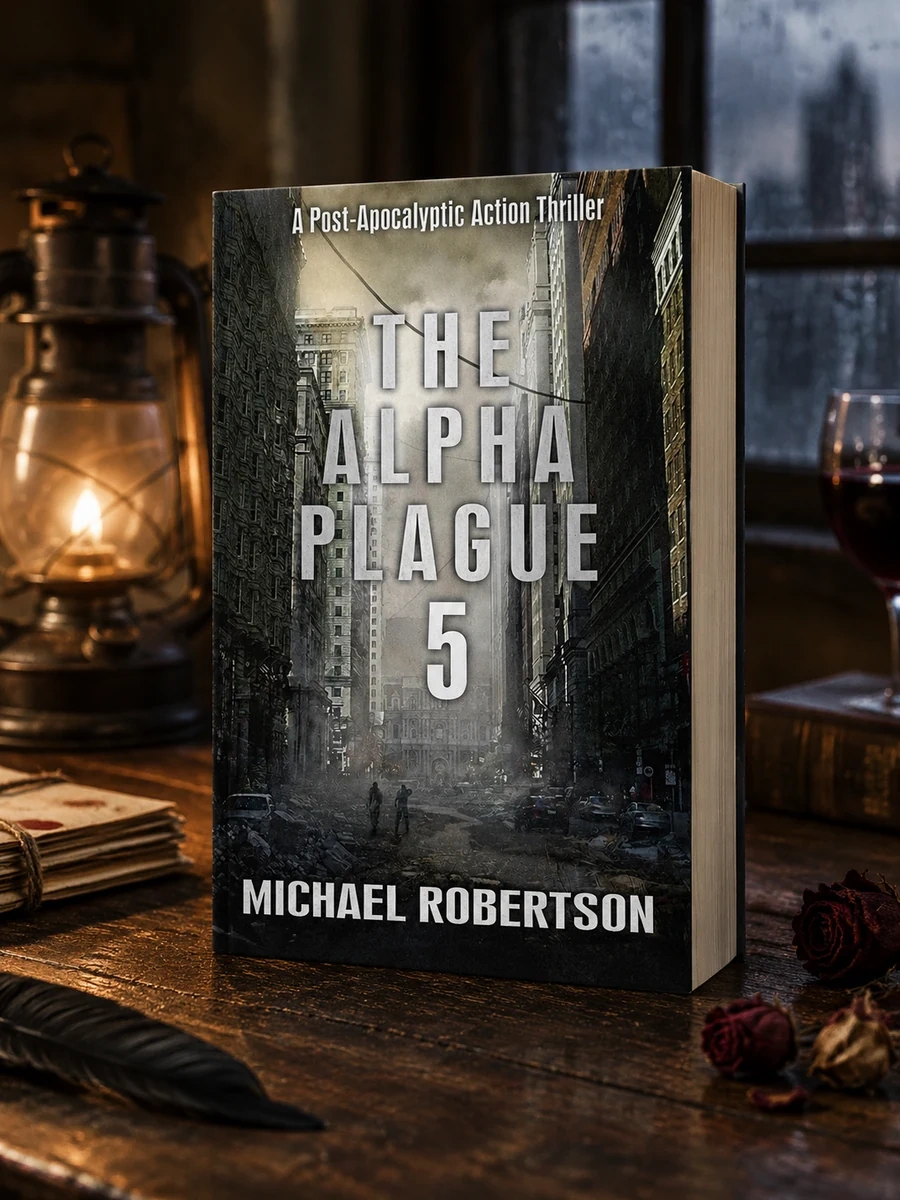
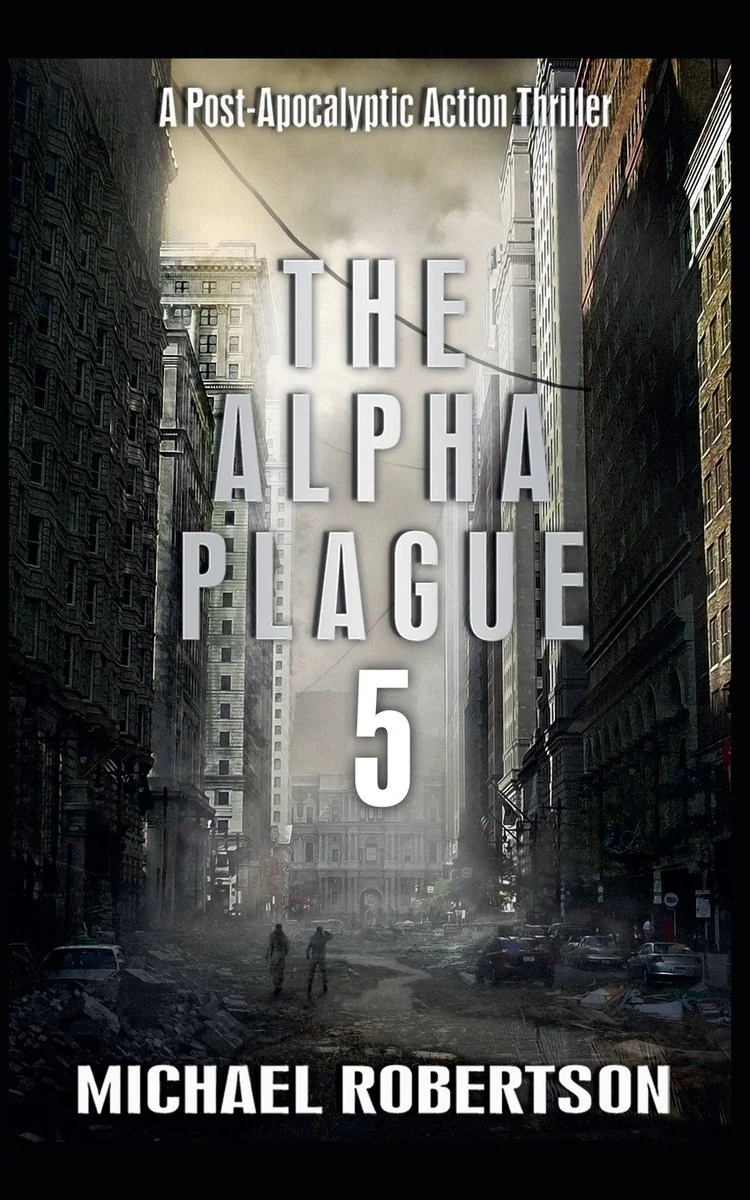
The Alpha Plague 5
Vicky seeks safety in an underground complex but finds danger within.
The narrative centers on Vicky’s arrival at Home, a subterranean refuge designed for self-sufficiency. She is relieved to find Flynn alive after fearing his death during the outbreak. Their reunion offers a brief respite from the diseased outside, yet Vicky quickly realizes that security is an illusion. The complex harbits its own dangers, requiring constant vigilance. Robertson structures the plot around this internal threat, forcing characters to adapt their survival strategies. The story emphasizes the psychological toll of living in fear and the necessity of relying on others when external protection fails. It traces the erosion of trust among survivors who must coexist in close quarters.
This work sits within the post-apocalyptic fiction tradition, examining societal collapse and human adaptation. It reflects contemporary anxieties about disease outbreaks and the fragility of modern infrastructure. The narrative draws on survival thriller conventions to explore how communities form and fracture under extreme pressure.


📝 Description: The Alpha Plague 5
💎 Our verdict on The Alpha Plague 5
📖 Why choose it
Why this book is worth reading
Readers seeking intense, character-driven survival narratives will find this volume particularly engaging. It appeals to those interested in the psychological toll of living in constant fear and the necessity of relying on others when external protection fails. The story offers a gritty look at trust and vigilance in a collapsed society, making it ideal for fans who prefer human resilience over technical manuals or historical accounts. Those who enjoy fast-paced plots where internal conflict drives the action will appreciate the exploration of how danger often originates from within rather than outside the walls.
⭐ Reader reviews
Reader rating
Robertson effectively maintains tension by shifting the threat from the diseased outdoors to the fragile security of the underground complex. The narrative excels in portraying the erosion of trust among survivors forced to coexist in close quarters, highlighting the psychological strain of such isolation. By focusing on Vicky’s heightened senses and her reliance on Flynn, the book creates a claustrophobic atmosphere that sustains interest. It suits readers who value character dynamics and internal conflict over exposition. The story challenges the assumption of safety, offering a compelling examination of human bonds tested by perpetual danger.