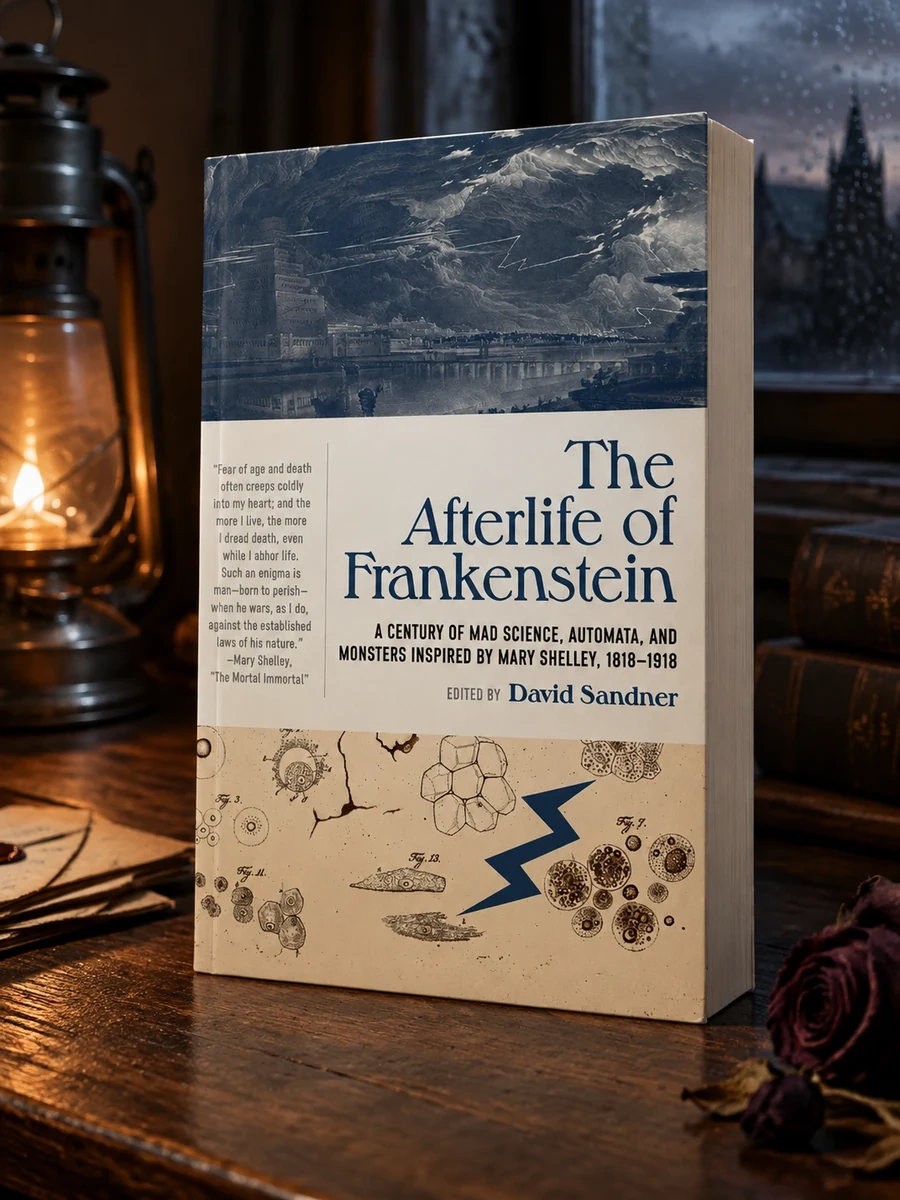
The Afterlife of Frankenstein: A Century of Mad Science, Automata, and Monsters Inspired by Mary Shelley, 1818-1918
An anthology tracing Frankenstein's literary influence from 1818 to 1918.
Sandner curates a collection that highlights the enduring power of Shelley’s creation. The book moves beyond simple retellings to analyze how early writers adapted the myth. It shows the transition from gothic tales to the foundations of science fiction. Readers will see how automata and mad science became central themes in this period. The anthology serves as a historical record of creative adaptation.
The book covers the period from 1818 to 1918, focusing on the century before film popularized Frankenstein. It examines how writers adapted Shelley’s myth during this era, shaping what would become science fiction.


📝 Description: The Afterlife of Frankenstein: A Century of Mad Science, Automata, and Monsters Inspired by Mary Shelley, 1818-1918
💎 Our verdict on The Afterlife of Frankenstein: A Century of Mad Science, Automata, and Monsters Inspired by Mary Shelley, 1818-1918
📖 Why choose it
Why this book is worth reading
Scholars and enthusiasts of speculative fiction's origins will find this volume indispensable for understanding the evolution of the Frankenstein myth. David Sandner curates a precise selection of short stories and textual excerpts from 1818 to 1918, offering a concrete look at how early writers adapted Shelley’s creation. It is ideal for those interested in literary history, automata, and the foundational themes of mad science. Readers seeking modern horror or film analysis may find the focus on early literature less relevant, as the text remains grounded in its specific historical window without speculation.
⭐ Reader reviews
Reader rating
Sandner successfully traces the pioneering nature of Shelley’s myth through a curated lens of literary adaptation. The collection highlights the shift from gothic tales to science fiction foundations, emphasizing automata and monsters inspired by the original text. It serves as a robust historical record of creative evolution rather than simple retellings. This volume suits readers interested in the roots of speculative fiction and literary history. By focusing strictly on the period between 1818 and 1918, it provides a clear view of genre origins. While it may not appeal to those seeking cinematic analysis, it offers a vital perspective on how one character shaped decades of writing through diverse narrative voices.
📖 Read on the blog
🏛 Books from this publisher Lanternfish Press




You might also like
See more →


Have a question about this item?
Ask about the edition, condition, delivery or anything else — we reply by email or phone, usually within a day.
