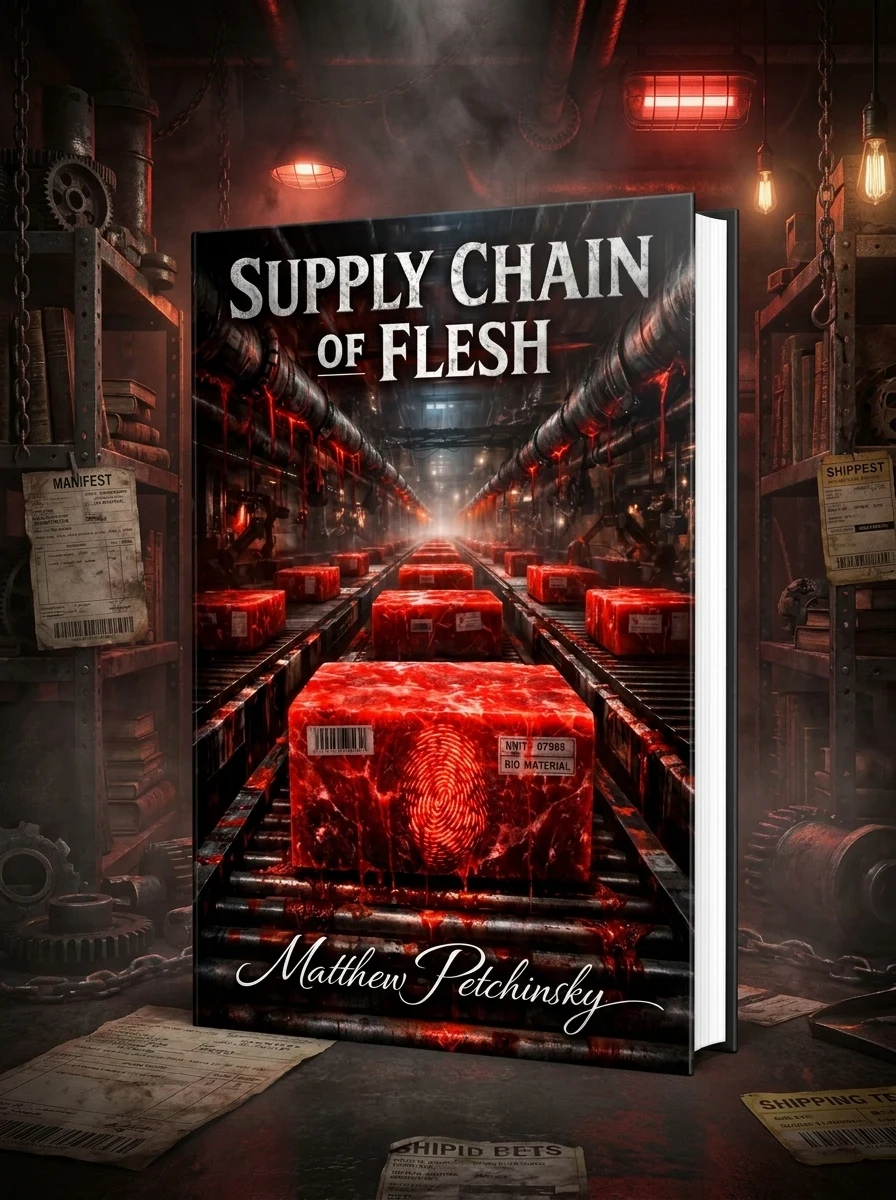
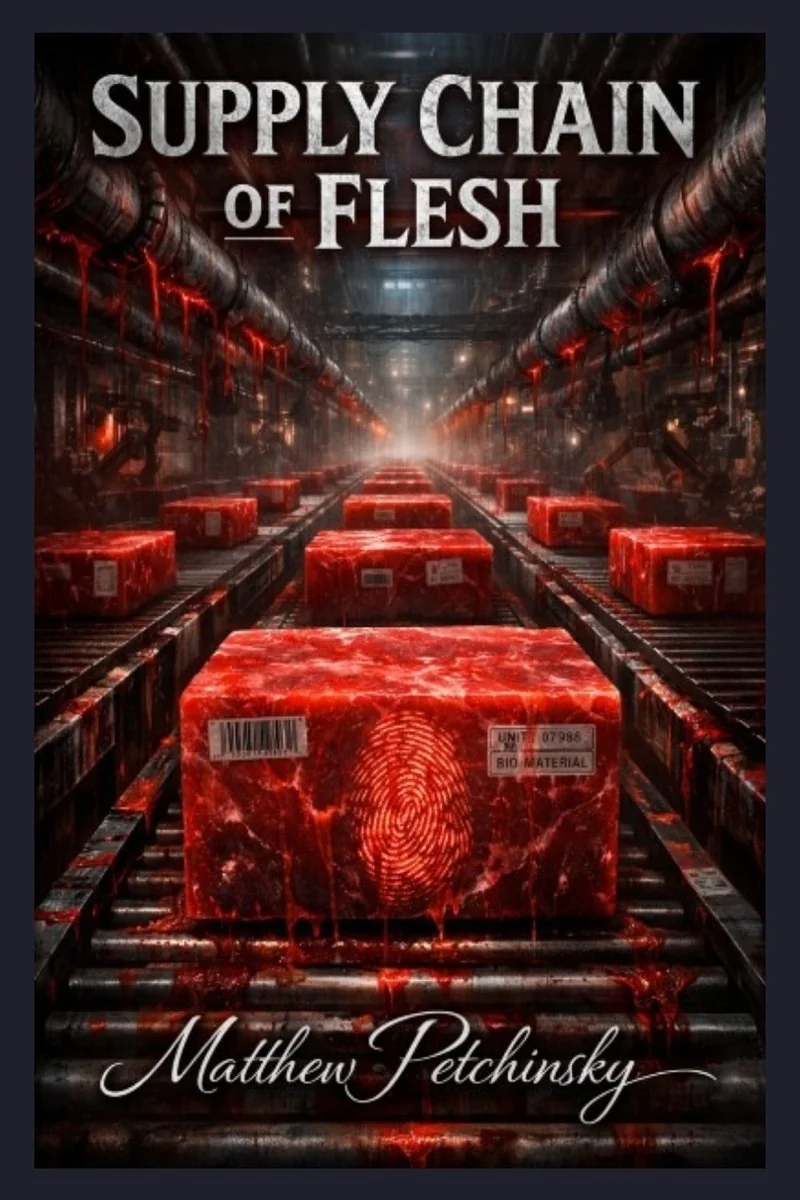
Supply Chain of Flesh
A logistics analyst discovers human inventory fighting back in a dehumanizing future.
Matthew Petchinsky's Supply Chain of Flesh follows Jonah Vale, a logistics analyst in Meridian-9, where human bodies are processed as commodities. When a shipment resists its fate, revealing an awareness that defies the system, efficiency protocols evolve into terror. The narrative explores a world where machines perfect humanity through dehumanization and systemic control, offering a brutal descent for fans of psychological horror.
Set in a future where cities are replaced by distribution hubs, the book draws on traditions of dystopian and gothic horror. It critiques the reduction of human life to mere commodities within a global network. The narrative reflects anxieties about efficiency protocols and the loss of individuality in a world optimized for output.


📝 Description: Supply Chain of Flesh
💎 Our verdict on Supply Chain of Flesh
📖 Why choose it
Why this book is worth reading
Readers who crave intellectual terror and psychological unease will find this narrative deeply compelling. It appeals to those interested in the intersection of capitalism, bureaucracy, and horror, offering a stark critique of efficiency when applied to human life. The book provides a unique perspective on systemic control, making it ideal for fans of speculative fiction who enjoy exploring the darkest corners of societal structures. Those who appreciate atmospheric dread over jump scares will value the slow-burn descent into a world where awareness is a curse. It offers a haunting examination of what it means to be reduced to inventory, delivering a brutal yet thought-provoking experience for the discerning horror enthusiast.
⭐ Reader reviews
Reader rating
Petchinsky crafts a chilling portrait of a future where humanity is stripped of all dignity and reduced to mere logistical data. The narrative excels in building an atmosphere of relentless dread, focusing on the psychological horror of being watched, priced, and processed by an indifferent machine. The concept of pain as a metric rather than a flaw is particularly effective, creating a sense of violation that lingers long after reading. This book suits readers who enjoy cerebral horror and dystopian themes, particularly those who appreciate the works of authors like Thomas Ligotti or Jeff VanderMeer. It avoids traditional supernatural tropes in favor of a more grounded, yet equally terrifying, exploration of dehumanization and systemic control.
📖 Read on the blog
✍️ More books by this author Matthew Petchinsky








🏛 Books from this publisher Apophis Enterprises LLC





You might also like
See more →

Have a question about this item?
Ask about the edition, condition, delivery or anything else — we reply by email or phone, usually within a day.
