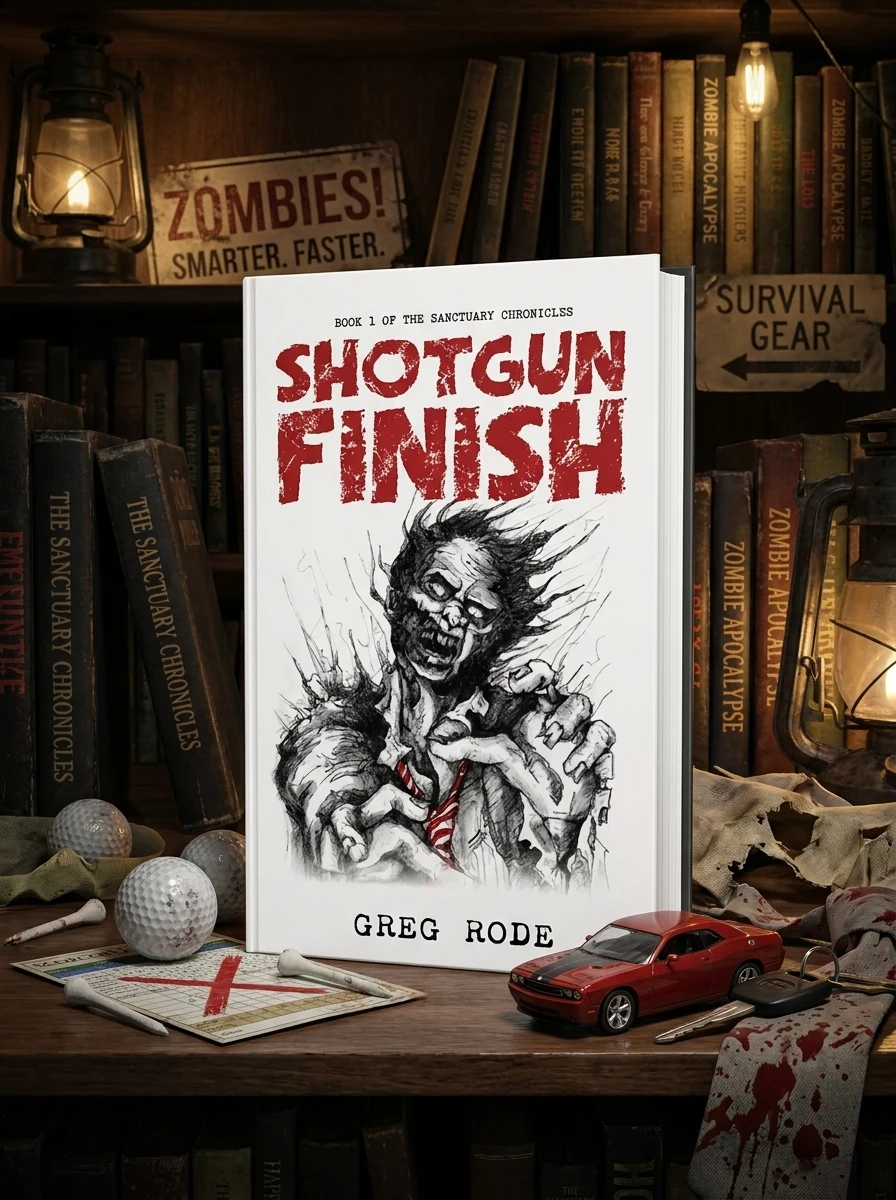
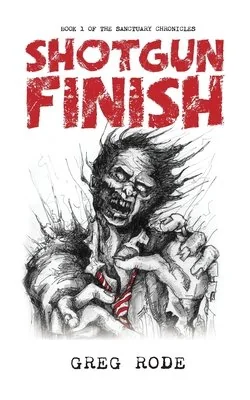
Shotgun Finish
A man fighting zombies and a deadline to save new friends.
The protagonist leaves his home after months of isolation to play golf, expecting peace. Instead, he faces intelligent undead forces that attack with unusual coordination. His solitude ends when strangers arrive at his door, including three women and one man. A zombie leader appears, setting an unspeakable deadline for the group’s survival. The narrative tracks their attempt to find safety while dealing with internal friction and external attacks. Rode uses this setup to explore how ordinary people react when normal rules vanish. The story balances action sequences with the awkwardness of forced cohabitation. It avoids traditional hero tropes by focusing on the chaos of improvisation.
Published in 2020 by Warren Publishing, Inc., this book reflects the era’s heightened awareness of isolation and sudden disruption. The setting draws on contemporary American suburban life, specifically the desire for outdoor leisure like golfing, contrasting it with modern fears of invisible threats.


📝 Description: Shotgun Finish
💎 Our verdict on Shotgun Finish
📖 Why choose it
Why this book is worth reading
Readers who enjoy fast-paced action mixed with dark humor will find this narrative compelling. The book appeals to those interested in character-driven conflict and the logistical strain of protecting an eclectic group under time pressure. It is ideal for fans who prefer momentum over exposition and want to see how ordinary people react when normal rules vanish. The story avoids traditional hero tropes, focusing instead on the chaos of improvisation and internal friction among survivors. Those seeking a grounded tone that balances action with the awkwardness of forced cohabitation will appreciate the visceral experience of running out of time.
⭐ Reader reviews
Reader rating
Greg Rode delivers a survival narrative driven by a protagonist seeking refuge on a golf course during societal collapse. The book excels in balancing action sequences with the psychological strain of protecting an eclectic group under strict deadlines. Rode effectively draws on classic horror traditions where human dynamics fracture under external threat, avoiding traditional hero tropes to focus on the chaos of improvisation. The tone remains grounded in immediate physical dangers, offering a visceral experience without relying on complex lore. It suits readers who enjoy dark humor and character-driven conflict over slow-burn atmospheric dread or academic analysis.