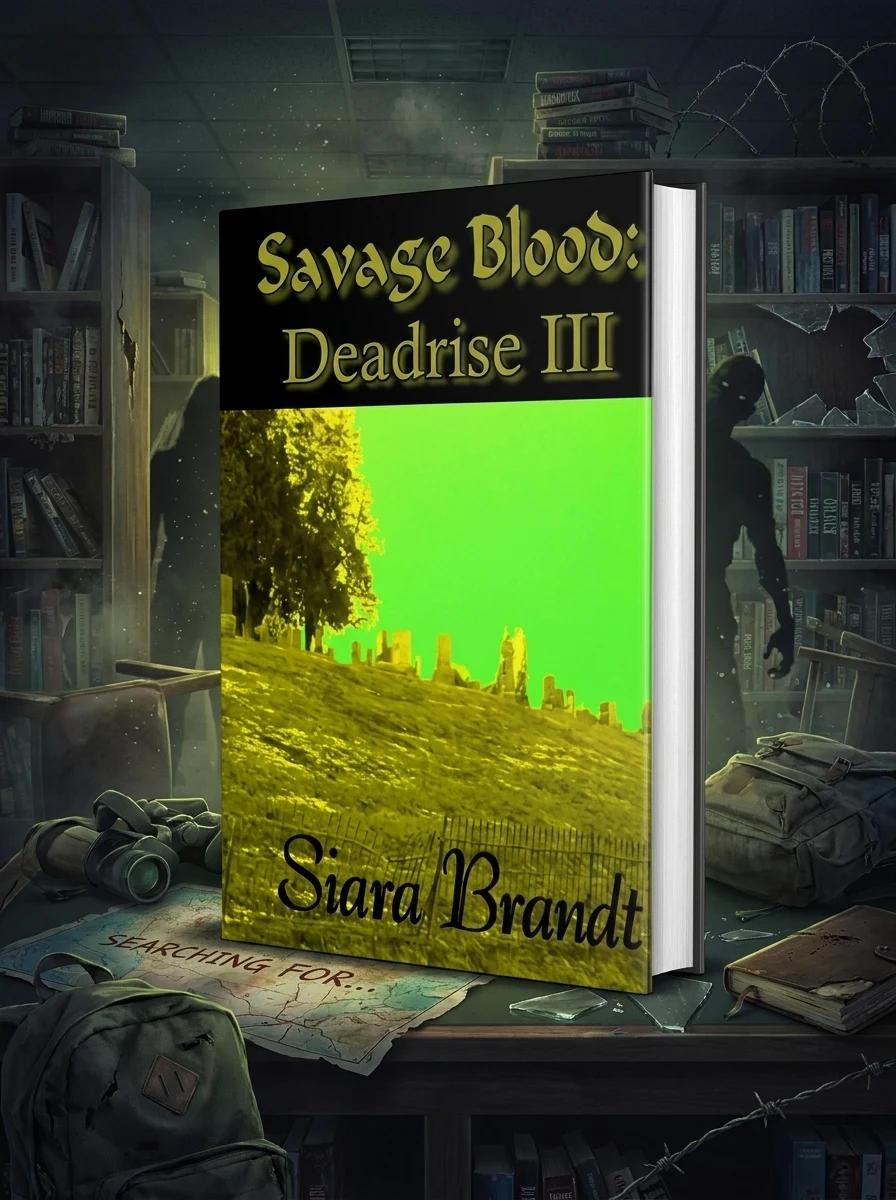

Savage Blood: Deadrise III
Siara Brandt's third Deadrise novel explores moral choices during a zombie apocalypse.
This entry continues the saga by shifting focus to an original group of survivors. Their actions directly influence the fate of characters from earlier books. The plot centers on the desperate search for family members amidst societal collapse. Brandt highlights the tension between personal desire and collective survival. The narrative does not shy away from the grim reality of a blighted world. It asks readers to consider what people sacrifice when the fabric of society dissolves. The story provides closure for some arcs while setting up new conflicts for others.
Published in 2015, this work sits within the contemporary American horror fiction market. It engages with the enduring tradition of zombie narratives that examine human nature under extreme duress. The book reflects cultural anxieties about social stability and community breakdown during catastrophic events.


📝 Description: Savage Blood: Deadrise III
💎 Our verdict on Savage Blood: Deadrise III
📖 Why choose it
Why this book is worth reading
Readers who appreciate character-driven narratives within the horror genre will find this entry compelling, particularly those interested in the psychological toll of loss and the fragility of social order. This book is ideal for audiences seeking a serious exploration of grief and duty rather than lighthearted escapism or pure action without emotional weight. It offers a grounded look at human resilience and failure when faced with an existential threat, making it suitable for those who enjoy moral choices during catastrophic events. The narrative appeals to fans of cosmic and psychological horror who want to witness the consequences of survival instincts as civilization unravels.
⭐ Reader reviews
Reader rating
Savage Blood delivers a grim yet thoughtful examination of humanity's ethical crossroads during societal collapse. Brandt excels at constructing a world where personal desire clashes with collective survival, forcing characters to make desperate choices that ripple outward. The narrative effectively bridges earlier events with future outcomes, providing closure for some arcs while setting up new conflicts. It succeeds in highlighting the tension between individual needs and group welfare without resorting to simplistic moralizing. This volume suits readers who value psychological depth over constant action, offering a compelling look at how people attempt to rebuild their lives amidst widespread destruction and blighted reality.